
Acute vs Chronic Diarrhea in Dogs: Duration, Causes & Warning Signs
Written by: Dr. Akram Khan, DVM
Medically Reviewed by: Dr. Zaheer Hussain, PhD
Last updated on September 14, 2026
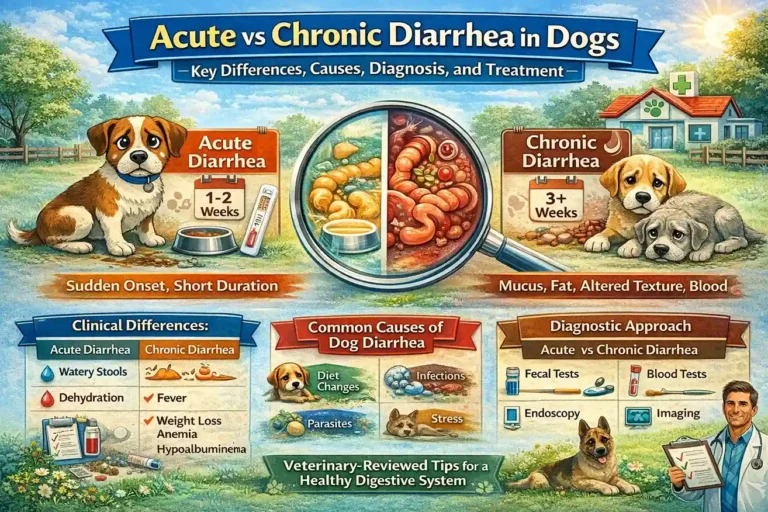
Not all dog diarrhea means the same thing. Some cases are acute, meaning they start suddenly and may last only a few days, often after a diet change, stress, spoiled food, parasites, or infection. Other cases are chronic, meaning the diarrhea lasts for weeks, keeps coming back, or is linked to deeper digestive problems such as food sensitivity, intestinal inflammation, dysbiosis, or disease affecting the liver, kidneys, or gut. This guide explains the difference between acute and chronic diarrhea in dogs, how long each type may last, what symptoms to watch for, and when diarrhea needs veterinary care.
Acute vs Chronic Diarrhea in Dogs: What Is the Difference?
Acute diarrhea in dogs starts suddenly and usually lasts a short time, often less than 14 days. Chronic diarrhea lasts more than 3–4 weeks, happens repeatedly, or keeps returning after temporary improvement. Acute cases are often linked to diet changes, stress, infections, or parasites, while chronic cases may involve food sensitivities, inflammatory bowel disease, gut dysbiosis, parasites, or internal disease. Blood, vomiting, dehydration, weakness, weight loss, or diarrhea lasting more than 48 hours should be checked by a veterinarian.
What Is Diarrhea in Dogs?
Diarrhea refers to the condition where a dog experiences an increase in stool frequency, volume, or water content. This is caused by a disruption in the intestinal tract, either in the small or large intestines. Diarrhea may occur suddenly or persist over time, leading to changes in stool consistency, frequency, and the dog’s overall condition.
Acute vs Chronic Diarrhea in Dogs: Quick Overview
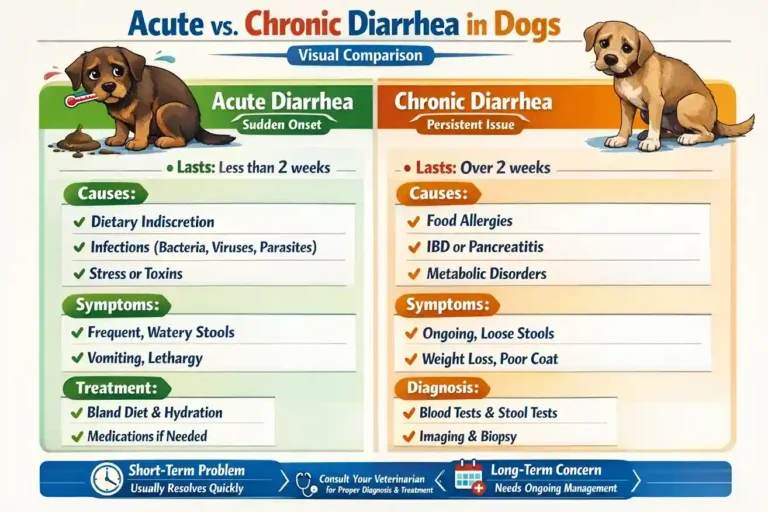
Feature Acute Diarrhea Chronic Diarrhea
Duration: Less than 14 days More than 3–4 weeks onset sudden Gradual or recurrent
Common Causes: Diet change, infections, parasites IBD, enteropathy, dysbiosis severity Often self-limiting Often progressive
Diagnostics Needed: Limited to Extensive
What Is Acute Diarrhea in Dogs?
Definition and Duration
Acute diarrhea is a short-term gastrointestinal upset that typically lasts a few days. It often resolves with supportive care, such as dietary adjustments and hydration.
Common Causes of Acute Diarrhea in Dogs
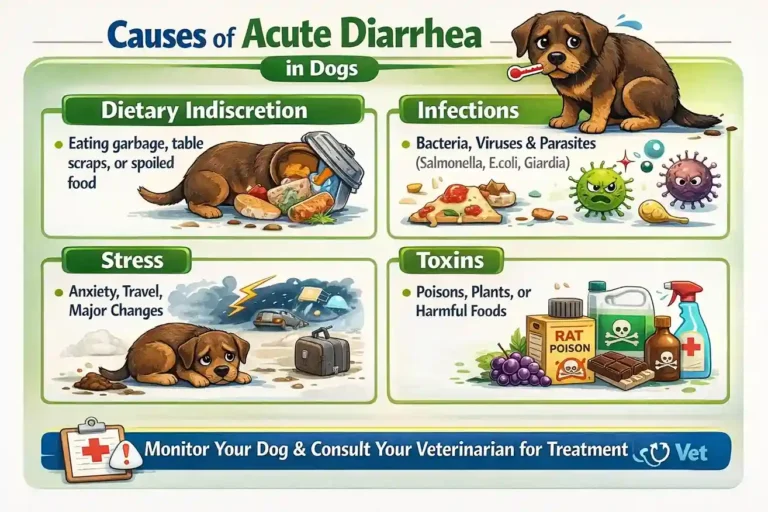
1. Dietary Indiscretion
o Sudden changes in diet
o Introduction of raw food or table scraps
o Eating spoiled food
2. Bacterial Infections
Common pathogens detected through PCR or ELISA tests:
o Salmonella spp.
o Campylobacter spp.
o Clostridium perfringens
3. Parasitic Infections
o Giardia
o Coccidia
o Hookworms
o Roundworms
o Whipworms
4. Viral Infections
o Parvoviruses
o Coronaviruses
o Circoviruses
(Vaccination status plays a key role in prevention.)
Clinical Signs of Acute Diarrhea
• Increased frequency of defecation
• Watery stools
• Vomiting and mild dehydration
• Flatulence
• Small amounts of blood or mucus in the stool
What Is Chronic Diarrhea in Dogs?
Definition and Duration
Chronic diarrhea is defined as diarrhea that persists for more than 3–4 weeks or occurs intermittently over several months. This condition often signals underlying diseases, including intestinal dysfunction.
Common Causes of Chronic Diarrhea in Dogs
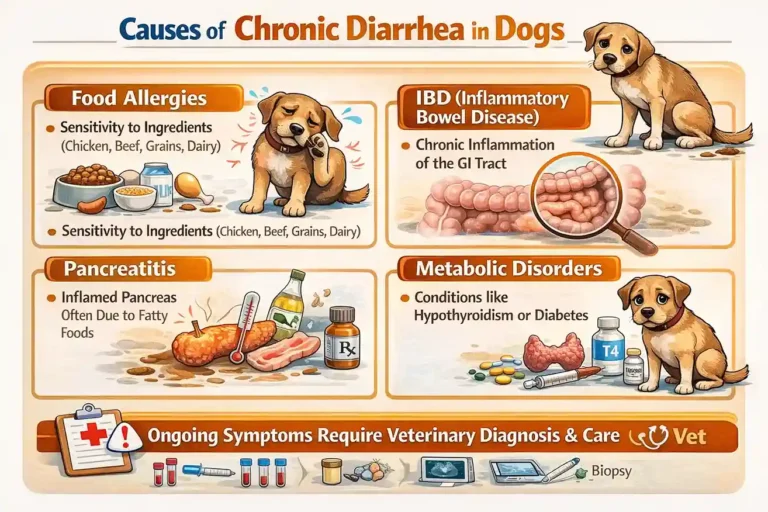
1. Chronic Enteropathy & IBD (Inflammatory Bowel Disease)
Symptoms include:
o Persistent diarrhea
o Weight loss
o Protein loss leading to hypoalbuminemia
2. Intestinal Dysbiosis
An imbalance in the gut bacteria that can lead to:
o Nutrient absorption issues
o Altered stool consistency
3. Food Sensitivities & Elimination Diet Failure
o Protein intolerance
o Poor response to elimination diets
4. Parasitic Persistence
o Chronic Giardia or whipworm infestation
5. Systemic Diseases
o Kidney disease
o Liver disease
o Protein-losing enteropathy
Clinical Differences Between Acute and Chronic Diarrhea
Stool Characteristics: Acute Diarrhea, Chronic Diarrhea
Stool Consistency: Large, watery stools; mucus, fat (steatorrhea), blood, altered texture
Systemic Effects: Dehydration, fever Weight loss, anemia, hypoalbuminemia
Diagnostic Approach: Acute vs Chronic Diarrhea
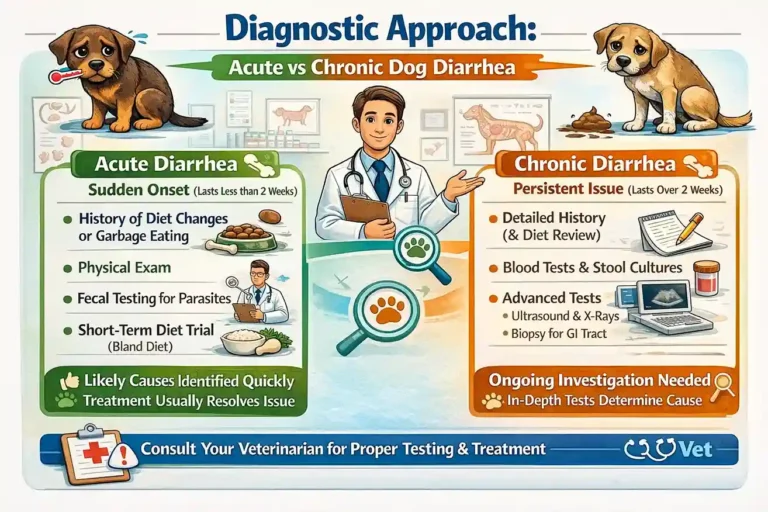
Diagnostics for Acute Diarrhea
• History and Physical Examination
• Fecal Tests and Parasitology
• Limited Blood Tests
Diagnostic tests are typically focused on the immediate cause, such as fecal analysis or bacterial cultures.
Diagnostics for Chronic Diarrhea (Gold Standard)
• Full Blood Count (FBC)
• Blood Chemistry Panels
• Albumin Levels
• Imaging (Ultrasound)
• Endoscopy and Biopsies
• PCR & ELISA Testing
Chronic cases require a more in-depth diagnostic approach to identify systemic issues.
Treatment Differences: Acute vs Chronic Diarrhea
Treatment for Acute Diarrhea
• Temporary Fasting: Allows the intestines to rest and heal.
• Fluid Substitution: Prevents dehydration.
• Bland Diet: A mild, easily digestible diet, such as boiled chicken and rice.
• Probiotics: Restore gut balance. (PetMD, 2023)
• Antiparasitic Medication: If parasites are identified.
Treatment for Chronic Diarrhea
• Elimination Diets: Identifying food triggers and following a restricted diet.
• Long-Term Dietary Management: Tailored to address chronic issues.
• Targeted Antibiotics: If bacterial overgrowth is present. • Immunosuppressive Therapy: For cases of IBD or autoimmune-related issues.
• Probiotics & Gut-Support Supplements: To improve digestion.
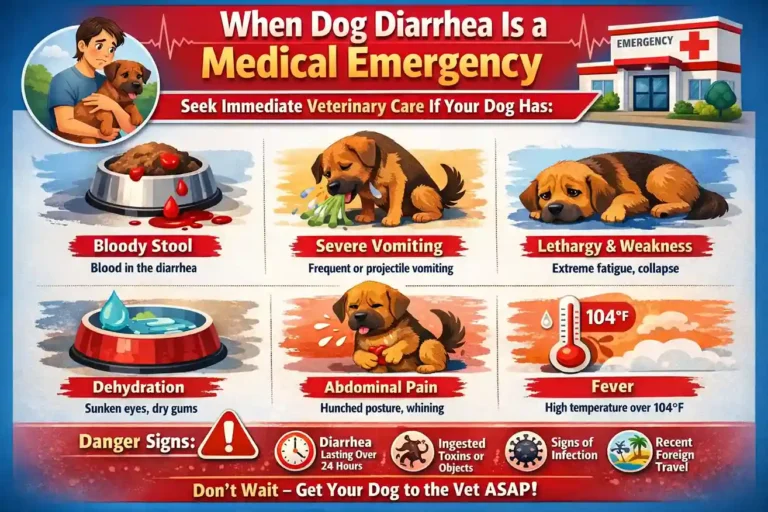
When to Visit the Veterinarian Immediately
Seek immediate veterinary care if your dog experiences:
• Diarrhea lasting more than 48 hours
• Blood or black stools
• Vomiting and diarrhea
• Severe dehydration
• Weight loss, fever, or anorexia
Prevention Strategies for Both Types of Diarrhea
• Gradual Diet Transitions: Avoid abrupt changes in diet.
• Routine Deworming: To control parasitic infestations.
• Vaccination Compliance: Keep vaccinations up to date.
• Avoid Raw Food Contamination: Minimize the risk of bacterial infections.
• Stress Reduction: Limit stress-related triggers.
• Regular Health Examinations: Early detection can prevent chronic issues.
Frequently Asked Questions (FAQs)
1. How long does acute diarrhea last in dogs?
Typically, acute diarrhea lasts 1–5 days with supportive care.
2. Is chronic diarrhea always serious?
Yes, chronic diarrhea often signals underlying intestinal disease or systemic illness that requires veterinary treatment.
3. Can acute diarrhea turn chronic?
Yes, untreated acute diarrhea can develop into a chronic condition, especially if the underlying cause is not addressed.
4. What are the main causes of chronic diarrhea in dogs?
Chronic diarrhea is often caused by inflammatory bowel disease (IBD), food sensitivities, or systemic diseases such as kidney or liver failure.
5. Should I change my dog's diet if they have diarrhea?
Yes, a bland diet such as boiled chicken and rice is often recommended for dogs with diarrhea, but consult your vet for advice tailored to your dog’s condition.
Medical Disclaimer
This content is for educational purposes only and does not replace professional veterinary advice. Always consult a licensed veterinarian for diagnosis and treatment.
References
- American Veterinary Medical Association. (2021). Canine gastrointestinal health and the role of diet in diarrhea management. https://www.avma.org
- Cornell University College of Veterinary Medicine. (2024). Diarrhea in dogs. https://www.vet.cornell.edu
- Dandrieux, J. R. S. (2016). Inflammatory bowel disease versus chronic enteropathy in dogs: Are they one and the same? Journal of Small Animal Practice, 57(11), 589–599. https://doi.org/10.1111/jsap.12588
- PetMD. (2023). Chronic diarrhea in dogs: Causes, diagnosis, and management. https://www.petmd.com