
Hydrolyzed Protein Dog Food for Dogs with Diarrhea and Food Sensitivity
Written by: Dr. Akram Khan, DVM
Medically Reviewed by: Dr. Khalid Mehmood, PhD (Assistant Professor in Clinical Veterinary Medicine)
Last updated on September 15, 2026
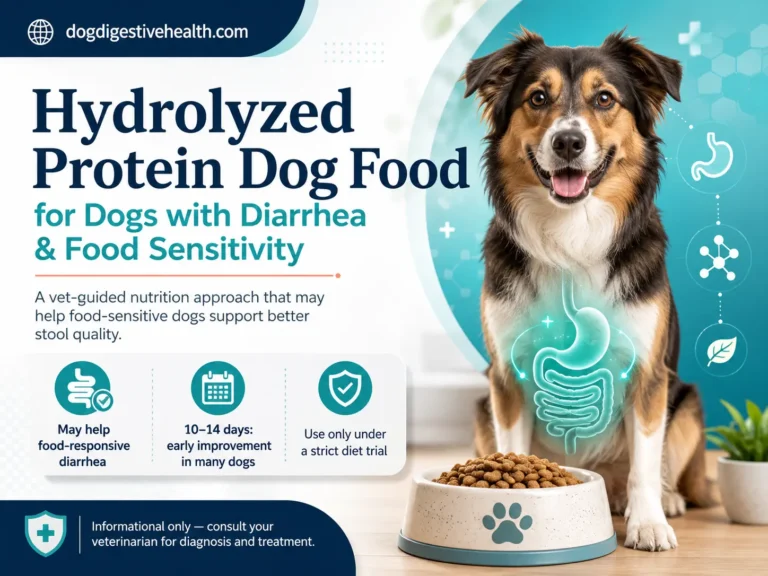
Hydrolyzed protein dog food for dogs with diarrhea and food sensitivity is a specialized veterinary diet designed for dogs that may not tolerate normal proteins in regular dog food. Many owners look for the best hydrolyzed protein dog food for diarrhea, hydrolyzed dog food for sensitive stomachs, and hydrolyzed protein dog food for food intolerance when their dog has repeated loose stool, chronic diarrhea, or digestive upset after meals. This type of food uses proteins broken into smaller peptides and amino acids, which may make them easier for food-sensitive dogs to tolerate. It is also commonly used during a strict diet trial when owners want to know, “Does hydrolyzed protein dog food help dogs with diarrhea?” or “How long does hydrolyzed protein dog food take to work?”
Does hydrolyzed protein dog food help dogs with diarrhea?
Hydrolyzed protein dog food may help dogs with diarrhea when the problem is linked to food sensitivity, food intolerance, or food-responsive enteropathy. It contains proteins broken into smaller peptides and amino acids, which may be easier for sensitive dogs to tolerate. Many dogs with food-responsive diarrhea may show improvement within 10–14 days, but some may need 2–4 weeks under veterinary guidance.
In comparison, this protein dog food is not the same as a basic “sensitive stomach” dog food. It is usually a more controlled therapeutic nutrition option used when a veterinarian suspects that food may be contributing to loose stool, chronic diarrhea, gas, vomiting, or poor stool quality. For dogs with repeated digestive upset, the goal is not only to change food but also to reduce exposure to proteins that may be triggering a reaction.
Recent veterinary research supports the use of hydrolyzed protein diets as an important dietary approach for many dogs with chronic enteropathy and food-responsive diarrhea. A 2025 multicenter study reported that veterinarians commonly use hydrolyzed diets in dogs with naïve chronic enteropathy and supported the need to feed a hydrolyzed diet in many affected dogs (Rodrigues, S. D., et al. 2025). Furthermore, a 2026 ACVIM-endorsed consensus statement reported that hydrolyzed protein diets achieved 64–89% remission rates in referral practice, with many dogs showing important improvement within about 2 weeks of starting dietary treatment (Heilmann, R. M., et al. 2026).
This guide explains how hydrolyzed protein dog food may help dogs with diarrhea and food sensitivity, how long it may take to work, what owners should avoid during the diet trial, and when veterinary guidance is important.
What Is Hydrolyzed Protein Dog Food for Dogs with Diarrhea?
Hydrolyzed protein dog food is a specialized dog food made with proteins that manufacturers break down into smaller fragments. Veterinarians call these smaller fragments peptides and amino acids. The industry knows this process as hydrolysis.
In regular dog food, protein may come from chicken, beef, dairy, lamb, egg, fish, soy, or other animal and plant sources. For some dogs, intact dietary proteins may contribute to food sensitivity, food intolerance, or immune-related food reactions. When this happens, the dog may develop repeated digestive signs such as loose stool, soft stool, diarrhea, gas, bloating, or vomiting after eating certain foods.
Hydrolyzed protein dog food is designed to reduce this problem. It does not remove protein from the diet. Dogs still need protein for muscle maintenance, immune function, tissue repair, enzymes, hormones, and overall health. Instead, the protein is modified so the body may be less likely to recognize it as a trigger.
For dogs with diarrhea and food sensitivity, hydrolyzed protein dog food may be used when the goal is to feed a controlled diet that reduces the chance of protein-related digestive upset.
A hydrolyzed protein diet may be considered for dogs with:
- diarrhea linked to suspected food sensitivity
- repeated loose stool after regular dog food
- food intolerance
- food-responsive enteropathy
- chronic digestive upset
- sensitive stomach
- suspected adverse food reaction
- dogs needing a strict elimination diet trial
The main idea is simple: hydrolyzed protein dog food for dogs with diarrhea and food sensitivity is more specific than ordinary sensitive stomach dog food. It is a controlled nutritional approach used when a dog may be reacting to dietary proteins.
Does Hydrolyzed Protein Dog Food Help Dogs with Diarrhea and Food Sensitivity?
Hydrolyzed protein dog food may help dogs with diarrhea when the diarrhea is connected to food sensitivity, food intolerance, or food-responsive enteropathy. It is not needed for every dog with diarrhea, but it can be very useful when food is suspected as a trigger.
Food-sensitive dogs do not always react immediately after eating. Some dogs develop repeated loose stool over time. Others seem fine for a few days and then have recurring soft stool, gas, or digestive discomfort. Some dogs improve when the food is changed and then relapse when old treats, table scraps, or flavored chews are added again.
This is why hydrolyzed protein dog food is often used as part of a strict diet trial. Instead of guessing which ingredient is causing the problem, the dog eats one carefully selected food for a set period. If stool quality improves, the veterinarian may suspect that food sensitivity is playing a role.
In dogs with chronic enteropathy, dietary response may involve several gut-related changes, including reduced dietary antigen exposure, changes in gut microbiota, improved intestinal barrier function, and changes in intestinal immune activity (Rodrigues, S. D., et al., 2025).
This matters because dogs with diarrhea and food sensitivity often need more than a random food change. They need a structured feeding plan that is consistent, controlled, and appropriate for their health status.
How Does Hydrolyzed Protein Dog Food Work for Food-Sensitive Dogs?
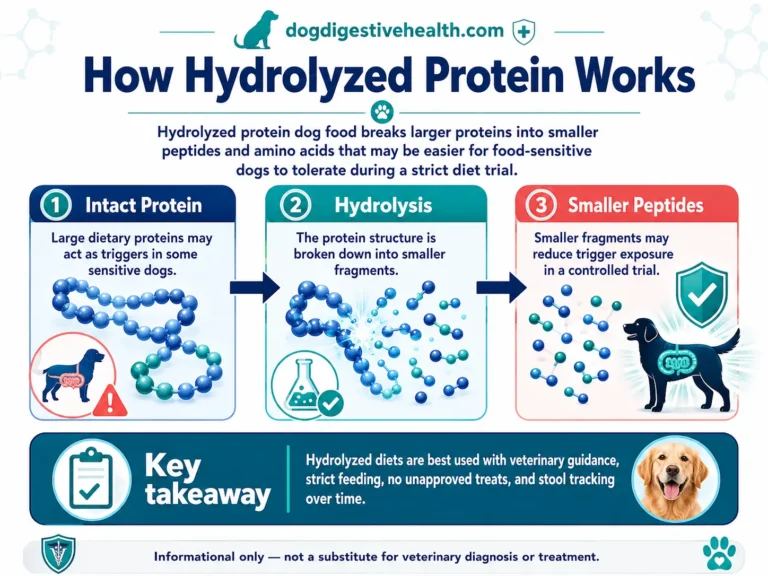
Hydrolyzed protein dog food works by changing the size and structure of dietary proteins. Large intact proteins are more likely to be recognized by the immune system. When proteins are broken down into smaller peptides and amino acids, they may be less likely to trigger an adverse food reaction in sensitive dogs.
This does not mean the food is “protein-free.” It means the protein has been processed in a way that may make it easier for the dog’s body to tolerate.
The process is especially helpful during a diet trial because it allows the dog to receive complete nutrition while reducing exposure to intact protein triggers. For dogs with repeated diarrhea, this controlled approach can help clarify whether food is contributing to the problem.
Hydrolyzed protein dog food may support food-sensitive dogs by:
- reducing exposure to intact dietary proteins
- making proteins less recognizable to the immune system
- supporting a cleaner diet trial
- helping improve stool consistency when food is a trigger
- reducing confusion caused by multiple ingredients and treats
- providing complete and balanced nutrition when properly selected
Extensive protein hydrolysis has been shown to reduce IgE recognition of poultry proteins in dogs and cats, supporting the scientific basis for using highly hydrolyzed proteins in hypoallergenic diets (Olivry, T. et al. 2017).
This is one reason many veterinarians prefer hydrolyzed protein diets when a dog has diarrhea that may be linked to food sensitivity.
Why Is Hydrolyzed Protein Easier for Dogs with Sensitive Stomachs?
Hydrolyzed protein may be easier for some dogs with sensitive stomachs because it reduces the chance that intact proteins will irritate the digestive or immune system. The dog still receives protein, but in a modified form.
A sensitive stomach can be influenced by many diet-related factors. These may include protein source, fat level, fiber type, digestibility, food additives, sudden food changes, and overall formula quality. Hydrolyzed protein dog food mainly focuses on reducing protein antigenicity. Many veterinary hydrolyzed diets are also made to be highly digestible, which may help support better stool quality.
The key benefit is not that hydrolyzed food is generally “light” or “simple.” The benefit is that the protein is broken down in a way that may be less likely to trigger a reaction.
For dogs with diarrhea and food sensitivity, this matters because dietary proteins are often important triggers in adverse food reactions. If a dog’s body reacts poorly to a normal protein source, changing to a hydrolyzed protein diet may reduce that reaction and help the gut settle.
However, hydrolyzed protein dog food is not automatically the answer for every dog with diarrhea. It works best when the dog’s stool problem is food-responsive or when a veterinarian suspects food sensitivity.
Is Hydrolyzed Protein Dog Food Good for Loose Stool and Chronic Diarrhea?
Hydrolyzed protein dog food may be helpful for dogs with loose stool and chronic diarrhea when food is part of the problem. It is commonly used for dogs with food-responsive diarrhea, suspected adverse food reactions, and chronic enteropathy.
A dog with food-responsive diarrhea may improve after eating a therapeutic diet and may relapse when previous food, treats, or flavored chews are reintroduced. This type of response helps veterinarians understand whether food is playing a major role.
In a 2025 retrospective multicenter study, hydrolyzed diets were highlighted as an important diet option for dogs with naïve chronic enteropathy (Rodrigues, S. D., et al. 2025). This supports the idea that diet can be a major part of managing repeated digestive signs in selected dogs.
Hydrolyzed protein dog food may be especially relevant when a dog has:
- loose stool that keeps returning
- diarrhea after eating regular dog food
- suspected food intolerance
- digestive upset with common proteins
- poor response to ordinary sensitive stomach food
- stool improvement during diet change
- relapse after treats or old food return
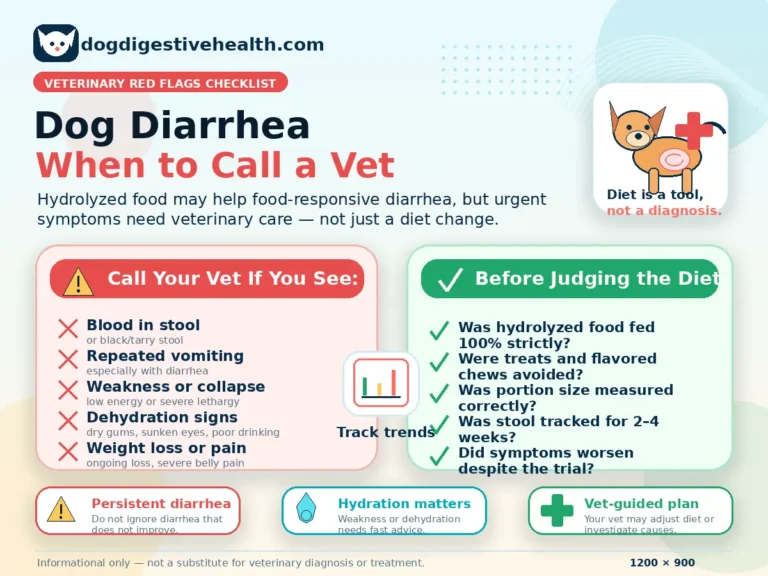
Still, hydrolyzed protein dog food should not replace veterinary care when diarrhea is severe. A dog should be checked by a veterinarian if there is blood in the stool, repeated vomiting, weakness, dehydration, weight loss, severe abdominal pain, or diarrhea that does not improve.
Hydrolyzed protein dog food is a nutritional tool. It is not a cure for every cause of diarrhea.
Prescription vs OTC Hydrolyzed Protein Dog Food: Which Is Better for Food Sensitivity?
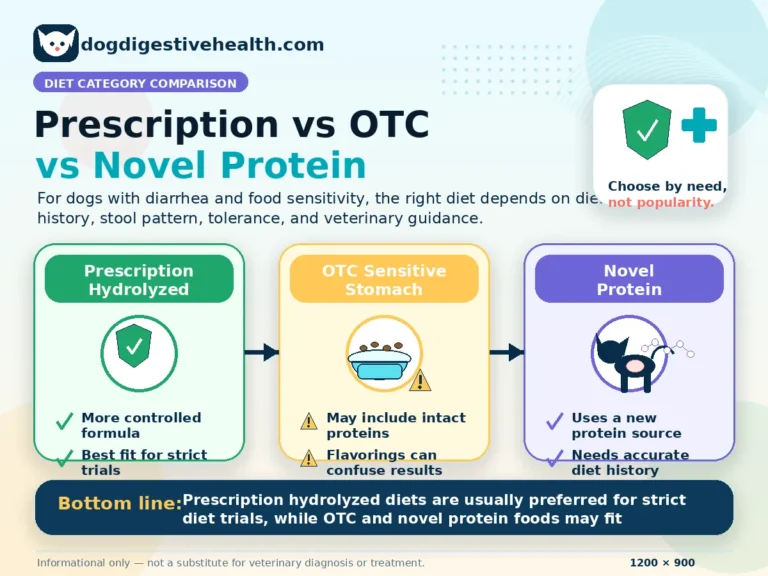
Many hydrolyzed protein dog foods are prescription veterinary diets. These diets are often preferred when the goal is a strict diet trial because they are usually more controlled than regular commercial foods.
Prescription hydrolyzed protein dog food may be recommended for dogs with diarrhea and food sensitivity because the trial needs to be clean. A regular over-the-counter sensitive stomach food may still contain intact proteins, multiple protein sources, flavorings, or ingredients that make the result unclear.
For example, an over-the-counter food may say “limited ingredient,” but it may still contain hidden flavorings or may not be made with the same level of control used in veterinary therapeutic diets. For dogs with true food sensitivity, this can confuse the results.
Prescription hydrolyzed diets may include controlled protein sources, selected carbohydrate sources, and carefully balanced nutrient profiles. Some common veterinary hydrolyzed diet examples include:
- Royal Canin Veterinary Diet Hydrolyzed Protein HP
- Royal Canin Veterinary Diet Ultamino
- Hill’s Prescription Diet z/d
- Hill’s Prescription Diet z/d Low Fat
- Purina Pro Plan Veterinary Diets HA Hydrolyzed
- Purina Pro Plan Veterinary Diets EL Elemental
- Blue Buffalo Natural Veterinary Diet HF Hydrolyzed
The best hydrolyzed protein dog food for diarrhea is not always the same for every dog. Some dogs need a standard hydrolyzed formula. Some need a low-fat hydrolyzed formula. Others may need a different protein source, an amino acid-based diet, or a diet with different fiber levels.
This is why veterinary guidance is important. The goal is not simply to buy the most popular hydrolyzed food. The goal is to choose the right diet for the dog’s stool pattern, medical history, life stage, weight, and tolerance.
Hydrolyzed Protein vs Novel Protein Dog Food: Which Is Better for Diarrhea?
Hydrolyzed protein diets and novel protein diets are both used for food-sensitive dogs, but they work differently.
A novel protein diet uses a protein the dog has not eaten before. Examples may include venison, rabbit, duck, kangaroo, or selected fish, depending on the dog’s previous diet history. The idea is that the dog is less likely to react to a protein it has never eaten.
A hydrolyzed protein diet uses protein that has been broken into smaller pieces. The dog may have eaten the original protein source before, but the hydrolysis process changes the protein structure.
For dogs with diarrhea and food sensitivity, hydrolyzed protein dog food may be useful when:
- The dog has eaten many protein sources before
- The diet history is unclear
- The owner cannot identify a truly novel protein
- A strict therapeutic diet trial is needed
- Cross-contact risk should be reduced
- The dog may react to common intact proteins
Novel protein diets can help some dogs, but they depend heavily on accurate diet history. If a dog has already eaten chicken, beef, lamb, salmon, duck, venison, and many treats, finding a truly novel protein becomes difficult.
A randomized controlled trial published in 2023 found that hydrolyzed fish diets supported clinical recovery in dogs with protein-losing enteropathy, while dogs with non-protein-losing chronic enteropathy responded to diet change without clear differences between assigned diets (Simpson, K. W., et al. 2023).
This supports a practical point: diet trials matter, but the best diet category must be selected for the individual dog. Hydrolyzed protein is often a strong first choice, but some dogs may still need another diet trial if the first diet does not work.
What Is the Best Type of Hydrolyzed Protein Dog Food for Diarrhea?
There is no single best hydrolyzed protein dog food for every dog with diarrhea. The best choice depends on the dog’s age, size, stool pattern, body condition, medical history, previous diet exposure, fat tolerance, and veterinary recommendation.
Some dogs do well on a standard hydrolyzed protein diet. Some need a low-fat, hydrolyzed diet. Some need a wet food option because they will not eat dry kibble. Others may need an amino acid-based diet if they do not respond well to hydrolyzed protein.
A veterinarian may choose a hydrolyzed protein dog food based on:
- how long the diarrhea has been present
- whether the stool is soft, watery, or mucus-coated
- whether vomiting is also present
- the dog’s weight and body condition
- previous foods and treats
- known allergies or intolerances
- fat sensitivity
- age and life stage
- other medical conditions
- ability of the owner to feed the diet strictly
The most important point is consistency. Even the best hydrolyzed protein dog food may not work if the dog continues to receive regular treats, table scraps, flavored chews, or another pet’s food.
Hydrolyzed Chicken Protein Dog Food: Is It Good for Sensitive Dogs?
Hydrolyzed chicken protein dog food uses chicken protein that has been broken down into smaller peptides. Even though chicken is a common protein in dog food, hydrolyzed chicken protein may be tolerated differently from intact chicken protein.
This can be helpful for some dogs with food sensitivity. However, not every dog responds the same way. If a dog continues having diarrhea on one hydrolyzed chicken formula, a veterinarian may recommend a different hydrolyzed formula or another diet category.
Hydrolyzed Soy Protein Dog Food: Is It Safe for Dogs with Food Sensitivity?
Hydrolyzed soy protein is used in some veterinary therapeutic diets. In hydrolyzed form, soy protein is broken into smaller fragments and may be tolerated by many dogs needing a controlled diet trial.
Some owners worry when they see soy on the label. The important point is that hydrolyzed soy protein is not the same as regular intact soy protein. The hydrolysis process changes the protein structure.
Whether hydrolyzed soy protein is appropriate depends on the individual dog, the full diet formula, and the veterinarian’s recommendation.
Hydrolyzed Fish Protein Dog Food: Can It Help Dogs with Diarrhea?
Hydrolyzed fish protein diets may be useful for some dogs with chronic enteropathy and food sensitivity. Fish-based hydrolyzed diets may also be selected when a veterinarian wants a different hydrolyzed protein source.
The 2023 randomized controlled trial on hydrolyzed fish diets showed that diet change was clinically useful in dogs with chronic enteropathy, and hydrolyzed fish diets supported recovery in dogs with protein-losing enteropathy (Simpson, K. W., et al. 2023).
Hydrolyzed fish protein dog food may be considered when a dog needs a controlled therapeutic diet and the veterinarian believes a fish-based hydrolyzed formula is suitable.
Low-Fat Hydrolyzed Protein Dog Food: When Is It a Better Choice?
Some dogs with diarrhea and food sensitivity may also need lower fat intake. A low-fat hydrolyzed protein dog food may be considered when a veterinarian suspects that the fat level is contributing to loose stool or digestive upset.
Low-fat hydrolyzed food is not automatically better for every dog. Some dogs need regular hydrolyzed diets. Others need lower fat, adjusted fiber, or different calorie density.
A low-fat hydrolyzed diet may be considered when a dog has:
- loose stool that worsens with rich foods
- difficulty tolerating fatty treats
- history of digestive upset after high-fat meals
- need for both protein control and fat control
- veterinary recommendation for lower dietary fat
The decision should be made with a veterinarian because dogs still need enough energy and essential fatty acids.
Hydrolyzed Wet Dog Food vs Dry Dog Food: Which One Is Better for Diarrhea?
Hydrolyzed protein dog food may come in dry kibble or wet canned form. Dry food is often easier to measure, store, and use as treats during the diet trial. Wet food may be more palatable and may help dogs that need more moisture or have chewing problems.
For diarrhea and food sensitivity, the most important factor is not wet versus dry. The most important factor is whether the food is appropriate, complete, balanced, and fed strictly without unapproved extras.
Wet hydrolyzed food may be helpful for:
- picky dogs
- senior dogs
- dogs with dental discomfort
- dogs needing more moisture
- dogs that refuse dry kibble
Dry hydrolyzed food may be helpful for:
- easier measuring
- longer storage
- training treats
- lower mess
- consistent daily feeding
Some dogs may use a combination of wet and dry hydrolyzed food from the same approved diet line, but this should be done with veterinary guidance.
How Long Does Hydrolyzed Protein Dog Food Take to Work for Diarrhea?
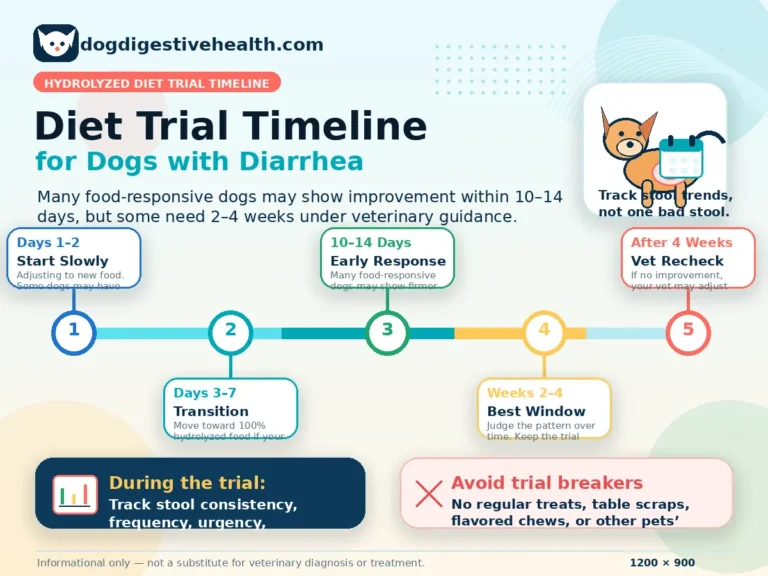
Many dogs with food-responsive diarrhea may show improvement within 10–14 days, although some need more time. The 2026 ACVIM-endorsed consensus statement notes that clinical responses to dietary treatment are typically seen within 10–14 days, but effectiveness may require longer in some dogs (Heilmann, R. M., et al. 2026).
A practical timeline may look like this:
First few days:
The dog may be adjusting to the new food. Some dogs show early improvement, while others may have temporary soft stool during transition.
Week 1:
Some owners may notice less urgency, slightly firmer stool, or fewer diarrhea episodes.
Weeks 2–4:
This is often the most important window for dogs with food-responsive diarrhea. Stool consistency may become clearer during this period.
After 4 weeks:
If there is no improvement, the veterinarian may check whether the trial was strict, whether portion size is correct, whether the dog ate treats or flavored medication, or whether a different diet is needed.
The mistake many owners make is judging the diet too quickly. Hydrolyzed protein dog food is not always an overnight fix. It works best as a controlled diet trial.
How to Switch Your Dog to Hydrolyzed Protein Food Without Worsening Diarrhea
A careful transition can help reduce digestive upset. Sudden food changes may cause temporary soft stool, even when the new food is appropriate.
A common transition schedule may be
- Days 1–2: 25% hydrolyzed food and 75% old food
- Days 3–4: 50% hydrolyzed food and 50% old food
- Days 5–6: 75% hydrolyzed food and 25% old food
- Day 7 onward: 100% hydrolyzed food
However, not every dog should follow the same schedule. Dogs with severe diarrhea, vomiting, poor appetite, dehydration risk, or another medical condition may need a different plan from the veterinarian.
During the transition, owners should track:
- stool consistency
- stool frequency
- urgency
- gas
- vomiting
- appetite
- energy level
- body weight
- any treats or accidental food exposure
A stool diary can be very useful. Write down what the dog ate, how much was fed, stool quality, and any extra items the dog may have eaten. This helps the veterinarian judge whether the hydrolyzed protein diet is working.
Can Hydrolyzed Protein Dog Food Cause Diarrhea at First?
Yes, hydrolyzed protein dog food can cause temporary stool changes in some dogs, especially if the switch is sudden. Any new food can change stool quality during the adjustment period.
Possible early changes include:
- slightly softer stool
- change in stool color
- change in stool smell
- mild gas
- change in stool volume
- temporary appetite difference
This does not always mean the dog is reacting badly to the food. Sometimes the digestive system simply needs time to adjust.
However, worsening diarrhea should not be ignored. If the dog has watery diarrhea, blood in stool, repeated vomiting, weakness, refusal to eat, dehydration, or weight loss, contact a veterinarian.
Hydrolyzed protein dog food may help with food-responsive diarrhea, but not all diarrhea is food-responsive. Some dogs need testing or treatment beyond diet.
What Should Dogs Avoid While Eating Hydrolyzed Protein Dog Food?
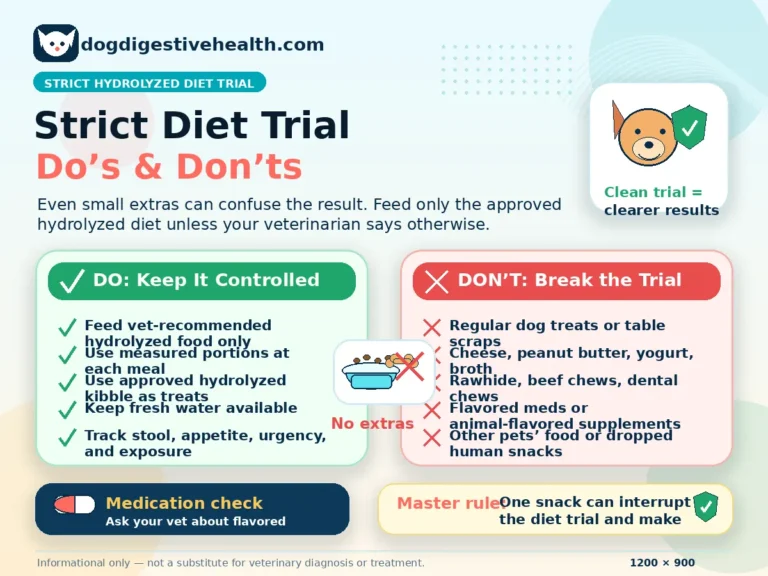
A hydrolyzed protein diet trial must be strict. Even small amounts of other foods can interfere with the results.
During the diet trial, avoid:
- regular dog treats
- table scraps
- chicken pieces
- beef chews
- cheese
- peanut butter
- yogurt
- rawhide
- flavored dental chews
- food toppers
- broth with unknown ingredients
- flavored medications unless approved by the vet
- supplements with animal flavoring
- other pets’ food
- dropped food from the floor
- human snacks
This is one of the biggest reasons hydrolyzed protein dog food appears to “fail.” The dog may be eating the correct diet but still receiving small amounts of trigger ingredients.
If treats are needed for training, ask your veterinarian whether you can use the hydrolyzed kibble as treats or use matching hydrolyzed treats from the same diet line.
If medication is needed, ask whether it contains animal flavoring. Some chewable tablets are flavored with beef, chicken, pork, or other animal proteins. These may interfere with a strict diet trial.
Best Hydrolyzed Protein Dog Food Options for Dogs with Diarrhea and Food Sensitivity
The best hydrolyzed protein dog food depends on the dog. No single product is best for every dog with diarrhea and food sensitivity.
A veterinarian may choose based on:
- dog’s age
- dog’s weight
- breed size
- stool pattern
- previous food history
- fat tolerance
- fiber needs
- medical conditions
- palatability
- cost and long-term feeding ability
Common hydrolyzed dog food categories include standard hydrolyzed protein diets, extensively hydrolyzed diets, low-fat hydrolyzed diets, wet hydrolyzed foods, and amino acid-based diets.
Standard Hydrolyzed Protein Diets
Standard hydrolyzed protein diets are often used for dogs with suspected food sensitivity, food intolerance, or food-responsive diarrhea. They usually contain hydrolyzed protein and selected carbohydrate sources.
These diets may be used as the first controlled diet trial when a veterinarian suspects that food is contributing to diarrhea.
Extensively Hydrolyzed Diets
Some diets use very small peptides or extensively hydrolyzed proteins. These may be helpful when a dog does not respond to a standard hydrolyzed diet or when the veterinarian wants a more controlled protein approach.
Extensive hydrolysis may reduce IgE recognition of poultry proteins, which supports the scientific logic behind highly hydrolyzed veterinary diets (Olivry, T. et al. 2017).
Low-Fat Hydrolyzed Diets
Low-fat hydrolyzed diets may help dogs whose diarrhea is worsened by higher fat intake. They should be chosen under veterinary guidance.
Hydrolyzed Wet Food
Wet hydrolyzed food may help picky eaters, senior dogs, or dogs needing more moisture in the diet.
Amino Acid-Based Diets
Amino acid-based diets are not exactly the same as hydrolyzed protein diets, but they are closely related. Instead of using protein fragments, they provide amino acids. These diets may be used when dogs do not respond well to hydrolyzed protein diets.
A 2023 study found that exclusive feeding of an elemental amino acid-based diet improved clinical signs in 16 of 23 dogs with uncontrolled chronic enteropathy (Manchester, A. C., et al. 2023).
How Do You Know If Hydrolyzed Protein Dog Food Is Working?
The most important sign is better stool quality. A dog that responds well may have firmer stool, less urgency, fewer diarrhea episodes, and better overall comfort.
Signs the diet may be helping include:
- Stool becomes firmer
- Diarrhea becomes less frequent
- less urgency to go outside
- less mucus in stool
- less gas
- better appetite
- better energy
- more stable weight
The response should be judged over time. One good stool or one bad stool does not prove success or failure. A pattern over 2 to 4 weeks is more meaningful.
If diarrhea improves while the dog eats only the hydrolyzed diet, this supports the possibility of food-responsive diarrhea. If diarrhea returns when old foods or treats are added back, food sensitivity becomes more likely.
A stool diary can make this easier. Write down stool quality, frequency, food amount, treats, accidental food exposure, and appetite every day. This gives your veterinarian a clearer picture.
Why Is My Dog Still Having Diarrhea on Hydrolyzed Protein Food?
Some dogs continue to have diarrhea even after switching to hydrolyzed protein dog food. This can happen for several reasons.
The Diet Trial Was Not Strict
This is the most common reason. Treats, table scraps, flavored medication, dental chews, and other pets’ food can break the trial.
The Transition Was Too Fast
Some dogs need a slower change to avoid temporary digestive upset.
The Portion Size Is Too Large
Overfeeding can cause loose stool, even with a therapeutic diet.
The Formula Is Not the Right Match
A dog may need a different hydrolyzed protein source, a low-fat formula, a fiber-adjusted formula, or an amino acid-based diet.
The Dog Has Another Medical Problem
Not all diarrhea is caused by food sensitivity. Some dogs need veterinary testing for parasites, infections, pancreatitis, endocrine disease, intestinal disease, or other problems.
The Dog Needs More Time
Some dogs need 2 to 4 weeks before the response becomes clear.
The 2026 ACVIM-endorsed consensus statement notes that multiple therapeutic diet trials may be needed in some dogs with chronic inflammatory enteropathy, and each trial should involve exclusive feeding of a therapeutic diet for at least 2 weeks (Heilmann, R. M., et al. 2026).
Can Dogs Eat Hydrolyzed Protein Dog Food Long Term?
Many veterinary hydrolyzed protein diets are complete and balanced and can be used long-term when recommended by a veterinarian. If a dog’s diarrhea improves on hydrolyzed protein food and returns when other foods are given, long-term feeding may be the best way to keep stool stable.
Long-term feeding should consider:
- life stage
- body condition
- weight goals
- other diseases
- cost
- availability
- palatability
- nutrient profile
Puppies, large-breed puppies, senior dogs, overweight dogs, and dogs with other medical conditions may need special diet selection. Owners should not assume every hydrolyzed protein dog food is appropriate for every dog.
If the dog is doing well long-term, the veterinarian may recommend staying on the diet. In other cases, the veterinarian may discuss a food challenge or controlled reintroduction plan.
Medical Disclaimer:
This article is for informational purposes only and is not a substitute for professional veterinary advice, diagnosis, or treatment. If your dog has persistent diarrhea, vomiting, blood in stool, weight loss, dehydration, or worsening symptoms, consult a licensed veterinarian immediately.
Frequently Asked Questions (FAQs)
1. Does hydrolyzed protein dog food help dogs with diarrhea?
Yes, hydrolyzed protein dog food may help dogs with diarrhea when the problem is linked to food sensitivity, food intolerance, or food-responsive digestive issues.
2. How long does hydrolyzed protein dog food take to work?
Many dogs may show improvement within 10–14 days, but some dogs may need 2–4 weeks to show clearer stool improvement.
3. Can hydrolyzed protein dog food cause diarrhea at first?
Yes, some dogs may have temporary soft stool during the transition, especially if the food is changed too quickly.
4. Is hydrolyzed protein dog food good for food sensitivity?
Yes, it is commonly used for dogs with suspected food sensitivity because the protein is broken into smaller pieces that may be easier to tolerate.
5. Do dogs need a prescription for hydrolyzed protein dog food?
Many hydrolyzed protein dog foods are prescription veterinary diets, especially when used for a strict diet trial.
6. Can dogs eat treats while on hydrolyzed protein food?
Only veterinarian-approved treats should be given. Regular treats, table scraps, and flavored chews can interfere with the diet trial.
7. Can dogs eat hydrolyzed protein dog food long term?
Yes, many hydrolyzed protein diets can be used long term if they are complete, balanced, and recommended by a veterinarian.
Final Takeaway: Is Hydrolyzed Protein Dog Food Worth Trying for Dogs with Diarrhea and Food Sensitivity?
Hydrolyzed protein dog food can be a highly useful diet option for dogs with diarrhea and food sensitivity. It works by breaking dietary proteins into smaller fragments that may be less likely to trigger digestive or immune reactions. For dogs with loose stool, chronic diarrhea, food intolerance, or suspected food-responsive enteropathy, a strict hydrolyzed protein diet trial can help improve stool quality and guide long-term feeding decisions.
The most important rule is consistency. Feed only the recommended hydrolyzed protein dog food, avoid unapproved treats and flavored extras, track stool changes, and work with a veterinarian if diarrhea continues.
For many dogs, hydrolyzed protein dog food is not just another food choice. It is a structured nutrition plan that may help reduce food-related triggers, support digestive stability, and improve quality of life.
References
- Heilmann, R. M., Jergens, A. E., Kathrani, A., Allenspach, K., Salavati Schmitz, S., Priestnall, S. L., Dandrieux, J. R. S., & O’Connor, A. M. (2026). ACVIM-endorsed statement: Consensus statement and systematic review on guidelines for the diagnosis and treatment of chronic inflammatory enteropathy in dogs. Journal of Veterinary Internal Medicine, 40(1), aalaf017. doi:10.1093/jvimsj/aalaf017
- Rodrigues, S. D., Allenspach, K., Heilmann, R. M., & others. (2025). Association of diet with treatment response in dogs with chronic enteropathy: A retrospective multicenter study. Journal of Veterinary Internal Medicine, 39(3), e70071. doi:10.1111/jvim.70071
- Simpson, K. W., Miller, M. L., Loftus, J. P., Rishniw, M., Frederick, C. E., & Wakshlag, J. J. (2023). Randomized controlled trial of hydrolyzed fish diets in dogs with chronic enteropathy. Journal of Veterinary Internal Medicine, 37(6), 2334–2343. doi:10.1111/jvim.16844
- Manchester, A. C., Dow, S., Chow, L., Gagne, J., & Lappin, M. R. (2023). Efficacy of an elemental diet in achieving clinical remission in dogs with chronic enteropathy. Journal of Veterinary Internal Medicine, 37(6), 2322–2333. doi:10.1111/jvim.16846
- Olivry, T., Bexley, J., & Mougeot, I. (2017). Extensive protein hydrolyzation is indispensable to prevent IgE-mediated poultry allergen recognition in dogs and cats. BMC Veterinary Research, 13, 251. doi:10.1186/s12917-017-1183-4