
What Time of Day Should I Give My Dog Probiotics?
Written by: Dr. Akram Khan, DVM
Medically Reviewed by: Dr. Zaheer Hussain, PhD
Last updated on September 08, 2026

What time of day should I give my dog probiotics? For most dogs, the best time to give probiotics is with or immediately after a meal, either in the morning or evening, depending on your dog’s feeding routine. Many owners also ask whether probiotics should be given with food or on an empty stomach, how often to give probiotics to dogs, and whether daily use is safe. In general, consistency matters more than the exact clock time, but giving probiotics with food may improve tolerance and help beneficial bacteria survive stomach acid.
What is the best time of day to give probiotics to dogs?
The best time to give probiotics to dogs is with or immediately after a meal, either in the morning or evening. Food helps buffer stomach acid and may improve probiotic survival. Daily consistency is more important than the exact time of day, but empty-stomach dosing may cause gas or digestive upset in some dogs.
Does Timing Matter When Giving Probiotics to Dogs?
Yes—timing does matter, but not as much as consistency, correct dosing, and product quality.
Veterinary consensus suggests probiotics are most effective when they are:
- Given at the same time every day
- Integrated into a predictable feeding routine
- Administered in a way that protects beneficial bacteria from stomach acid
Timing influences bacterial survival, intestinal delivery, and digestive tolerance, especially in dogs with sensitive stomachs or chronic gut issues.
Morning vs Evening: Which Time Is Better for Dog Probiotics?
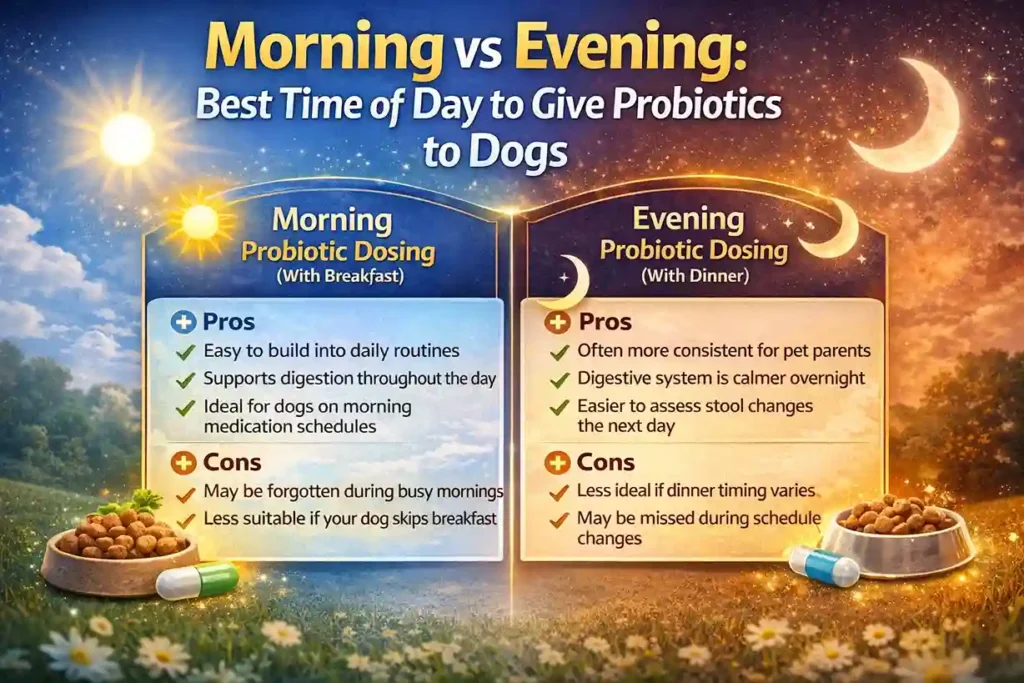
Morning Probiotic Dosing (With Breakfast)
Pros
- Easy to build into daily routines
- Supports digestion throughout the day
- Ideal for dogs on morning medication schedules
Cons
- May be forgotten during busy mornings
- Less suitable if your dog skips breakfast
Best for:
Dogs with regular morning meals, dogs recovering from antibiotics, and dogs with sensitive digestion.
Evening Probiotic Dosing (With Dinner)
Pros
- Often more consistent for pet parents
- The digestive system is calmer overnight
- Easier to assess stool changes the next day
Cons
- Less ideal if dinner timing varies
- May be missed during schedule changes
Best for:
Dogs fed primarily in the evening or those on multi-meal feeding routines.
Should Probiotics Be Given With Food or on an Empty Stomach?
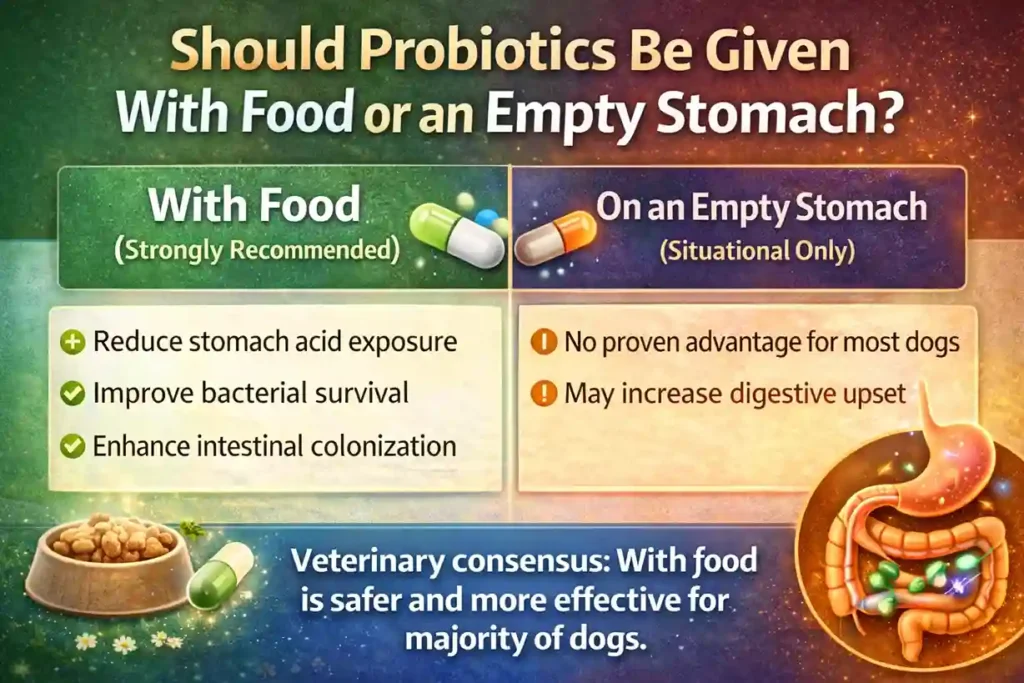
With Food (Strongly Recommended)
Giving probiotics with meals helps:
- Reduce stomach acid exposure
- Improve bacterial survival
- Enhance intestinal colonization
This is why most dog probiotics come as chews, powders, capsules, or food toppers.
On an Empty Stomach (Situational Only)
Some shelf-stable or spore-based probiotics may tolerate stomach acid better, but for most dogs:
- Empty-stomach dosing offers no proven advantage
- It may increase the risk of gas or mild digestive upset
📌 Veterinary consensus: Food is safer and more effective for the majority of dogs.
Why Consistency Matters More Than Exact Timing
Consistency has a greater impact than the clock.
Probiotics work best when given:
- Daily
- In the same form
- As part of a predictable routine
Inconsistent dosing or frequent schedule changes can:
- Delay gut microbiome stabilization
- Reduce stool quality improvements
- Slow immune-related benefits
How Long After Starting Probiotics Will You See Results?
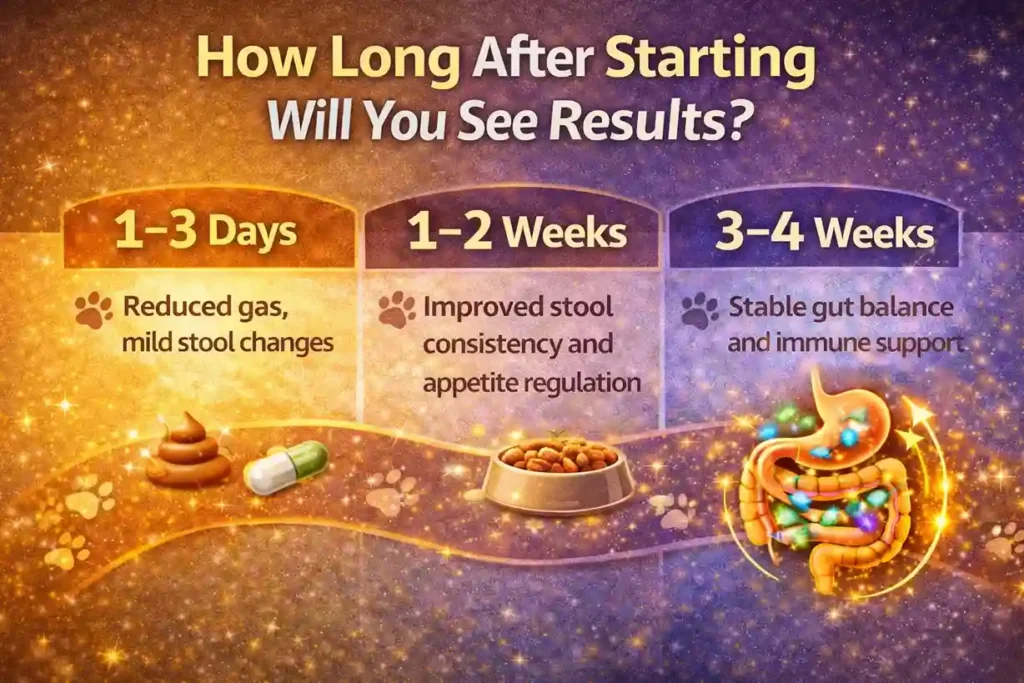
Most dogs respond within predictable timeframes:
- 1–3 days: Reduced gas, mild stool changes
- 1–2 weeks: Improved stool consistency and appetite regulation
- 3–4 weeks: Stable gut balance and immune support
Daily administration is essential for sustained benefits.
Factors That Affect the Best Time for Your Dog
There is no universal schedule. The ideal timing depends on:
1. Diet Type
- Kibble, raw, fresh, or prescription diets
- Once-daily vs. twice-daily feeding
2. Digestive Sensitivity
- Dogs with GERD, diarrhea, or bloating benefit from food-buffered dosing
3. Age & Life Stage
- Puppies and senior dogs tolerate probiotics better when given with meals
4. Health Conditions
- IBS, IBD, antibiotic recovery, or chronic digestive disorders may require veterinary guidance
Can Probiotics Be Given With Other Supplements or Medications?
Yes—but spacing matters.
Best practices:
- Give probiotics with food
- Separate antibiotics and probiotics by 2–3 hours
- Avoid introducing multiple new supplements at the same time
This improves absorption and reduces gastrointestinal stress.
Signs Your Probiotic Timing Is Working
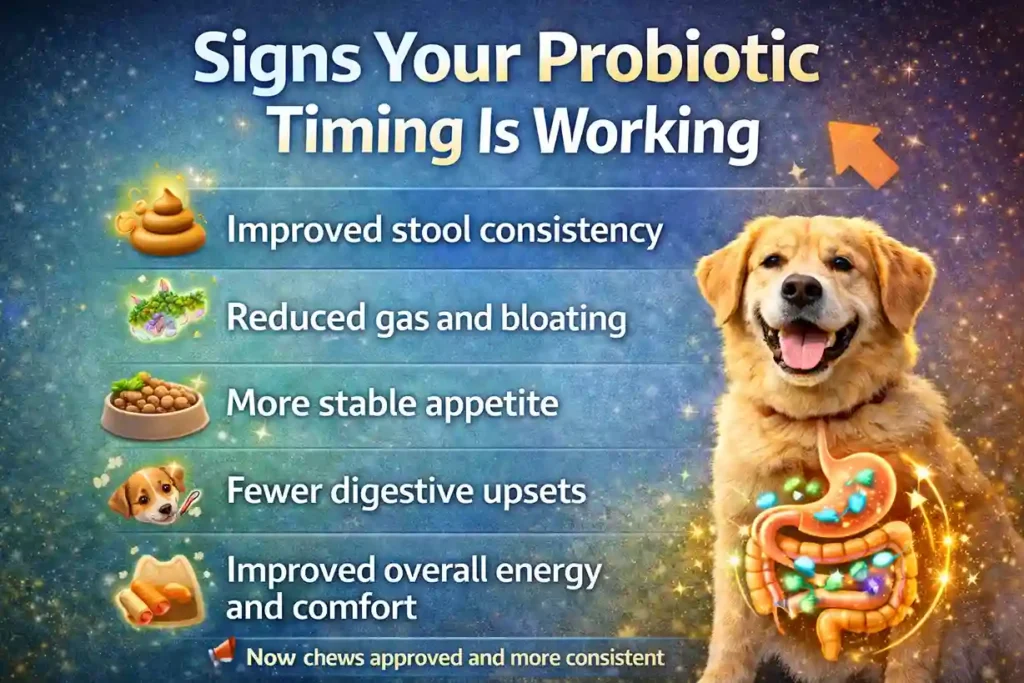
Positive indicators include:
- Improved stool consistency
- Reduced gas and bloating
- More stable appetite
- Fewer digestive upsets
- Improved overall energy and comfort
If symptoms worsen or fail to improve after several days, timing or product choice may need adjustment.
When Should You Consult a Veterinarian?
Seek veterinary advice if:
- Your dog has chronic digestive disease
- Symptoms worsen after starting probiotics
- Your dog is immunocompromised
- You are unsure about dosing or scheduling
Vet-approved probiotics are recommended for long-term or therapeutic use.
Choosing the Right Probiotic Product for Dogs
For best results, select probiotics that:
- Are clearly labeled for dogs
- List specific bacterial strains
- Provide transparent CFU counts
- Are easy to administer with meals
- Match your dog’s size and health needs
Chews, powders, capsules, and pastes each suit different routines—product format should align with your dog’s habits.
Medical Disclaimer
This article is for educational purposes only and does not replace professional veterinary diagnosis or treatment. Always consult a licensed veterinarian for medical concerns.
Frequently Asked Questions (FAQs)
1. Can I give probiotics to my dog at night?
Yes, evening dosing with food is effective.
2. Should probiotics be given before or after meals?
With or immediately after meals is best.
3. Do probiotics work better in the morning?
Only if that timing is consistent for your dog.
4. Can probiotics be given with antibiotics?
Yes, but space doses by 2–3 hours.
5. How often should dogs take probiotics?
Daily, unless otherwise directed by a veterinarian.
6. Is timing important for puppies and senior dogs?
Yes—meal-time dosing improves tolerance.