
Why Is My Dog Smacking Lips and Shaking Before Throwing Up?
Written by: Dr. Akram Khan, DVM
Veterinary review by: Dr. Khalid Mehmood, PhD (Assistant Professor in Clinical Veterinary Medicine)
Last medically reviewed: September 26, 2026
Seeing your dog suddenly smack their lips, lick their mouth repeatedly, shake, and then vomit can be worrying. These behaviours are often your dog’s way of showing that something feels wrong before vomiting occurs.
In many cases, dog smacking lips before vomiting is an early sign of nausea. Before a dog vomits, the body activates protective reflexes that increase saliva production, trigger swallowing movements, and prepare the digestive system for emesis (vomiting). Lip licking, salivation, and increased swallowing are recognised signs associated with nausea in dogs (1).
However, lip smacking and shaking are not always caused by a simple upset stomach. The same signs can also occur with acid reflux, gastrointestinal irritation, pain, dietary problems, toxin exposure, or other medical conditions. Understanding the pattern of symptoms can help you decide when monitoring is appropriate and when veterinary advice is needed.

Quick Answer
Dogs often smack their lips and shake before throwing up because nausea activates the body’s vomiting response. Increased saliva production, throat discomfort, repeated swallowing, and nervous system stimulation can cause lip smacking and trembling before vomiting begins. Occasional episodes may be mild, but persistent symptoms or vomiting with weakness, pain, or other warning signs require veterinary attention.
Why Does My Dog Smack His Lips Before Vomiting?
Lip smacking before vomiting usually occurs because your dog is experiencing nausea.
When the digestive system detects irritation or discomfort, signals travel from the gastrointestinal tract to the brain’s vomiting centres. The body then prepares for vomiting by increasing saliva production. This extra saliva helps protect the mouth and oesophagus from stomach acid during the vomiting process.
Your dog may show early signs such as:
- Repeated lip licking or smacking
- Drooling
- Frequent swallowing
- Gulping movements
- Restlessness
- Eating grass
- Loss of interest in food
These behaviours may appear minutes before vomiting, although some dogs can show nausea signs for a longer period without actually throwing up.
Why Is My Dog Licking His Lips and Shaking Before Throwing Up?
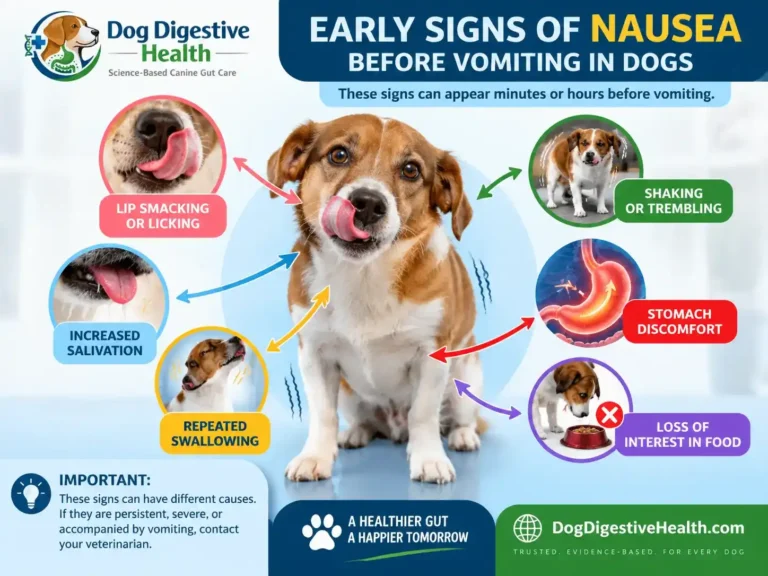
Lip licking combined with shaking often indicates that your dog is experiencing discomfort rather than simply displaying a normal behaviour.
Shaking before vomiting may occur because nausea affects the autonomic nervous system, which controls involuntary body responses. A dog that feels sick may also tremble because of abdominal discomfort, stress, weakness, or pain.
Possible situations associated with this combination include:
- Stomach irritation after eating something unusual
- Motion sickness
- Acid reflux
- Gastroenteritis
- Pancreatic inflammation
- Anxiety caused by feeling unwell
A dog shaking and licking lips at the same time should be interpreted along with other signs. A brief episode followed by normal behaviour is less concerning than repeated episodes with vomiting, lethargy, or appetite changes.
Why Does My Dog Keep Swallowing and Smacking Lips Before Vomiting?
Repeated swallowing before vomiting happens because nausea can create excess saliva and an uncomfortable sensation in the throat.
Dogs may repeatedly swallow to clear saliva or respond to irritation caused by stomach acid moving upward into the oesophagus. This behaviour is sometimes seen with:
- Acid reflux
- Gastric irritation
- Dietary indiscretion
- Empty stomach-related nausea
- Esophageal discomfort
If your dog frequently gulps, swallows, or smacks their lips, especially at night or after meals, the timing of the behaviour can provide useful clues for your veterinarian.
Why Is My Dog Smacking Lips but Not Vomiting?
Lip smacking does not always mean vomiting will happen immediately.
Some dogs show signs of nausea without progressing to vomiting. Other possible reasons for repeated lip smacking include:
- Mild stomach discomfort
- Acid reflux
- Dental problems
- Something irritating the mouth
- An unpleasant taste
- Stress or anxiety
The context matters. A dog that briefly licks its lips after eating is different from a dog repeatedly smacking its lips while appearing restless, uncomfortable, or refusing food.
Why Is My Dog Shaking and Licking His Lips at the Same Time?
When shaking and lip licking occur together, they often suggest that your dog is experiencing a stronger feeling of discomfort.
This combination may indicate nausea, but it can also occur with pain or systemic illness. Observe whether your dog is:
- Comfortable or restless
- Eating normally or refusing food
- Drinking normally
- Vomiting once or repeatedly
- Acting alert or unusually tired
The severity and duration of symptoms are often more important than a single episode.
Dog Smacking Lips and Shaking Before Vomiting: Mild Signs vs Warning Signs
Behaviour pattern | Possible meaning | Recommended response |
Occasional lip smacking followed by one episode of vomiting | Temporary nausea or stomach irritation | Monitor behaviour and hydration |
Lip smacking without vomiting | Mild nausea, reflux, oral irritation, or stress | Observe for additional symptoms |
Lip smacking with repeated vomiting or shaking | More significant digestive upset or illness | Contact your veterinarian |
Shaking with abdominal swelling, severe weakness, or repeated retching | Possible emergency condition | Seek urgent veterinary care |
When Should Lip Smacking and Shaking Before Vomiting Be a Concern?
Although occasional vomiting can occur in otherwise healthy dogs, certain combinations of symptoms require prompt veterinary assessment.
Contact your veterinarian if your dog has:
- Repeated vomiting episodes
- Blood in vomit
- Severe lethargy
- Loss of appetite lasting beyond a short period
- Signs of abdominal pain
- Persistent shaking
- Dehydration
- Possible toxin exposure
- Suspected foreign object ingestion
Emergency care is especially important if your dog repeatedly tries to vomit but nothing comes out, has a swollen abdomen, or appears severely distressed. These signs may indicate serious conditions such as gastric dilatation-volvulus (bloat), which requires immediate treatment.
What Should You Do When Your Dog Shows These Signs?
If your dog smacks their lips and shakes before a single episode of vomiting but quickly returns to normal:
- Keep fresh water available
- Observe behaviour closely
- Avoid giving unfamiliar foods or treats
- Note when the behaviour occurs
- Record what the vomit looks like if vomiting happens
Useful information for your veterinarian includes:
- How often the behaviour occurs
- Whether it happens before or after meals
- The appearance of vomit
- Changes in appetite or energy
- Any recent diet changes, medications, or possible exposures
A short video of the behaviour can also help your veterinarian evaluate what is happening.
Medical Disclaimer
This article is for educational purposes only and does not replace professional veterinary advice, diagnosis, or treatment. If your dog has persistent vomiting, severe discomfort, worsening symptoms, or signs of a medical emergency, consult a qualified veterinarian promptly.
Frequently Asked Questions (FAQs)
1. Why does my dog smack his lips before vomiting?
Dogs often smack their lips before vomiting because nausea increases saliva production and creates discomfort in the mouth or throat.
2. Is shaking before vomiting normal in dogs?
Mild shaking may occur with nausea or discomfort, but repeated shaking with vomiting or other concerning signs should be evaluated by a veterinarian.
3. Why is my dog licking his lips but not throwing up?
Lip licking without vomiting may occur with mild nausea, reflux, oral discomfort, stress, or an unpleasant taste.
4. Why does my dog keep swallowing before vomiting?
Repeated swallowing may happen because nausea increases saliva production and creates throat discomfort before vomiting.
5. When should I worry about my dog smacking lips and shaking?
Veterinary advice is recommended if these signs occur with repeated vomiting, weakness, abdominal pain, blood in vomit, or significant behaviour changes.
6. Can nausea make a dog shake?
Yes. Nausea can trigger shaking through discomfort, nervous system activation, and the stress response associated with feeling unwell.
References
- Elwood CM, Devauchelle P, Elliott J, et al. Emesis in dogs: a review. Journal of Small Animal Practice. 2009;50(8):406–412. doi:10.1111/j.1748-5827.2009.00763.x
- Kenward H, Pelligand L, Savary-Bataille K, Elliott J. Nausea: Current knowledge of mechanisms, measurement and clinical implications. Veterinary Journal. 2015;203(1):36–43. doi:10.1016/j.tvjl.2014.11.005
- Vail DM, Thamm DH, Liptak JM. Withrow & MacEwen’s Small Animal Clinical Oncology. 6th ed. Elsevier; 2019. doi:10.1016/C2015-0-03949-8