
Dog Poop Color Chart: What Each Stool Color Means
Written by: Dr. Akram Khan, DVM
Medically Reviewed by: Dr. Zaheer Hussain, PhD
Last updated on September 14, 2026

Your dog’s poop color can tell you a lot about their digestive health. A normal brown stool is usually a good sign, but black tarry poop, bright red blood, gray or greasy stool, yellow diarrhea, green poop, or white rice-like specks can point to problems such as bleeding, parasites, fast digestion, food intolerance, bile issues, or pancreas and liver concerns. This dog poop color chart explains what different stool colors may mean, which changes can be watched at home, and when an unusual poop color needs a veterinarian.
Dog Poop Color Chart: What Do Different Stool Colors Mean?
A dog poop color chart helps you compare normal brown stool with concerning colors such as black, red, green, yellow, gray, pale, greasy, or white-specked poop. Brown usually means normal digestion. Black tarry stool may signal digested blood, bright red blood may come from the lower gut, green can follow grass eating or fast transit, yellow may suggest bile or digestive upset, gray or greasy stool can point to bile or fat digestion problems, and rice-like white specks may indicate tapeworms.
Quick Dog Stool Color Chart (At-a-Glance Guide)

Stool Color | What It Often Means | Common Causes | How Urgent? |
Brown | Usually normal digestion | Balanced diet, normal bile pigment | Monitor only. |
Black / tarry (melena) | Digested blood from the upper GI tract | Ulcers, bleeding, tumors, toxins, medications | Emergency |
Bright red blood (hematochezia) | Fresh blood from the lower GI tract | Colitis, stress, parasites, AHDS/HGE | Urgent |
Green | Diet/grass or fast transit; sometimes toxins/infection | Grass eating, rapid transit, infection | Monitor → vet if persistent |
Yellow / orange | Bile not processed normally or fast transit | Diet change, intolerance, liver/gallbladder/pancreas issues | Vet if persistent. |
Gray / pale / greasy | Reduced bile or fat maldigestion | Pancreas or biliary disease, malabsorption | Vet soon. |
White spots / “rice” pieces | Often parasite segments | Tapeworm segments, worms, undigested bits | Vet visit recommended |
What Normal Dog Poop Looks Like (Healthy Stool Guide)
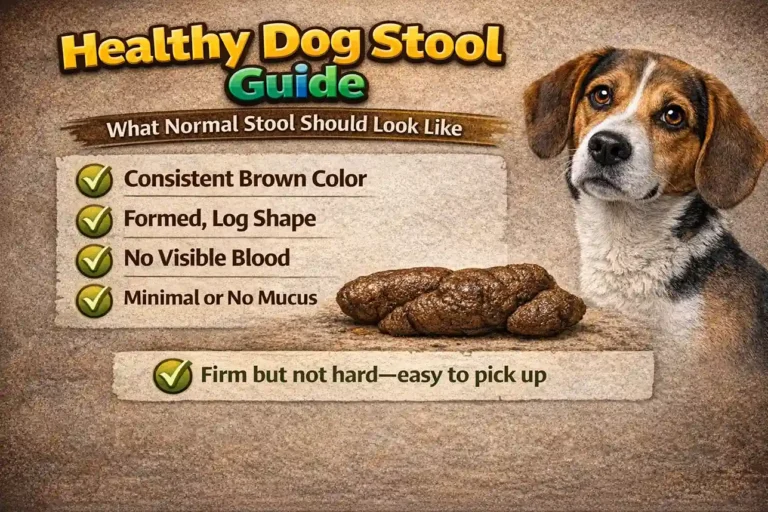
Healthy stool is usually chocolate-brown, formed, and easy to pick up—firm but not rock-hard. A normal brown color comes from bile pigments (bilirubin) released during digestion and processed through the intestines. Minor day-to-day variation can happen with diet changes, hydration, and treats, but your dog’s “normal” should stay fairly consistent.
Healthy stool signs
- Consistent brown color
- Formed “log” shape
- No visible blood
- Minimal or no mucus
- Regular bowel movement routine (for that dog)
Black or Black Tarry Stool in Dogs (Melena): What It Means
Black, tarry stool (melena) often means blood was digested before leaving the body—most commonly bleeding from the stomach or small intestine. This is not a “watch and wait” situation, especially if it appears sticky, shiny, or has a strong, unusual odor.
Common causes of melena
- Stomach or intestinal ulcers
- Ingested toxins
- Tumors or severe inflammation
- Certain medications (some pain relievers can irritate the GI tract)
Go to an emergency vet now if black stool comes with
- Weakness or collapse
- Vomiting (especially coffee-ground-like material)
- Pale gums, fast breathing, or severe lethargy
Red Blood in Dog Poop (Hematochezia): Bright Red vs. Maroon
Bright red blood usually points to bleeding in the colon or rectum (lower GI tract). It may appear as streaks on formed stool or mixed into diarrhea. Darker maroon blood can indicate bleeding slightly higher in the colon.
Common causes
- Colitis (inflammation of the colon)
- Parasites (especially in puppies)
- Sudden diet changes or food intolerance
- Stress-related diarrhea
- Acute hemorrhagic diarrhea syndrome (AHDS/HGE)—often sudden bloody diarrhea and vomiting in otherwise healthy dogs.
Key difference
- Bright red blood: lower GI bleeding
- Black tarry stool: upper GI bleeding (digested blood)
If blood persists, increases, or your dog acts sick, contact a veterinarian the same day.
Green Dog Poop: Grass, Rapid Transit, Infection, or Toxins
Green stool happens for a few reasons. Some dogs eat grass and pass a temporary greenish stool. But repeated green poop, especially with vomiting or loss of appetite, can point to rapid intestinal transit, infection, or potential toxin exposure.
Common triggers
- Grass ingestion
- Diet changes and fast transit
- Bacterial or GI infection
- Possible gallbladder involvement or bile imbalance
When green stool is concerning
- It lasts longer than 48–72 hours
- Your dog is lethargic, dehydrated, or vomiting
- You suspect toxin exposure
Yellow or Orange Dog Poop: Bile, Fast Transit, or Digestive Disease
Yellow, mustard-yellow, or orange stool often suggests bile didn’t get processed normally—either because food moved too quickly through the intestines or due to problems affecting bile flow and digestion.
Common causes
- Sudden food change or rich treats
- Food intolerance / sensitivity
- Intestinal upset or fast transit
- Possible liver, gallbladder, or pancreas issues
If yellow/orange stool continues beyond 2–3 days, keeps returning, or appears with weight loss, poor appetite, or vomiting, book a veterinary exam.
Gray, Pale, or Greasy Stool: Bile Flow & Fat Digestion Problems
Pale/gray stool can signal reduced bile pigment entering the intestines, while gray + greasy stool can suggest fat maldigestion. These patterns often connect to biliary or pancreatic issues and should be taken seriously.
Possible causes
- Bile duct or gallbladder problems
- Pancreatic disease or malabsorption
- Severe liver dysfunction
Vet soon if
- Pale/gray stool lasts more than 24–48 hours
- Stool looks greasy, bulky, or unusually foul-smelling
- Your dog is losing weight or seems painful
White Spots or Flecks in Dog Poop: Parasites vs. Undigested Food
White specks can be harmless (undigested food bits), but “rice-like” pieces are often tapeworm segments. Parasites are common—especially in puppies—and can also contribute to mucus, diarrhea, and blood. A fecal test and proper deworming plan are the safest routes.
Signs that suggest parasites
- White “rice” segments
- Mucus-covered stool
- Pot-bellied appearance (common in puppies)
- Itchy rear end or scooting
Mixed Stool Colors: What Combinations Can Signal
Dogs can pass mixed-color stool, especially after diet changes. A single unusual stool isn’t always an emergency, but patterns matter.
Examples
- Brown with green patches (grass + mild upset)
- Yellow-brown loose stool (fast transit)
- Gray-brown greasy stool (fat digestion issue)
Rule of thumb: If unusual color repeats across more than 2–3 bowel movements, treat it as a signal worth investigating.
Stool Consistency Matters Too (Vet Fecal Score Chart)
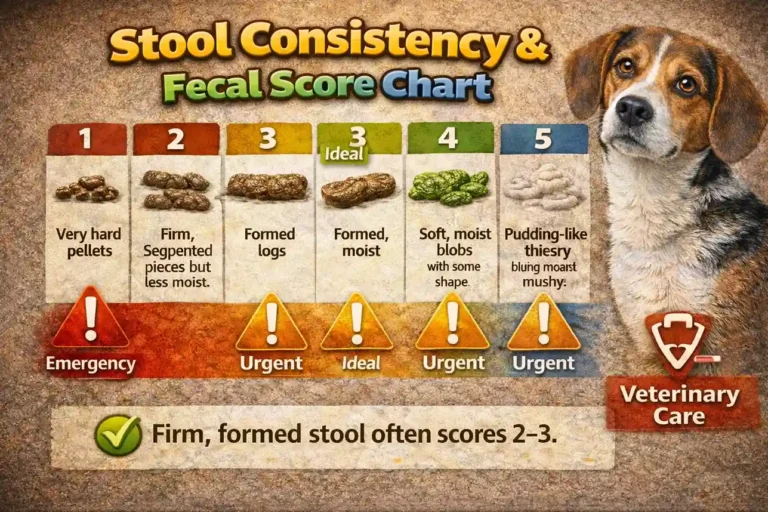
Color alone can mislead. Vets often use a fecal scoring system to describe stool consistency. On the common 1–7 scale, 1 is very hard pellets and 7 is watery diarrhea. A typical “ideal” stool is often around 2–3 (formed and easy to pick up). [6]
Why consistency matters
- Loose stool + abnormal color = higher chance of infection, parasites, inflammation, or obstruction
- Hard, dry stool can point to dehydration, constipation, or diet imbalance
How Diet Changes Stool Color (Food, Treats, Dyes, Fat)
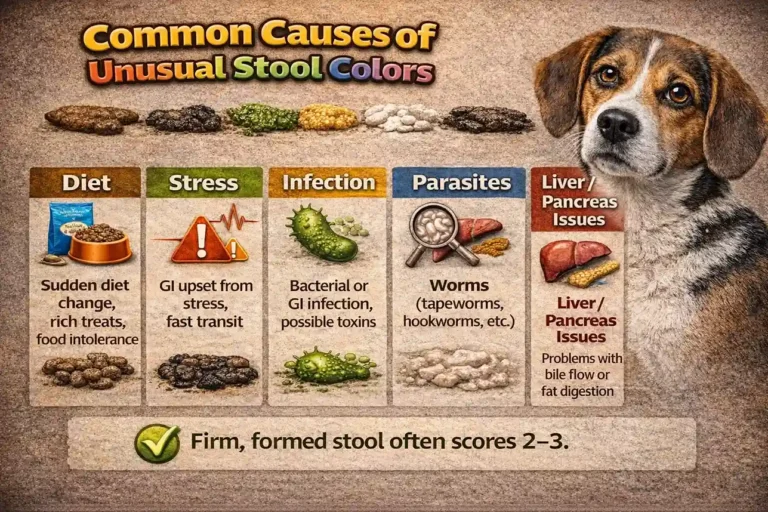
Food is one of the biggest reasons stool color changes. Many dogs react to sudden transitions, high-fat scraps, or new treats.
Diet-related causes
- Switching kibble too quickly
- High-fat foods (can trigger greasy stool)
- Artificial dyes (temporary color shifts)
- Food intolerance (often diarrhea, mucus, and recurring soft stools)
Best practice: Transition foods gradually over 7–10 days and avoid abrupt changes—especially if your dog has a sensitive stomach.
Rapid Intestinal Transit vs. Temporary Diet Color Changes
Sometimes stool turns yellow/green simply because food moved too fast for bile pigments to fully change color. This can happen with stress, mild GI upset, or dietary changes.
- Rapid transit: often yellow/green, softer stool, frequent trips outside
- Diet-only change: color shift without appetite loss, vomiting, or lethargy
If color changes persist beyond 48–72 hours, schedule a veterinary check.
When Dog Poop Color Means “See a Vet Now”
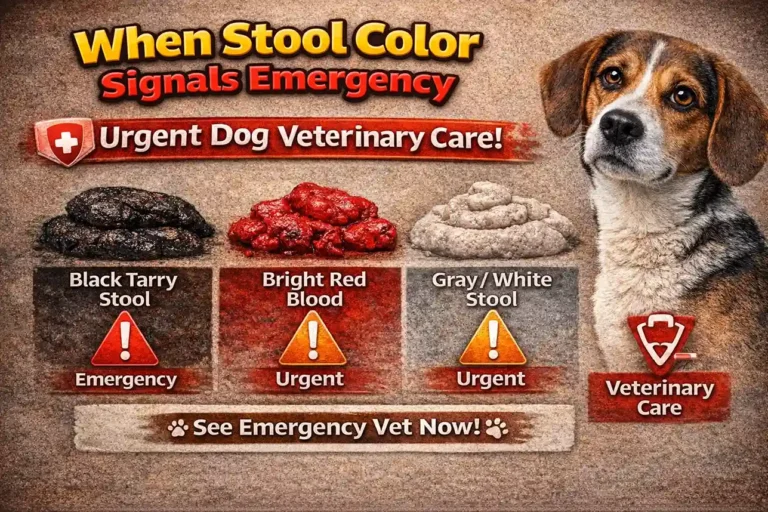
Seek urgent veterinary care if you notice any of the following:
- Black tarry stool (melena)
- Ongoing bright red blood or large amounts of blood
- Gray/white stool lasting longer than 24–48 hours
- Stool changes plus vomiting, fever, lethargy, dehydration, or refusal to eat
- Suspected foreign object or toxin ingestion
Tip for faster diagnosis: Take a clear photo (in good light) and, if safe, bring a fresh stool sample.
Vet Visit Prep: What Your Vet May Check
Depending on symptoms, your vet may recommend:
- Fecal exam (parasites, bacterial overgrowth indicators)
- Bloodwork (hydration, anemia, liver/pancreas markers)
- Imaging (X-ray/ultrasound for obstruction or organ concerns)
- Diet trial or prescription GI diet plan
This structured approach helps identify whether the problem is dietary, infectious, inflammatory, or something more urgent.
Medical Disclaimer
This article is for educational purposes only and is not a substitute for veterinary diagnosis or treatment. If your dog has bloody diarrhea, vomiting, weakness, or signs of dehydration, contact a licensed veterinarian or emergency animal hospital immediately.
Frequently Asked questions (FAQs)
1. Is green dog poop always bad?
Not always. One episode after grass eating can be normal, but persistent green stool needs a vet check.
2. What does yellow dog poop mean?
Often fast transit or bile not being processed normally. If it lasts more than 2–3 days, contact a vet.
3) Why is my dog’s poop black and tarry?
Black tarry stool can indicate digested blood (melena) from upper GI bleeding and needs urgent care.
4. My dog has bright red blood in poop—what should I do?
Take a photo, check for vomiting/lethargy, and contact your vet—same day if it continues or your dog seems ill.
5) What does gray or pale dog poop mean?
It can signal reduced bile pigment or fat digestion problems, sometimes tied to liver, gallbladder, or pancreas issues.
6. Can stress change dog poop color?
Yes. Stress can speed up transit, causing yellowish, softer stool and more frequent bowel movements.
7. What are white specks in dog poop?
They may be undigested food, but rice-like pieces often suggest tapeworm segments. A fecal test helps confirm.
8. When should I worry about one odd-colored poop?
If it’s a one-off and your dog is normal otherwise, monitor. If it repeats over 48–72 hours, call your vet.
9. Does dehydration affect stool?
Yes. Dehydration can lead to harder, drier stool and constipation.
10. Should I change food immediately if poop color changes?
Not abruptly. Sudden switches can worsen diarrhea. If your dog is sick or the color is alarming, call your vet first.
References
[1] PetMD. (2022, March 18). How should my dog’s poop look?
[2] Pumpkin. (2025, November 25). What to do if you spot black dog poop (melena).
[3] VCA Hospitals. (n.d.). Hemorrhagic gastroenteritis in dogs / acute hemorrhagic diarrhea syndrome (AHDS).
[4] American Kennel Club. (2024, July 12). How to tell if your dog’s poop is healthy.
[5] PetMD. (2009, September 30). Bile duct obstruction in dogs.
[6] PetMD. (2022, March 18). How should my dog’s poop look? (Fecal scoring discussion).
[7] Purina. (2021). Faecal scoring chart (general use) [PDF].