
Dog Diarrhea but Acting Fine: When to Worry & What to Do
Written by: Dr. Akram Khan, DVM
Medically Reviewed by: Dr. Khalid Mehmood, PhD
Last updated on October 20, 2026
If your dog has diarrhea but is acting fine, it can be confusing. They may still eat, drink, play, and seem normal, even though their stool is loose, watery, or more frequent than usual. In many mild cases, dog diarrhea with normal behavior can be monitored closely for the first 24 hours if there is no blood, black stool, repeated vomiting, dehydration, weakness, or belly pain. But acting normal does not always mean the problem is harmless. If diarrhea lasts more than 24–48 hours, gets worse, contains blood or mucus, or your dog is a puppy, senior, very small breed, or has a medical condition, call your veterinarian.
My Dog Has Diarrhea but Is Acting Fine — Should I Worry?
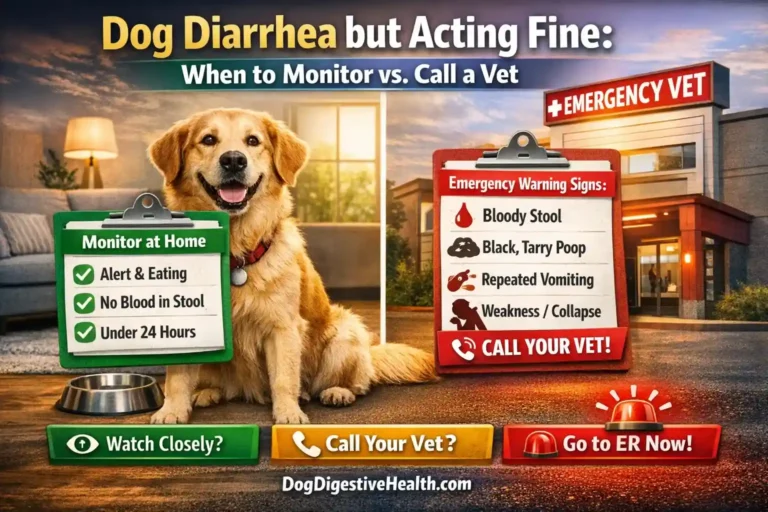
If your dog has diarrhea but is acting fine, you can usually monitor at home for up to 24 hours if your dog is bright, eating, drinking, and has no blood, black stool, vomiting, dehydration, weakness, or abdominal pain. Call your vet if diarrhea lasts 24–48 hours, becomes watery or frequent, contains blood or mucus, or affects a puppy, senior dog, small breed, or dog with health problems.
Call Your Vet If Diarrhea Lasts 24–48 Hours
You can usually monitor your dog at home if all of the following are true:
- Your dog is bright, alert, responsive
- Normal appetite and drinking
- No repeated vomiting
- No obvious abdominal pain
- No blood in stool
- No black, tarry stool
- Diarrhea started less than 24 hours ago
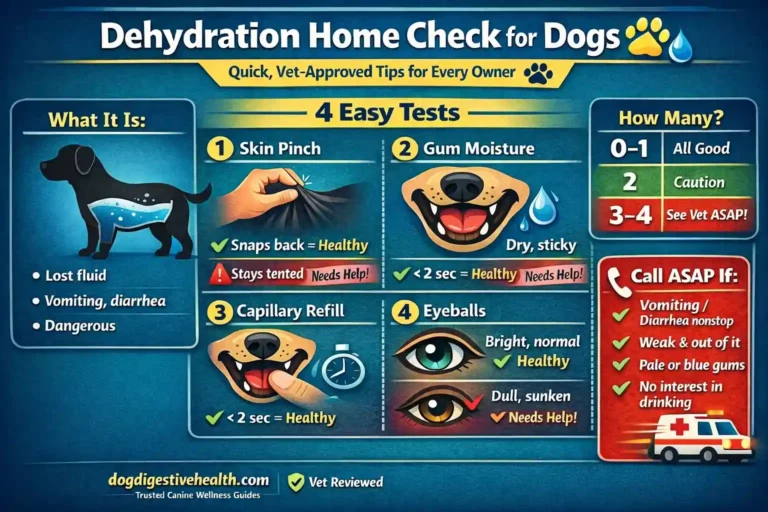
- No signs of dehydration (see the quick check below)
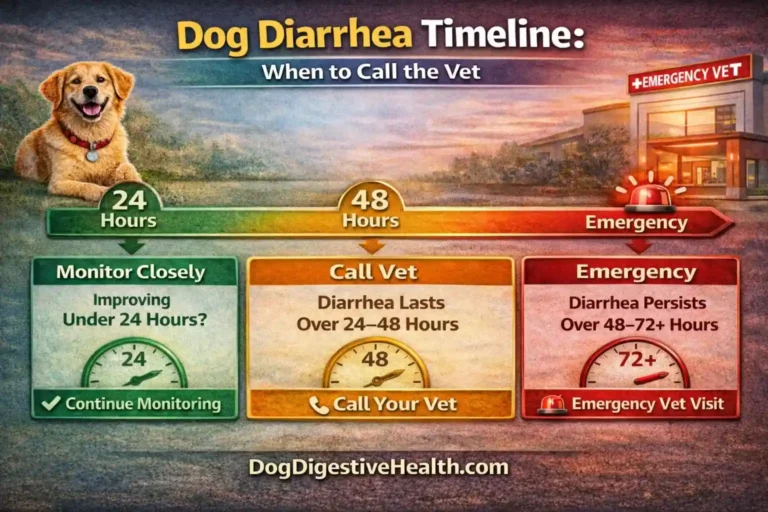
Time is one of the clearest decision triggers. If your dog’s diarrhea:
- Lasts more than 24–48 hours
- Shows no improvement
- Becomes more frequent
- Keeps returning over multiple days
…call your veterinarian.
Practical Time Thresholds
Duration | Recommended Action |
Under 24 hours, mild, acting normal | Monitor closely. |
24–48 hours without improvement | Call your vet. |
48+ hours or worsening | A vet exam is strongly recommended |
Some dogs should not be “wait and see” cases. Call your vet sooner if your dog is:
- A puppy
- A senior dog
- A toy or very small breed
- Living with chronic disease
- Immunocompromised
- On medications that affect hydration or gut stability
🚑 Go to Emergency Immediately If You See These Red Flags
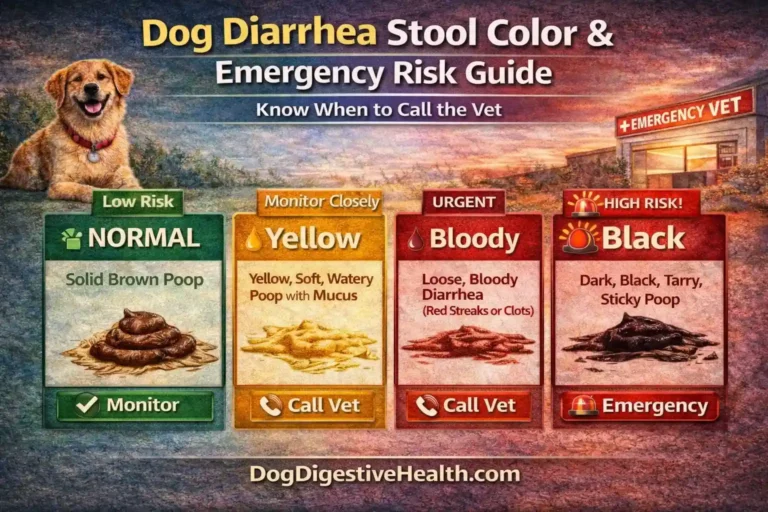
Even if your dog seems fine at first, the following signs override “monitor at home.”
Emergency Stool Red Flags
- Black, tarry stool (melena)
- Large amounts of bright red blood
- Rapid, explosive watery diarrhea
- Bloody diarrhea with vomiting
Emergency “Whole-Dog” Red Flags
- Repeated vomiting or inability to keep water down
- Severe lethargy, weakness, collapse
- Refusing water
- Abdominal pain (hunched posture, guarding belly)
- Bloated/tense abdomen
- Fever (if measured) or suspected overheating + GI signs
- Rapidly worsening dehydration
🧪 Go Immediately If Toxin or Foreign Body Is Possible
If your dog may have eaten something unsafe, diarrhea can be an early sign—and waiting can cost time.
Go urgently (or call emergency guidance) if ingestion is possible, including:
- Human medications
- Cleaning chemicals
- Toxic plants
- Rodent bait
- Toys, bones, fabric, or other foreign material
🟢 Quick Decision Summary
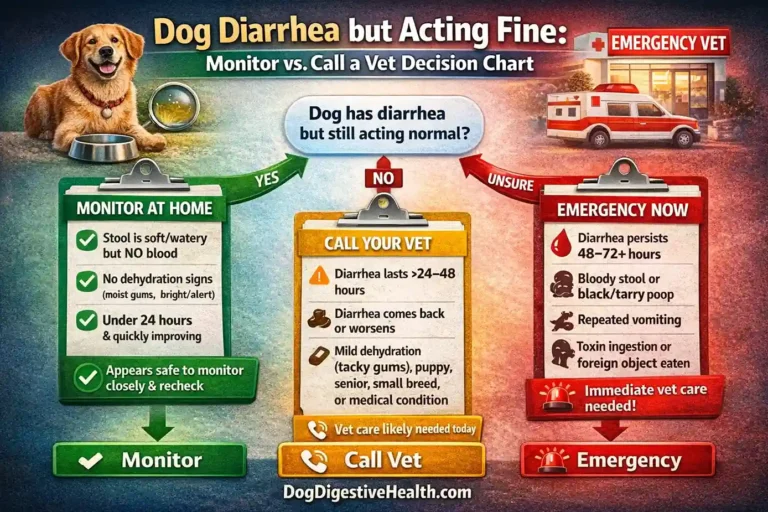
✅ Monitor at Home If:
Acting normal + no blood/black stool + no repeated vomiting + no dehydration signs + under 24 hours.
📞 Call Your Vet If:
Lasts more than 24–48 hours, OR is a high-risk dog, OR has worsening stool frequency, OR has early dehydration signs.
🚑 Emergency Now If:
Black/tarry stool, heavy blood, repeated vomiting, weakness/collapse, severe abdominal pain/bloating, suspected toxin/foreign object, or rapidly worsening dehydration.
Frequently Asked Questions (FAQs)
1) My dog has diarrhea but is acting normal — should I worry?
If it’s mild, under 24 hours, and there’s no blood, vomiting, or dehydration, monitor closely. Call your vet if it lasts beyond 24–48 hours.
2) How long is too long for dog diarrhea?
If diarrhea persists 48+ hours or worsens, a veterinary exam is recommended.
3) Is bloody diarrhea always an emergency?
Bloody or black tarry stool should be treated as urgent—contact a vet the same day, often immediately.
4) Can I wait if my puppy has diarrhea but seems fine?
Puppies dehydrate quickly. Call your vet early—within 24 hours or sooner if stool is watery/frequent.
5) What are signs of dehydration in dogs?
Sticky gums, sunken eyes, lethargy, and slow skin “snap-back” are common warning signs.
6) When should I go to the emergency vet for diarrhea?
Go now for black stool, large amounts of blood, repeated vomiting, collapse/weakness, severe belly pain/bloating, suspected toxin, or foreign object risk.
7) Should I give antibiotics for mild diarrhea?
Don’t self-start antibiotics. Many mild cases don’t need them; use medications only under veterinary direction.
Medical Disclaimer:
This content is educational and does not replace veterinary diagnosis or treatment. If symptoms worsen, red flags appear, or you’re unsure, contact a licensed veterinarian or emergency clinic right away.
References:
- Jessen, L. R., Werner, M., Singleton, D., Prior, C., Foroutan, F., Ferran, A. A., … Scahill, K. (2024). European Network for Optimization of Veterinary Antimicrobial Therapy (ENOVAT) guidelines for antimicrobial use in canine acute diarrhoea. The Veterinary Journal, 307, 106208.
- World Small Animal Veterinary Association (WSAVA) & ENOVAT. (2025). Five steps of canine acute diarrhea treatment (summary infographic).
- Scahill, K., Jessen, L. R., Prior, C., Singleton, D., Foroutan, F., Ferran, A. A., … Werner, M. (2023). Efficacy of antimicrobial and nutraceutical treatment for canine acute diarrhoea: A systematic review and meta-analysis for ENOVAT guidelines. The Veterinary Journal.
- O’Neill, D. G., Prisk, L. J., Brodbelt, D. C., Church, D. B., & Allerton, F. (2025). Epidemiology and clinical management of acute diarrhoea in dogs under primary veterinary care in the UK. PLOS ONE, 20(6), e0324203.
- Jugan, M. C., Bresciani, A., Suchodolski, J. S., Hoang, L., & Steiner, J. M. (2023). Clinical response in dogs with acute hemorrhagic diarrhea syndrome to an oral multi-strain probiotic or fecal microbiota transplant: A randomized clinical trial. Frontiers in Veterinary Science.