Can Changing Raw Food Brands Suddenly Cause a Dog to Vomit Bile?
Written by: Dr. Akram Khan, DVM
Veterinary review by: Dr. Khalid Mehmood, PhD (Assistant Professor in Clinical Veterinary Medicine)
Last medically reviewed: October 03, 2026
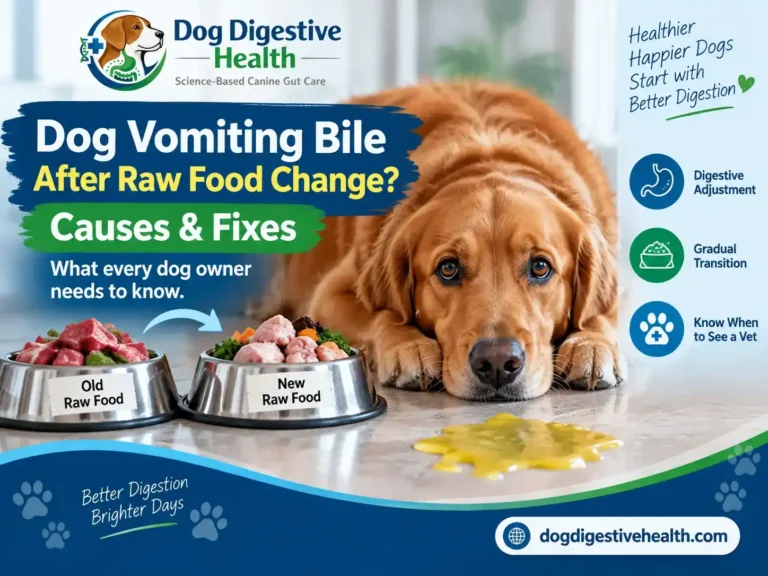
Changing your dog’s raw food brand may seem like a simple switch, especially if both products are marketed as complete raw diets. However, even small differences between formulations can affect digestion. A dog that previously tolerated one raw food brand may develop yellow bile vomiting after suddenly moving to another because the new diet can differ in fat content, protein source, bone composition, organ meat ratio, and overall nutrient profile.
While a brief digestive adjustment can happen after a diet change, repeated vomiting should not be ignored. Vomiting bile can sometimes indicate a problem unrelated to food, so understanding the difference between normal adjustment and a potential health concern is important.
Quick Answer
Yes, changing raw food brands suddenly can cause some dogs to vomit bile. The digestive system may need time to adapt when the new raw diet has different ingredients, fat levels, protein sources, or nutrient composition. A gradual transition is usually recommended to support digestive adaptation and reduce gastrointestinal upset.
Key Takeaway
Yellow bile vomiting after a raw food switch is often related to digestive adjustment rather than raw feeding itself. However, ongoing vomiting, reduced appetite, abdominal discomfort, or changes in your dog’s behavior require veterinary attention.
Why Is My Dog Vomiting Yellow Bile After Switching Raw Food Brands?
Yellow bile vomit usually occurs when bile enters the stomach and is expelled, often when the stomach is empty or irritated. After switching raw food brands, this may happen because the digestive system is responding to a new nutritional profile.
Although two diets may both be labelled as raw food, they are not necessarily identical. A new formulation may contain:
- A different animal protein such as chicken, beef, turkey, or fish
- Higher or lower fat content
- Different bone-to-meat proportions
- More or fewer organ meats
- Different levels of fibre or supplements
These changes can influence gastric emptying, digestive enzyme activity, and intestinal adaptation. A dog’s gastrointestinal tract does not simply recognise all raw diets as the same food; it responds to the specific nutrient composition of each formula.
Dietary transitions can also influence the gut microbiome, which plays an important role in digestion and intestinal health. Gradual dietary changes may allow better microbial and digestive adaptation compared with abrupt changes (1).
My Dog Was Fine on Raw Food but Vomits After a New Brand — What Changed?
Many owners are surprised when their dog reacts poorly to a new raw food brand despite having eaten raw food successfully before. The reason is that the digestive system adapts to the specific characteristics of the previous diet.
For example, your dog may have been eating a raw formula with:
- Moderate fat levels
- A familiar protein source
- A specific bone content
The new raw food may contain:
- A richer meat mixture
- Higher fat concentration
- A different protein source
- More concentrated calories
These differences may temporarily challenge digestion.
A raw-fed dog that vomits after a brand change does not necessarily mean the dog cannot tolerate raw food. In many cases, the issue is the speed of transition or the difference between the two formulations.
How Long Does Vomiting Last After Changing Raw Dog Food?
The adjustment period varies between dogs. Some dogs tolerate a new raw diet within a few days, while others require a slower transition period.
Factors that influence adjustment include:
- Age
- Previous digestive sensitivity
- The difference between the old and new diets
- Fat and protein changes
- Existing gastrointestinal conditions
If vomiting occurs only once and your dog remains active, hydrated, and interested in food, monitoring may be appropriate. However, vomiting that continues or worsens requires veterinary assessment.
Should Raw Dog Food Brands Be Changed Gradually?
Yes. A gradual transition is generally recommended when changing raw food brands.
A practical transition approach may include:
Transition period | Feeding approach |
Days 1–3 | Mostly the previous raw food with a small amount of the new formula |
Days 4–6 | Equal portions of old and new raw food |
Days 7–9 | Increase the new raw food while reducing the previous diet |
After day 10 | Fully transition if your dog is tolerating the change |
Dogs with sensitive digestion may need a slower transition. The goal is to allow the gastrointestinal tract to adapt without introducing a sudden nutritional shift.
Can a Higher-Fat Raw Food Cause a Dog to Vomit Bile?
A sudden increase in dietary fat can contribute to digestive upset in some dogs. Different raw food brands may vary significantly in fat concentration, even when they use similar ingredients.
A dog moving from a lean raw formula to a richer, higher-fat recipe may experience:
- Nausea
- Vomiting
- Reduced appetite
- Loose stools
Fat digestion is particularly important because some dogs with underlying pancreatic or gastrointestinal problems may be more sensitive to sudden dietary changes.
Is Vomiting Bile After a Raw Food Switch Normal or a Warning Sign?
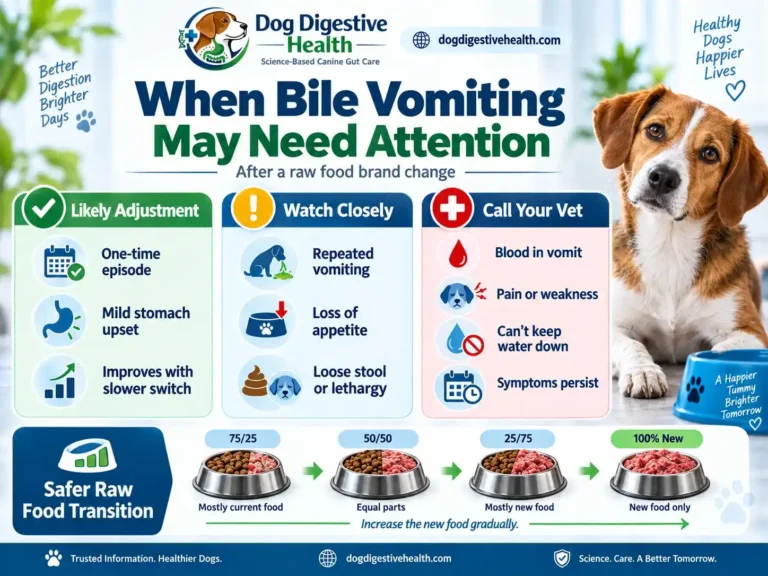
A single episode of bile vomiting shortly after changing raw food brands may occur during digestive adjustment. However, it is important to monitor your dog closely.
More consistent with adjustment | May require veterinary evaluation |
One isolated vomiting episode | Repeated vomiting episodes |
The dog remains energetic. | Lethargy or weakness |
Normal appetite and drinking | Refusal of food or water |
Symptoms improve after slowing the transition. | Symptoms continue despite dietary changes. |
Mild temporary stool changes | Blood, severe diarrhoea, or abdominal pain |
Vomiting should not be assumed to be caused by food alone because gastrointestinal disorders, infections, pancreatitis, and other medical conditions can produce similar signs.
Dog Vomiting Bile After New Raw Food Brand: What Should I Do?
If your dog vomits bile after switching raw food brands:
- Pause increasing the amount of new food.
- Consider returning temporarily to the previously tolerated diet if appropriate.
- Restart the transition more slowly.
- Monitor hydration, appetite, stool quality, and energy level.
- Record the ingredients and timing of symptoms.
Keeping notes about the old and new raw diets can help identify whether the issue is related to a specific ingredient, nutrient difference, or transition speed.
Can Changing Raw Food Affect a Dog’s Gut Micro biome?
Yes. Diet is one of the factors that influence the canine gut microbiome. Different diets can produce changes in microbial populations involved in digestion and nutrient metabolism.
Research suggests that abrupt dietary changes can alter gastrointestinal adaptation, while gradual transitions may help reduce digestive disturbances by allowing time for adjustment (1).
Raw diets can also vary considerably in nutritional composition and microbial exposure, making careful selection and appropriate handling important considerations for dog owners (2).
Final Thoughts
Changing raw food brands suddenly can cause some dogs to vomit bile because the new diet may differ in important nutritional characteristics, including fat content, protein source, bone composition, and digestibility.
The safest approach is usually a gradual transition that allows the digestive system and gut microbiome to adapt. A brief episode of vomiting may occur during adjustment, but persistent or severe symptoms should always be evaluated by a veterinarian.
Understanding your dog’s previous diet, the differences between formulations, and the pace of transition can help make raw food changes smoother and safer.
Medical Disclaimer
This article provides general educational information about canine digestive health and is not a substitute for professional veterinary advice, diagnosis, or treatment. If your dog has persistent vomiting, worsening symptoms, or signs of illness, consult a qualified veterinarian for an appropriate evaluation.
Frequently Asked Questions (FAQs)
1. Can changing raw food brands suddenly make a dog vomit bile?
Yes, a sudden raw food brand change can cause bile vomiting in some dogs because the new diet may differ in fat, protein, bone content, or other nutrients.
2. How long does a dog take to adjust after switching raw food brands?
Many dogs adjust within several days, but sensitive dogs may need a slower transition over one to two weeks.
3. Should I switch my dog’s raw food gradually?
Yes, gradual switching allows the digestive system to adapt more comfortably to the new formulation.
4. Why is my dog vomiting yellow bile after eating new raw food?
Yellow bile vomiting may occur when the stomach becomes irritated or when the digestive system is adapting to changes in the new diet.
5. When should I worry about bile vomiting after changing my dog’s food?
Seek veterinary advice if vomiting is frequent, persistent, or accompanied by lethargy, pain, dehydration, blood, or loss of appetite.
6. Can a different raw food protein cause digestive problems in dogs?
Yes, abruptly changing protein sources may cause digestive upset in some dogs.
References
- Liao P, et al. Abrupt dietary change and gradual dietary transition impact gut microbiota, metabolites, and diarrhoea incidence in puppies. Frontiers in Veterinary Science. 2023. DOI: 10.3389/fvets.2023.10135323.
- Davies RH, Lawes JR, Wales AD. Raw diets for dogs and cats: a review, with particular reference to microbiological hazards and nutritional adequacy. Veterinary Record. 2019; 184(17): e14. DOI: 10.1136/vr.105650.