
What Is the Dog Gut Microbiome? Understanding Its Role in Digestion, Immunity, and Behavior
Written by: Dr. Akram Khan, DVM
Medically Reviewed by: Dr. Zaheer Hussain, PhD
Last updated on September 03, 2026

The dog gut microbiome is a complex community of microorganisms that reside in a dog’s digestive tract, playing a critical role in dog digestion, immune health, and even behavior. This diverse ecosystem of gut bacteria in dogs helps break down food, absorb nutrients, and protect against harmful pathogens. A balanced microbiome supports healthy digestion and a strong immune system, while an imbalance, known as dysbiosis in dogs, can lead to digestive issues, skin allergies, and behavioral changes like anxiety or irritability. Understanding the importance of a balanced dog gut microbiome is key to maintaining your pet’s overall health and well-being.
What Is the Gut Microbiome in Dogs? (Veterinary Definition)
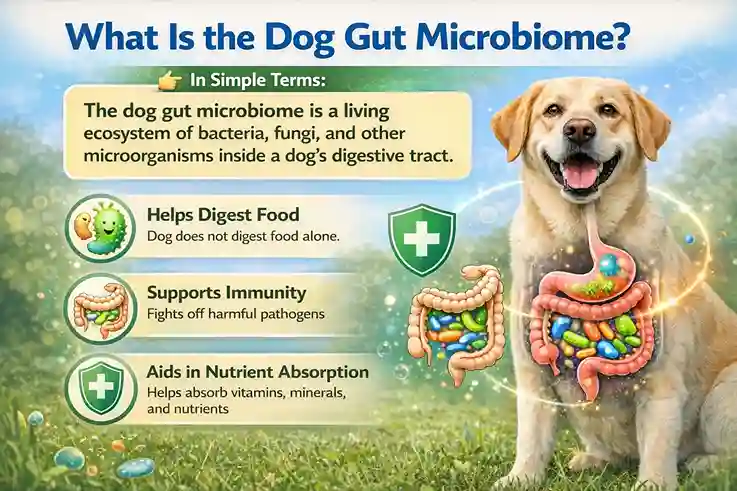
The canine gut microbiome is the collection of beneficial and potentially harmful microorganisms living mainly in the intestines. When balanced, these microbes help dogs:
- Break down food efficiently
- Absorb vitamins, minerals, and nutrients
- Defend against harmful pathogens
- Regulate immune responses
- Communicate with the brain via the gut-brain axis
A healthy gut microbiome is not sterile—it is diverse, stable, and resilient.
Where Is the Dog Gut Microbiome Located?
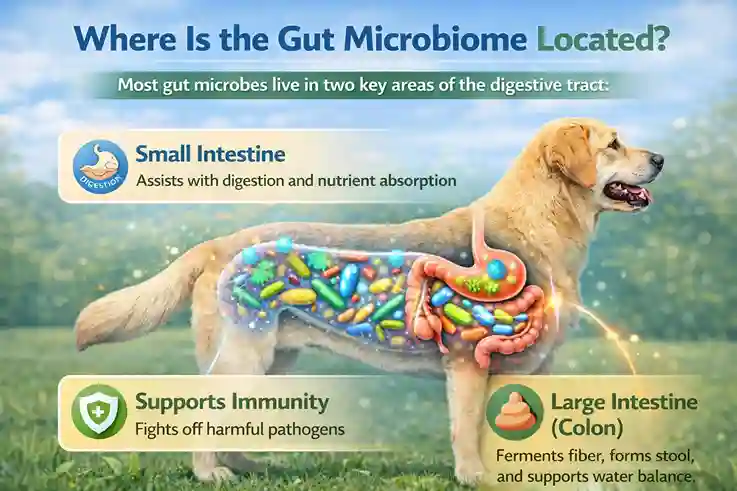
Most gut microbes live in two key areas of the digestive tract:
- Small intestine – assists with digestion and nutrient absorption
- Large intestine (colon) – ferments fiber, forms stool, and supports water balance
This microbial ecosystem functions like an internal organ, working continuously to maintain digestive health and immune stability.
Why the Dog Gut Microbiome Is So Important
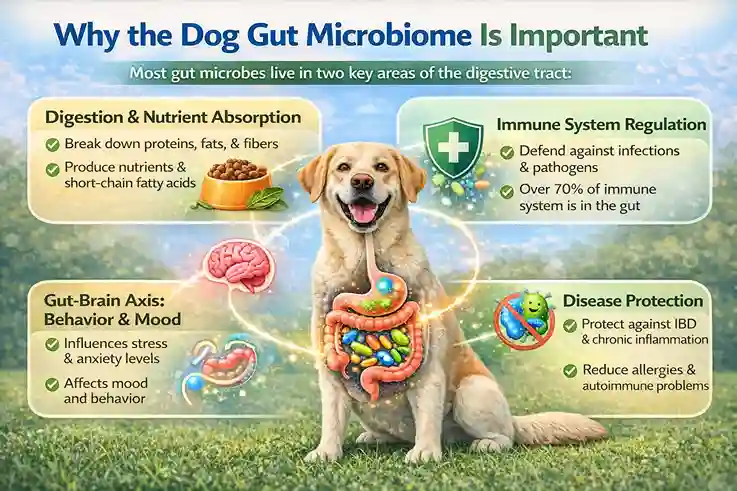
1. Digestion & Nutrient Absorption
Gut bacteria help break down:
- Proteins
- Fats
- Dietary fibers
- Complex carbohydrates
They also produce beneficial by-products (such as short-chain fatty acids) that nourish intestinal cells and enhance nutrient absorption.
2. Immune System Regulation & Disease Protection
Over 70% of a dog’s immune system is associated with the gut. A balanced microbiome:
- Trains immune cells to respond appropriately
- Prevents overreaction to harmless foods
- Protects against infections and pathogens
Microbial imbalance is strongly associated with IBD, allergies, autoimmune conditions, and chronic inflammation.
3. Gut-Brain Axis: Behavior, Mood & Stress
The gut-brain axis is a two-way communication system between the gut and the brain. Gut bacteria influence:
- Stress response
- Anxiety levels
- Mood and behavior
Dogs with poor gut health may show anxiety, restlessness, irritability, or behavioral changes alongside digestive symptoms.
What Does a Healthy Dog Gut Microbiome Look Like?
A healthy canine gut microbiome is characterized by:
- High bacterial diversity
- Stable digestion
- Normal, well-formed stools
- Strong immune defense
- Good energy, coat quality, and overall wellbeing
There is no single “perfect” microbiome—balance and resilience matter more than perfection.
Signs of an Imbalanced Gut Microbiome in Dogs
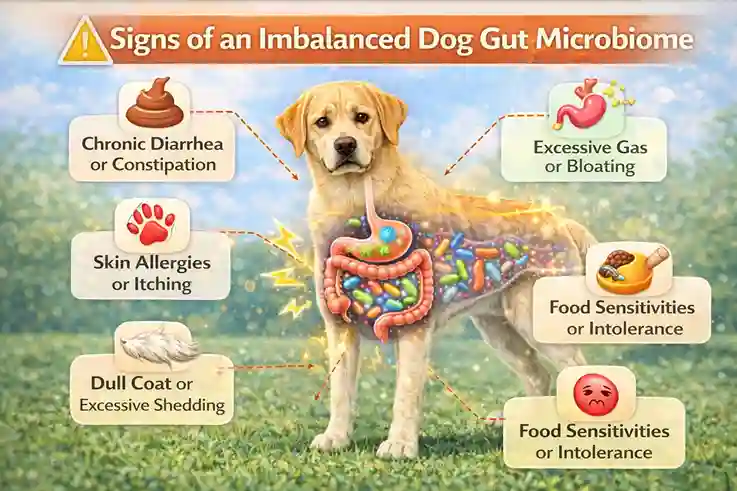
Common symptoms of gut microbiome imbalance include:
- Chronic diarrhea or constipation
- Excessive gas or bloating
- Food sensitivities or intolerance
- Skin allergies or itching
- Dull coat or excessive shedding
- Recurrent ear or skin infections
- Anxiety or unexplained behavior changes
These signs often overlap with broader digestive system disorders.
What Affects the Dog Gut Microbiome?
1. Diet (The Biggest Factor)
Diet has the strongest influence on gut bacteria composition.
- High-quality animal proteins support beneficial microbes
- Natural fiber feeds good bacteria
- Low-quality fillers, additives, and ultra-processed foods disrupt balance
Dogs are facultative carnivores, meaning diet quality matters more than dietary trends.
2. Antibiotics & Medications
Antibiotics eliminate harmful bacteria—but also destroy beneficial ones.
- Overuse may cause long-term dysbiosis
- Microbial recovery can take weeks or months
Gut support is especially important during and after antibiotic treatment.
3. Age & Life Stage
- Puppies develop their microbiome early in life
- Senior dogs often experience reduced microbial diversity
Age-related changes can affect digestion, immunity, and stool quality.
4. Stress & Environment
Stress alters gut bacteria through the gut-brain axis.
Common triggers include:
- Boarding or travel
- Illness or injury
- Environmental changes
Chronic stress worsens gut imbalance and digestive symptoms.
Gut Microbiome vs Gut Health: What’s the Difference?
- Gut microbiome = the microorganisms living in the gut
- Gut health = how well digestion, immunity, gut barrier function, and motility work together
A healthy microbiome is the foundation of good gut health—but gut health also depends on enzymes, diet, and immune balance.
How to Support a Healthy Dog Gut Microbiome
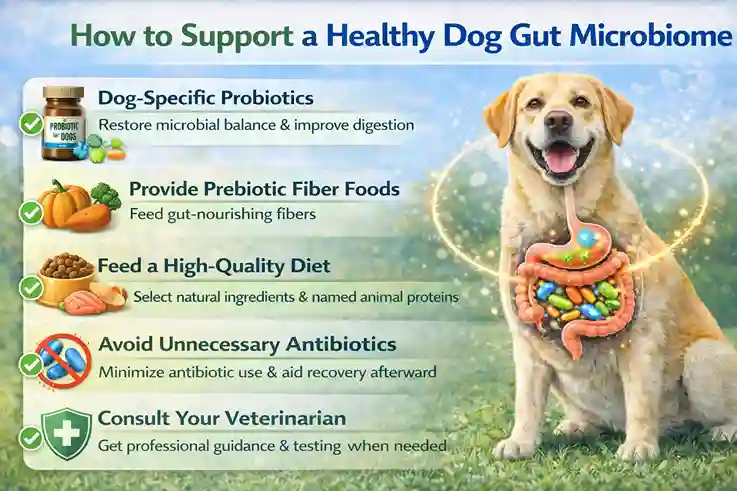
1. Probiotics for Dogs
Veterinary-formulated probiotics help:
- Restore microbial balance
- Improve digestion and stool consistency
- Support immune health
Dog-specific probiotics are safer and more effective than human products.
2. Prebiotics: Feeding Beneficial Bacteria
Prebiotics are fibers that nourish good gut microbes. Common sources include:
- Pumpkin
- Sweet potatoes
- Certain vegetables
Prebiotics enhance the effectiveness of probiotics and strengthen gut barrier function.
3. Diet Quality & Ingredient Selection
Choose dog foods with:
- Named animal proteins
- Moderate, digestible fats
- Natural fiber sources
- Minimal fillers and artificial additives
Fermented foods (such as kefir or yogurt) may help some dogs but should be used cautiously and under veterinary guidance.
4. Avoid Unnecessary Antibiotic Use
Antibiotics should only be used when prescribed by a veterinarian. Post-antibiotic gut support is essential to restore microbiome balance.
Can Dogs Have the Same Gut Microbiome as Humans?
No. Dogs and humans have different gut microbiomes due to:
- Species-specific digestion
- Different intestinal anatomy
- Unique nutritional requirements
Human probiotics or diets are not automatically safe or effective for dogs.
When to Talk to a Veterinarian
Consult a veterinarian if your dog experiences:
- Chronic digestive issues
- Persistent skin allergies
- Recurrent infections
- Unexplained weight loss
- Behavior changes linked to gut symptoms
Diagnostic testing, dietary trials, or targeted treatment may be required.
Medical Disclaimer
This content is for educational purposes only and does not replace professional veterinary advice. Always consult a licensed veterinarian for diagnosis and treatment.
Frequently Asked Questions (FAQs)
1. Is the dog gut microbiome permanent?
No. It changes with diet, age, medications, stress, and environment.
2. Can probiotics fix all gut problems in dogs?
No. Probiotics support balance but do not replace diagnosis or treatment.
3. How long does it take to improve gut microbiome health?
Improvements are often seen within 2–6 weeks, depending on the cause and intervention.
4. Are human probiotics safe for dogs?
Not always. Dog-specific probiotics are safer and better studied.
5. Does gut health affect a dog’s skin and coat?
Yes. Poor gut health commonly leads to skin issues and coat changes.