
Written by: Dr. Akram Khan, DVM
Medically Reviewed by: Dr. Khalid Mehmood, PhD
Last updated on September 02, 2026
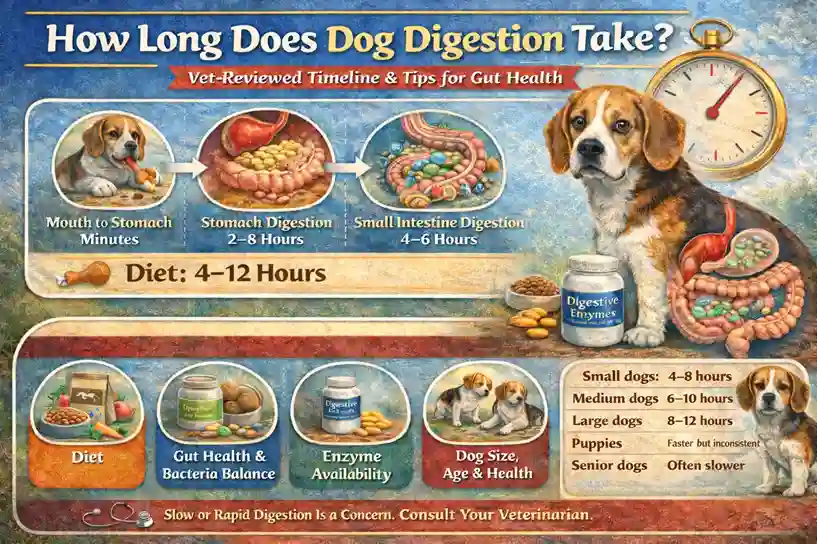
Many dog owners often wonder, “How long does dog digestion take?” Understanding canine digestion time is more than just curiosity—it helps explain bowel habits, nutrient absorption, digestive problems, and gut health in dogs. On average, dog digestion takes between 8 to 12 hours, but several factors, including dog size, breed, age, and diet can significantly affect digestion speed. Whether you’re concerned about slow digestion in dogs, want to know how long it takes for food to pass through a dog’s system, or are looking for ways to improve gut health in dogs, knowing the dog digestion timeline is important. This veterinarian-reviewed guide will walk you through the entire digestion process, from the stomach to the large intestine, and offer practical tips on supporting healthy dog digestion and preventing digestive issues like bloating, gas, and constipation.
Digestion begins as soon as food enters the mouth. Dogs generally chew minimally, but saliva helps lubricate food for swallowing. Once swallowed, food reaches the stomach within minutes.
In the stomach:
High-fat or large meals may slow stomach emptying, especially in dogs with stomach conditions or acid reflux.
The small intestine is where most digestion and absorption occur:
Efficient enzyme activity is critical at this stage.
In the colon:
Healthy gut bacteria balance influences stool quality and transit speed.
Dog Type Average Digestion Time
Small dogs 4–8 hours
Medium dogs 6–10 hours
Large dogs 8–12+ hours
Puppies Faster but inconsistent
Senior dogs Often slower
These are averages—not fixed rules.
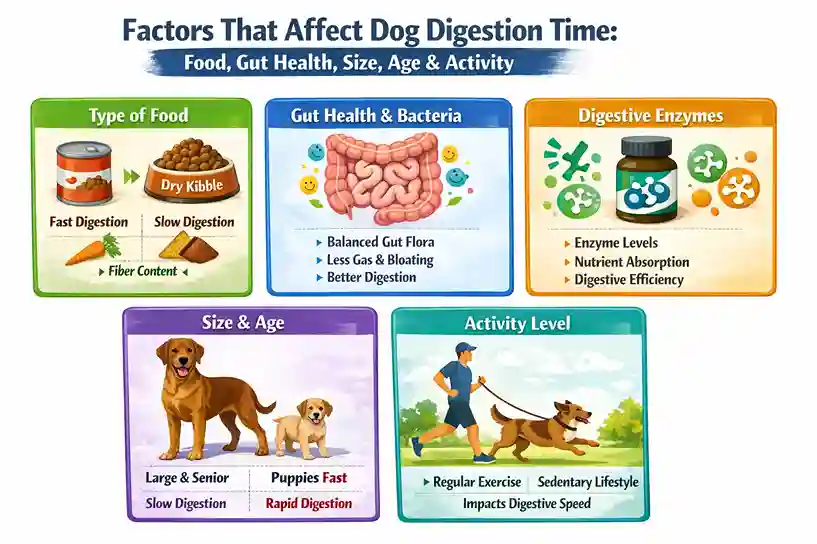
Healthy gut bacteria support:
Imbalance (dysbiosis) can either speed up digestion (diarrhea) or slow it (constipation).
Dogs with reduced digestive enzyme production may experience:
This is common in senior dogs and pancreatic conditions.
Moderate movement after meals supports digestion, while intense exercise immediately after eating may disrupt it.
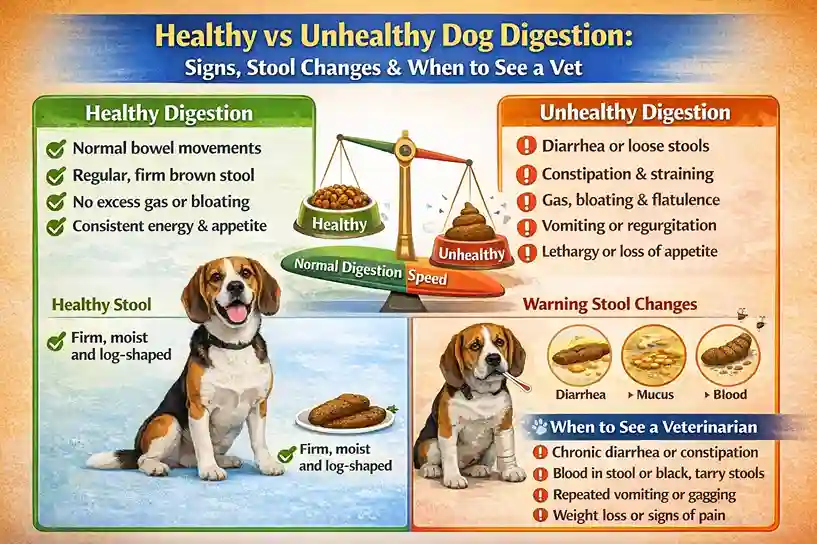
Abnormal digestion speed may cause:
Persistent symptoms should be evaluated by a veterinarian.
Gut health plays a central role in regulating digestion speed. A healthy gut ensures:
Poor gut health disrupts this balance, leading to digestive issues.
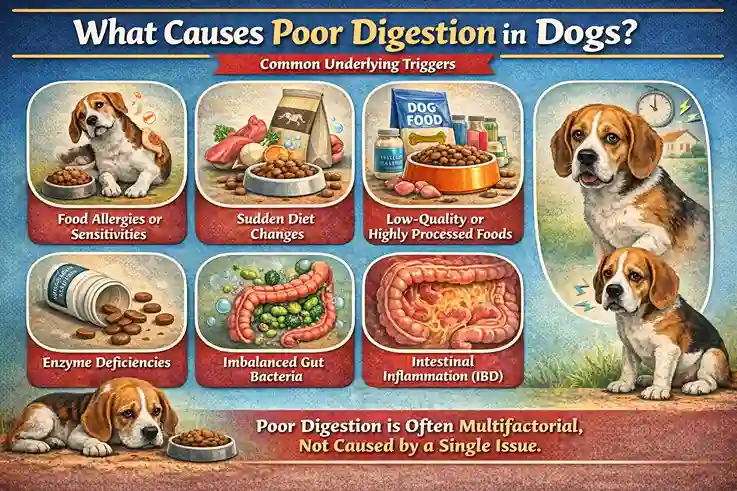
Probiotics help maintain beneficial bacteria balance, supporting:
Probiotic dog food and supplements are commonly recommended for digestive support.
Prebiotics feed beneficial bacteria, while fiber:
Enzyme supplements may help dogs with:
They support more efficient digestion and absorption.
Consult a veterinarian if digestion issues include:
Diagnosis may involve dietary assessment, blood tests, or treatment recommendations.
This article is for educational purposes only and does not replace professional veterinary advice. Always consult a licensed veterinarian for diagnosis or treatment of digestive conditions.
Most dogs defecate 6–12 hours after eating, often in the morning after the previous day’s meals.
Not always. Digestion that is too fast can reduce nutrient absorption and cause diarrhea.
Yes. Probiotics, prebiotics, and enzyme supplements can help normalize digestion speed when used appropriately.