
Why Is My Dog Pooping Bright Red Blood? Causes & Emergency Signs
Written by: Dr. Muhammad Ihsan Ullah, PhD
Medically Reviewed by: Dr. Khalid Mehmood, PhD
Last updated on September 15, 2026
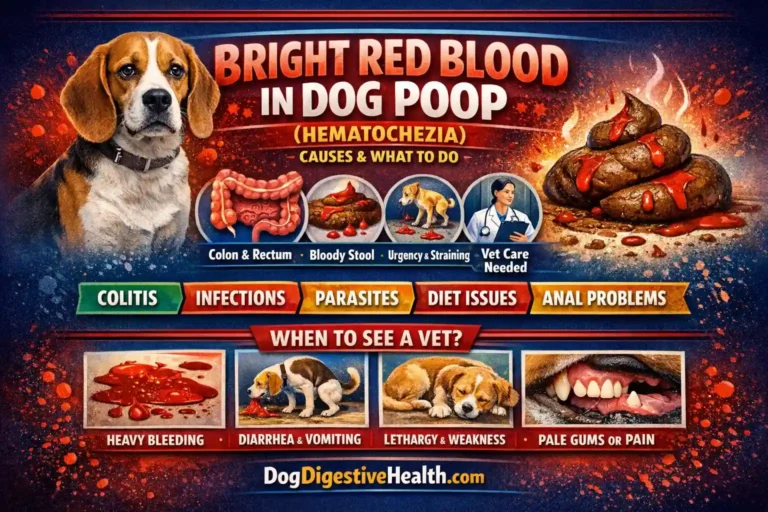
Seeing bright red blood in dog poop can be alarming, and many pet owners immediately search “why is my dog pooping bright red blood,” “bright red blood in dog stool causes,” or “is blood in dog poop an emergency” to understand what it means. This condition, known as hematochezia in dogs, usually indicates bleeding from the lower digestive tract, such as the colon or rectum. Other common searches like “dog poop with fresh blood and mucus” often reflect symptoms of colitis, parasites, or digestive irritation. Understanding what causes this type of bleeding is important for knowing when it is mild and when it requires urgent veterinary attention.
What Does Bright Red Blood in Dog Poop Mean?

- Bright red blood in dog poop usually means there is active bleeding near the end of the digestive tract.
- In many cases, the problem affects the:
- Colon
- Rectum
- Lower bowel
- Anal tissue
- Because the blood has not been digested, it remains bright red instead of turning black.
- Common lower bowel signs linked with hematochezia include:
- Mucus in dog stool
- Straining to poop
- Frequent small bowel movements
- Urgency to defecate
- Blood on the outside of dog stool
- These signs often point to large bowel diarrhea or colitis in dogs.
Why Is My Dog Pooping Bright Red Blood?
- If you are asking, “Why is my dog pooping bright red blood?” the answer can vary from mild irritation to a more serious digestive condition.
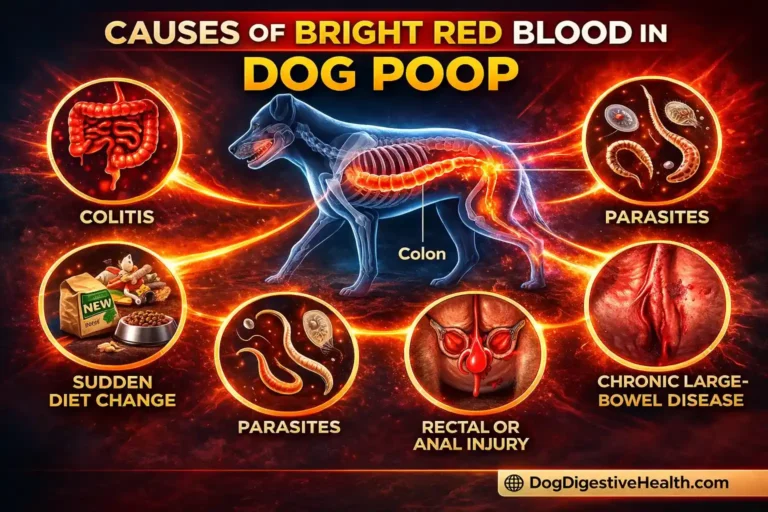
- The most common causes fall into these groups:
- Inflammation
- Infection
- Parasites
- Dietary irritation
- Anal or rectal disease
- Foreign body trauma
- Chronic intestinal disease
- In many dogs, the bleeding starts because the lining of the colon becomes inflamed and fragile.
- When stool passes through an inflamed colon, it can trigger visible bleeding.
Common Causes of Bright Red Blood in Dog Poop
Colitis in Dogs
- Colitis is one of the most common causes of bright red blood in dog stool.
- Colitis means inflammation of the colon.
- Dogs with colitis often have:
- Frequent small stools
- Mucus in stool
- Straining
- Fresh blood in poop
- Urgency to defecate
- Colitis can be triggered by:
- Stress
- Diet change
- Parasites
- Infections
- Immune-related bowel disease
Sudden Diet Change or Dietary Indiscretion
- A common reason for fresh blood in dog poop is dietary indiscretion.
- This means the dog ate something unsuitable or irritating.
- Examples include:
- Garbage
- Spoiled food
- Greasy leftovers
- Table scraps
- Bones
- A sudden switch to a new dog food
- These can irritate the colon and lead to:
- Acute diarrhea
- Mucus in stool
- Bright red blood in dog poop
Intestinal Parasites
- Parasites are an important cause of bloody stool in dogs.
- They are especially common in:
- Puppies
- Dogs with weak immunity
- Dogs with poor parasite prevention
- Common parasites include:
- Hookworms
- Whipworms
- Giardia
- Coccidia
- Parasites can damage the intestinal lining and cause:
- Inflammation
- Diarrhea
- Blood in stool
- This is one reason owners search:
- “Bright red blood in puppy stool”
- “Dog diarrhea with blood and mucus”
Acute Hemorrhagic Diarrhea Syndrome
Some dogs develop acute hemorrhagic diarrhea syndrome.
This is a more serious condition that can cause:
Sudden bloody diarrhea
Vomiting
Weakness
Rapid deterioration
- Dogs with this condition may need urgent veterinary care.
Rectal or Anal Injury
A dog may pass bright red blood after pooping because of injury near the rectum or anus.
Possible causes include:
Severe straining
Hard stool
Bone fragments
Sharp swallowed material
Local tissue irritation
- These problems may cause:
Pain during defecation
Drops of blood after stool
Anal Gland Disease
- Anal gland problems can also cause blood around the stool.
- Inflamed or infected anal glands may lead to:
- Blood spotting
- Scooting
- Licking the rear
- Discomfort while sitting
- Pain when passing stool
- This is a possible cause when there is blood on the outside of dog poop but no major diarrhea.
Chronic Large-Bowel Disease, Polyps, or Tumors
- Recurrent or persistent hematochezia may be linked with:
- Chronic colitis
- Inflammatory bowel disease
- Rectal polyps
- Masses
- Tumors
- These cases need proper veterinary assessment.
- Persistent bleeding should never be ignored.
Is Bright Red Blood in Dog Poop an Emergency?

- Sometimes yes, and sometimes no.
- A small amount of bright red blood in dog stool in an otherwise alert dog may be caused by mild lower bowel irritation.
- However, some signs make the situation more urgent.
Seek veterinary care quickly if your dog has:
- Large amounts of blood in stool
- Repeated bloody diarrhea
- Vomiting
- Lethargy
- Weakness
- Pale gums
- Abdominal pain
- Collapse
- Signs of dehydration
- Symptoms that continue beyond a short period
What to Do If Your Dog Has Bright Red Blood in Stool
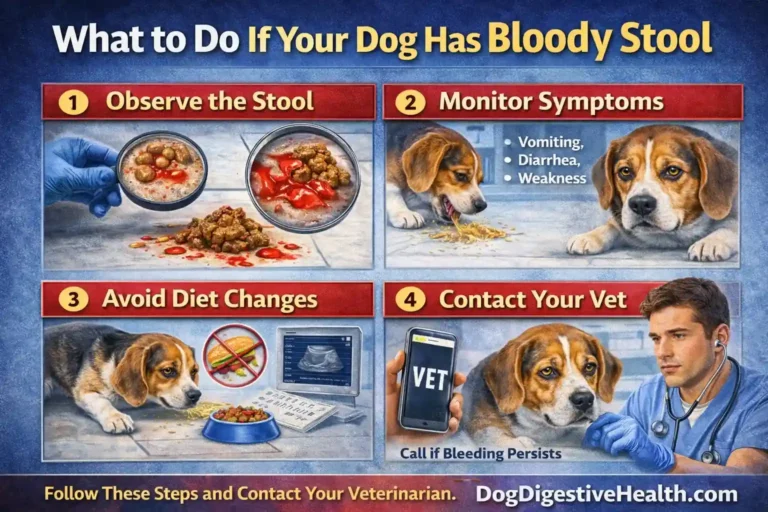
Check the stool pattern.
- Look closely to see whether the blood is:
- On the outside of the stool
- Mixed into loose stool
- Present with mucus
- Appearing as drops after defecation
Watch your dog’s overall condition.
- Monitor for:
- Vomiting
- Reduced appetite
- Low energy
- Pain
- Restlessness
- Repeated straining
- Dehydration
Avoid making the problem worse.
- Do not:
- Introduce random new foods
- Give human medicines
- Start antibiotics without veterinary advice
Contact a veterinarian.
- Even if the amount of blood seems small, speak with your vet if:
- It happens again
- Is your dog a puppy or senior
- There is diarrhea or mucus
- Your dog seems unwell
- The symptoms last more than a short time
How Vets Diagnose Hematochezia in Dogs
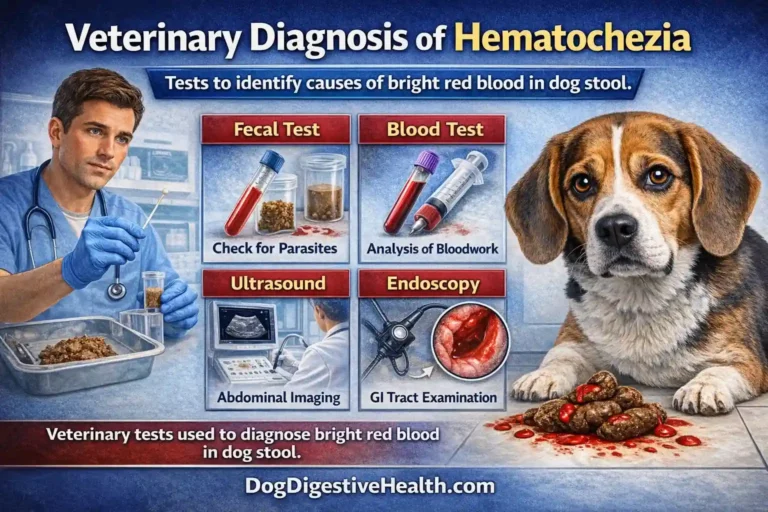
- A veterinary workup often starts with:
- Medical history
- Physical examination
- Rectal examination
- Fecal testing
- Depending on the case, a vet may also recommend:
- Complete blood count
- Biochemistry testing
- Urinalysis
- Abdominal imaging
- Ultrasound
- Endoscopy
- Biopsy
- These tests help separate common causes like parasites and acute colitis from more serious diseases.
Treatment for Bright Red Blood in Dog Poop
- Treatment depends on the underlying cause.
- There is no one-size-fits-all treatment for a dog pooping bright red blood.
Mild cases may need:
- Diet management
- Supportive care
- Parasite treatment if needed
- Monitoring
- Hydration support
More serious cases may need:
- Prescription medication
- Fluid therapy
- Hospitalization
- Advanced diagnostics
- Targeted treatment for chronic bowel disease
- Treatment for anal gland disease
- Surgery for structural problems or masses
How to Help Reduce the Risk
- Some cases cannot be fully prevented, but risk may be reduced by:
- Keeping your dog on a consistent diet
- Avoiding sudden food changes
- Preventing scavenging
- Using routine parasite prevention
- Getting early veterinary advice for diarrhea or straining
- Puppies need extra attention because they can worsen faster than healthy adult dogs.
Final Takeaways
- Bright red blood in dog poop usually means hematochezia.
- Hematochezia usually indicates bleeding from the:
- Colon
- Rectum
- Lower bowel
- Common causes include:
- Colitis
- Dietary indiscretion
- Intestinal parasites
- Acute hemorrhagic diarrhea
- Anal or rectal injury
- Anal gland disease
- Chronic lower GI disease
- Some cases are mild and short-lived.
- Others need urgent veterinary attention.
- The most important things to assess are:
- How much blood is present
- Whether your dog also has diarrhea or vomiting
- How your dog is acting overall
- Whether the symptoms are getting worse
Medical Disclaimer:
This article is for educational purposes only and does not replace veterinary diagnosis or treatment. If your dog has bloody stool, vomiting, weakness, pain, or worsening symptoms, contact a licensed veterinarian promptly.
Frequently Asked Questions(FAQs)
1. What does bright red blood in dog poop mean?
It usually means bleeding from the lower digestive tract, especially the colon or rectum.
2. Is a small amount of bright red blood in dog stool always an emergency?
Not always, but it should still be taken seriously, especially if it happens more than once or comes with other symptoms.
3. Can colitis cause fresh blood in dog poop?
Yes, colitis is one of the most common causes of bright red blood, mucus, and straining.
4. Can parasites cause bloody stool in dogs?
Yes, hookworms, whipworms, Giardia, and coccidia can all contribute to bloody stool.
5. Why is my dog pooping bright red blood but acting normal?
Mild colitis or temporary lower bowel irritation can sometimes cause this, but it should still be monitored and discussed with a veterinarian.
6. What is the difference between hematochezia and melena?
Hematochezia is fresh red blood from the lower GI tract, while melena is black digested blood from the upper GI tract.
7. When should I take my dog to the vet for bloody stool?
Go promptly if there is a lot of blood, repeated diarrhea, vomiting, weakness, pain, pale gums, or dehydration.
References:
- Merck Veterinary Manual Editorial Team. (2024). Colitis in small animals. Merck Veterinary Manual.
- Dandrieux, J. R. S., et al. (2025). Five steps of canine acute diarrhea treatment. World Small Animal Veterinary Association (WSAVA).
- Merck Veterinary Manual Editorial Team. (2022). Coccidiosis of cats and dogs. Merck Veterinary Manual.
- Merck Veterinary Manual Editorial Team. (n.d.). Disorders of the rectum and anus in cats. Merck Veterinary Manual.