
Dog Supplement Overdose: Symptoms, Treatment & When to Call a Vet
Written by: Dr. Akram Khan, DVM
Medically Reviewed by: Dr. Muhammad Saeed, PhD
Last updated on September 05, 2026
Symptoms, Risks, and Emergency Treatment
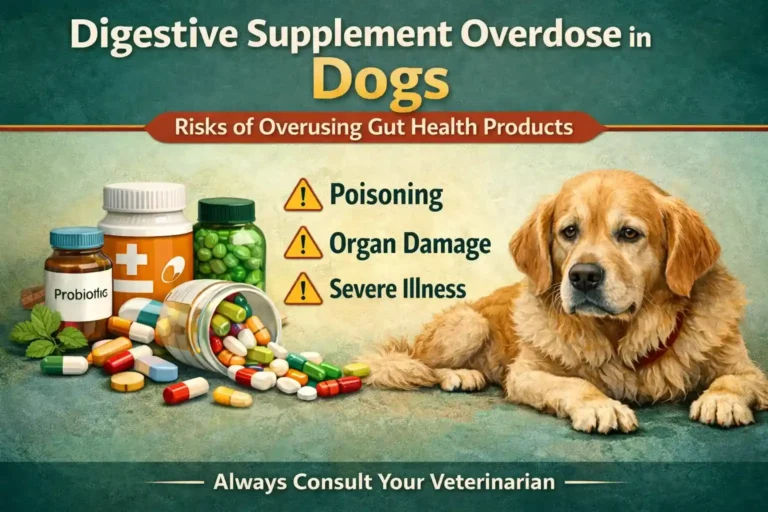
Can Digestive Supplements Be Dangerous for Dogs?
If your dog ate too many digestive supplements, you’re probably worried about what could happen next. Many pet owners search questions like “can a dog overdose on probiotics or digestive enzymes,” “what happens if a dog eats too many supplements,” or “dog supplement overdose symptoms” when faced with this situation. Digestive supplements are commonly used to support gut health and improve digestion in dogs, but taking too much can lead to serious problems, including vomiting, diarrhea, toxicity, or even organ damage. Understanding the signs of a dog overdose on digestive supplements and knowing what to do quickly can make a critical difference in protecting your pet’s health.
What Is Digestive Supplement Overdose in Dogs?
A digestive supplement overdose occurs when a dog consumes excessive amounts of products such as
- Digestive enzymes (often used for enzyme supplementation)
- Probiotics or synbiotics (beneficial bacteria to support digestion)
- Fiber supplements (helpful for regulating stool consistency)
- Herbal gut products (such as ginger or peppermint)
- Multi-ingredient digestive aids (containing combinations of enzymes, probiotics, and fiber)
Overdoses can occur due to various reasons, including incorrect dosage, unintentional consumption, or a mix-up between human medications and pet supplements.
Common Causes of Digestive Supplement Overdosing in Dogs
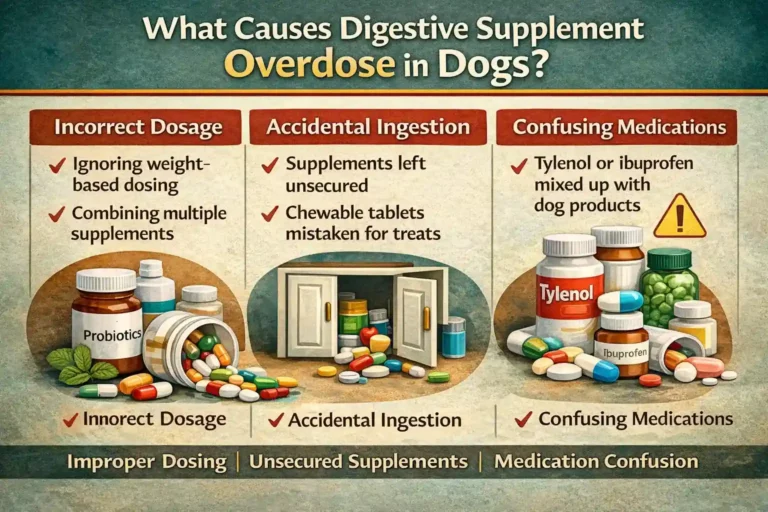
Incorrect Dosage or Administration
- Administering human-grade supplements instead of those formulated for dogs.
- Ignoring weight-based dosing guidelines.
- Combining multiple digestive products that may lead to excessive nutrient intake.
Accidental Consumption
- Leaving supplements unsecured in cabinets or open containers.
- Dogs mistakenly eating chewable pills that are not intended for them.
- Unsuspected access to supplement containers or hidden pills.
Confusion with Human Medications
- Some pet owners mistakenly administer human drugs believing they assist digestion.
- Toxic medications for dogs, such as acetaminophen (Tylenol), ibuprofen, and antihistamines, can lead to poisoning even at low doses.
⚠️ These substances are highly toxic to dogs and may cause serious damage even in small amounts.
Digestive Supplement Overdose Symptoms in Dogs
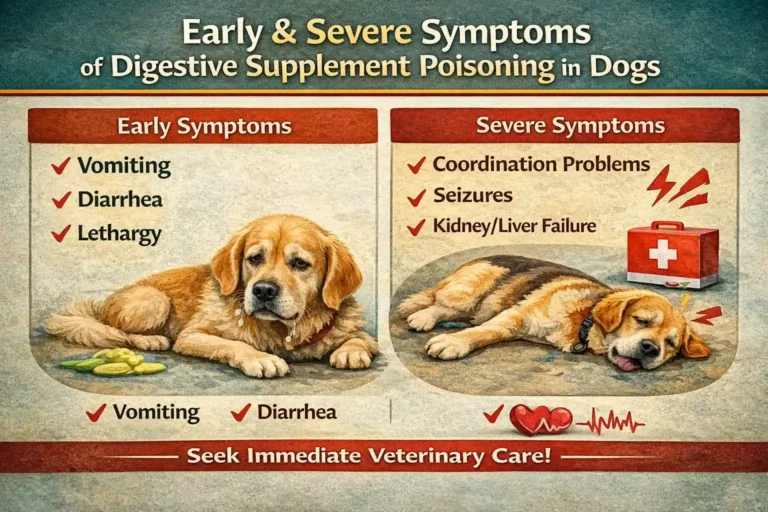
Early Warning Signs
- Vomiting or excessive salivation
- Loss of appetite
- Lethargy and tiredness
- Diarrhea or abdominal pain
Severe Dog Poisoning Symptoms
- Coordination problems or unsteady walking
- Tremors or seizures
- Rapid heart rate or irregular heartbeat
- Difficulty breathing
- Collapse and inability to stand
- Sudden behavioral changes or confusion
Advanced Toxicity Indicators
- Organ damage, particularly to the liver, kidneys, or heart
- Blood in urine or vomit
- Severe dehydration or shock
⏱️ Symptoms may show up within 30 minutes to 12 hours of ingestion, depending on the type of supplement and the amount consumed.
High-Risk Digestive Supplements & Substances
Certain supplements are more likely to cause issues if overdosed:
Digestive Enzymes
- Overuse can lead to oral ulcers, gastrointestinal irritation, and vomiting.
Probiotics (High CFU Overdose)
- Can lead to severe gas, bloating, and diarrhea.
- Risk is higher for small breeds and puppies.
Fiber Supplements
- May cause bowel obstructions, severe constipation, or dehydration if overdosed.
Herbal Digestive Products
- Can contain toxic plant extracts or have dangerous interactions with medications.
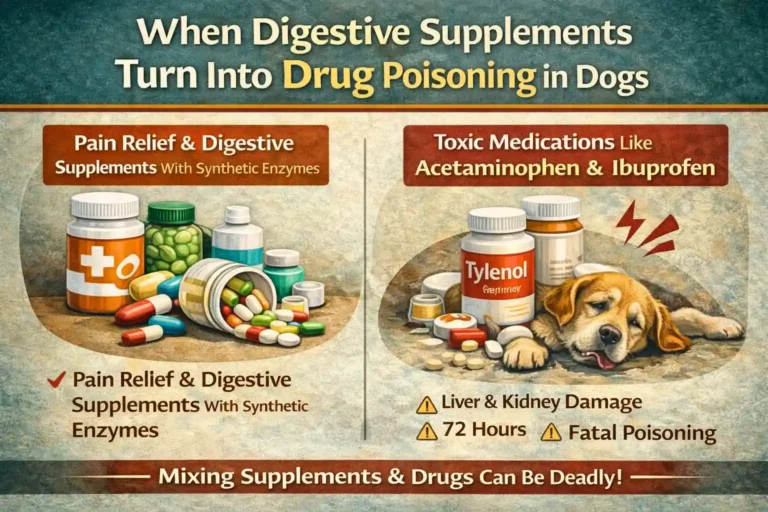
When Digestive Supplements Become Drug Poisoning
Some digestive supplements, especially those with synthetic enzymes, added pain relief agents, or combination formulations, can escalate into drug poisoning. Toxic substances such as acetaminophen (Tylenol) and ibuprofen can lead to:
- Acute liver failure
- Kidney damage
- Death within 24–72 hours after ingestion
⚠️ It’s important to never mix supplements and medications without veterinary guidance.
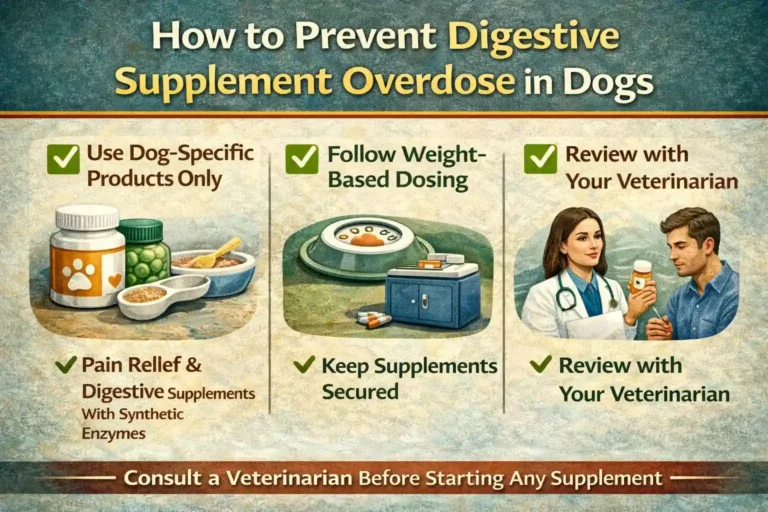
Diagnosis: How Veterinarians Confirm Overdose
🏥 Veterinary Examination
- Physical exam and detailed health history review.
- Supplement or pill identification to confirm the overdose.
🧪 Diagnostic Tests
- Blood tests to check liver and kidney markers.
- Urine testing to assess kidney function.
- Imaging if obstruction is suspected.
Early diagnosis can significantly improve survival rates and reduce the risk of long-term organ damage.
Treatment for Digestive Supplement Overdose in Dogs
Emergency Treatment (First 2–4 Hours)
- Induced vomiting (only by a veterinarian)
- Activated charcoal administration to absorb toxins
- IV fluids to maintain hydration and flush out toxins
Supportive Care
- Anti-vomiting medications to control nausea
- Pain management to keep the dog comfortable
- Electrolyte correction for dehydration
- Organ support therapy for long-term damage prevention
Severe Cases
- Hospitalization with intensive care
- Oxygen therapy for breathing difficulties
- Continuous monitoring of vital signs
Never attempt home treatment without veterinary supervision.
What to Do If You Suspect an Overdose
Immediate steps include:
- Remove access to the supplements or pills immediately.
- Do NOT induce vomiting at home.
- Call your veterinarian or emergency clinic immediately.
- Bring the container, label, or pills with you to the clinic.
⏳ Time is critical—early intervention saves lives.
Prevention: How to Avoid Digestive Supplement Overdose
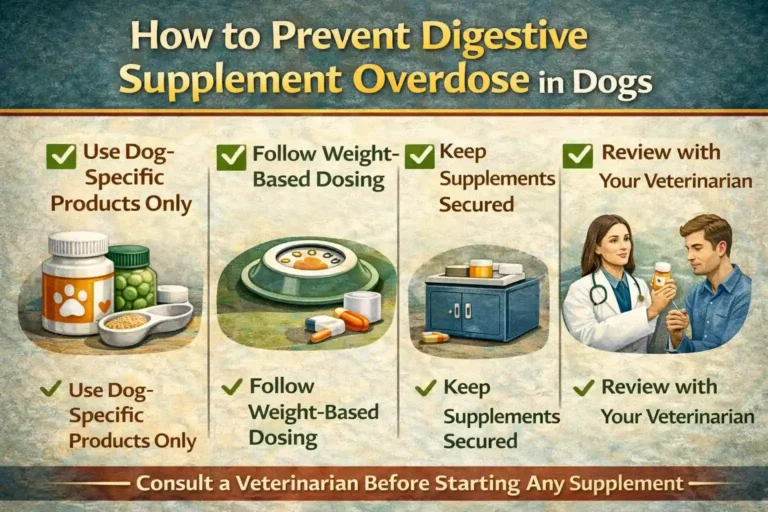
Safe Supplement Practices
- Use dog-specific products only.
- Follow weight-based dosing to prevent under- or overdosage.
- Avoid combining supplements unless approved by your veterinarian.
Storage Safety
- Store supplements in locked cabinets or safe places.
- Never leave pills unattended where dogs can access them.
Veterinary Consultation
- Review the supplements your dog is taking during annual wellness visits.
- Update your dog’s health records regularly and always ensure you’re following the correct dosages.
⚠️ Medical Disclaimer:
This article provides general educational information and is not intended to replace professional veterinary advice, diagnosis, or treatment.
Frequently Asked Questions(FAQs)
1. Can dogs overdose on digestive supplements?
Yes, overdosing on digestive supplements can cause vomiting, organ damage, and poisoning, particularly with enzymes or multi-ingredient products.
2. What are the signs of supplement poisoning in dogs?
Signs include lethargy, vomiting, loss of appetite, coordination problems, and seizures.
3. Are human digestive supplements safe for dogs?
No, human supplements may contain toxic ingredients like acetaminophen or ibuprofen, which are dangerous for dogs.
4. How long does supplement poisoning take to show symptoms?
Symptoms can appear within 30 minutes to 12 hours, depending on the type and dosage.
5. Can digestive supplements cause diarrhea in dogs?
Yes, excessive probiotics or fiber supplements can cause diarrhea, particularly in smaller dogs.
Conclusion
While digestive supplements offer great benefits for canine health, it’s critical to use them responsibly. Overdosing can result in serious health consequences, but with careful monitoring, proper dosing, and proper storage, you can avoid the risks associated with digestive supplement overdose.
References
- American Veterinary Medical Association (AVMA).(2023). Pet dietary supplements and safety considerations.
https://www.avma.org/resources-tools/pet-owners/petcare/pet-dietary-supplements - ASPCA Animal Poison Control Center.(2024). Common household toxins and supplement overdoses in dogs.
https://www.aspca.org/pet-care/animal-poison-control - Merck Veterinary Manual.(2023). Poisoning in dogs: Diagnosis and treatment.
https://www.merckvetmanual.com/toxicology - Pet Poison Helpline.(2024). Supplement toxicity and accidental ingestion in dogs.
https://www.petpoisonhelpline.com - Freeman, L. M., & Chandler, M. L.(2018). Use and misuse of dietary supplements in companion animals. Journal of the American Veterinary Medical Association, 252(2), 139–147.
https://doi.org/10.2460/javma.252.2.139