
Best Probiotic Strains for Dogs: Which Ones Actually Work?
Written by: Dr. Akram Khan, DVM
Medically Reviewed by: Dr. Muhammad Saeed, PhD
Last updated on November 12, 2026
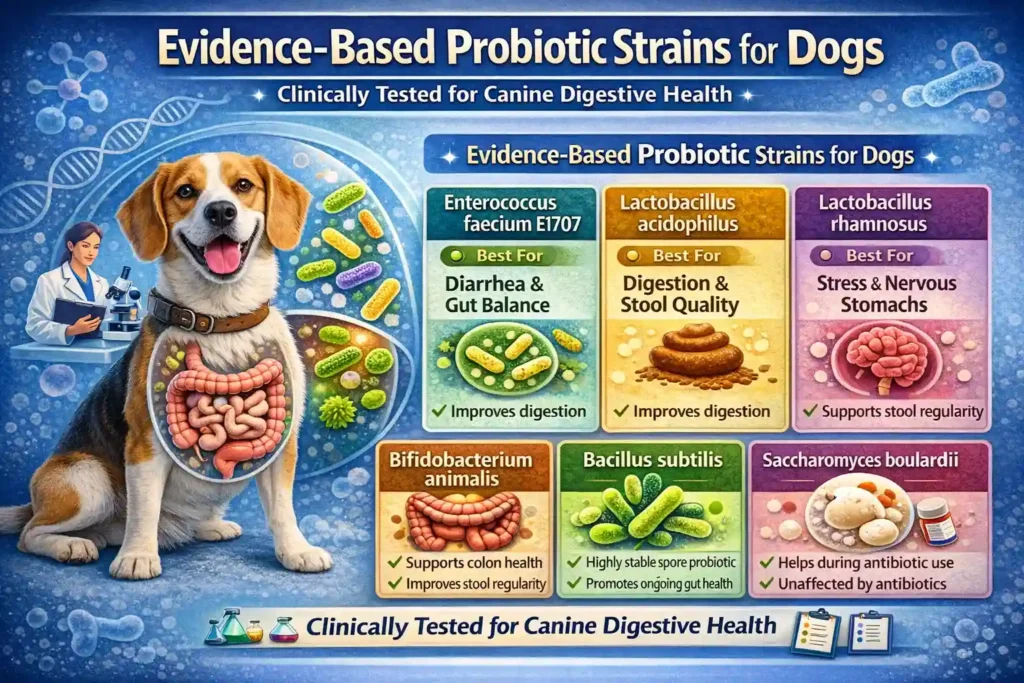
The best probiotic strains for dogs are not chosen by brand name alone; they depend on the exact strain, your dog’s digestive problem, and whether the probiotic has evidence for canine use. Strains such as Lactobacillus acidophilus for dogs, Enterococcus faecium, Bifidobacterium animalis, Bacillus subtilis, and Saccharomyces boulardii may support stool quality, sensitive stomachs, diarrhea recovery, IBD support, antibiotic-related gut disruption, and long-term digestive balance when used correctly.
What Are Probiotic Strains in Dogs?
A probiotic strain is a genetically distinct and well-defined version of a probiotic species with specific, measurable health effects.
Example:
- Enterococcus faecium → Species
- Enterococcus faecium E1707 → Specific strain
👉 Only probiotic strains tested and documented in dogs should be trusted, especially when managing digestive disorders, immune health, or antibiotic-related gut issues.
What Do Probiotics Do for Dogs?
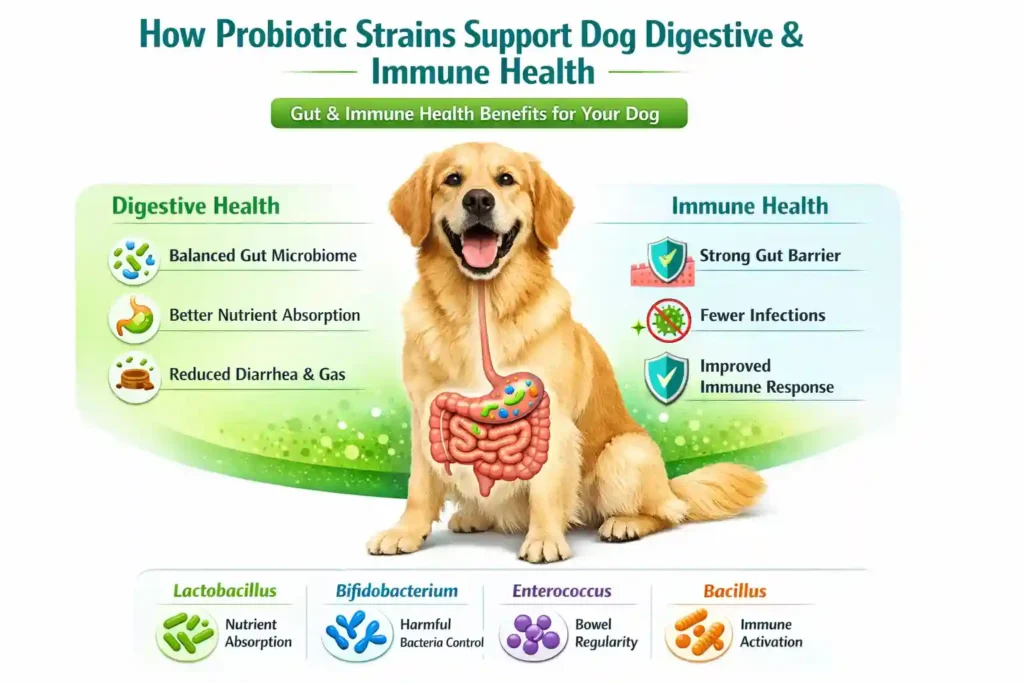
Probiotics help support a healthier balance of bacteria inside a dog’s digestive system. When the gut microbiome is balanced, dogs may have better stool quality, smoother digestion, less gas, and stronger gut barrier support.
Dog probiotics may help by:
- supporting beneficial gut bacteria
- helping maintain normal stool consistency
- supporting digestion and nutrient absorption
- helping the gut recover after antibiotics
- supporting immune activity in the digestive tract
- competing with harmful bacteria
- supporting the intestinal lining
Probiotics are not all the same. Their effects depend on the exact strain, CFU count, product quality, storage stability, dose, and the dog’s health condition.
1. Lactobacillus rhamnosus – Gut–Brain Axis & Stress-Related Digestion
Best for: Diarrhea, gut balance, immune support
Why This Strain Matters
- One of the most researched probiotic strains in canine medicine
- Commonly used in veterinary prescription diets and supplements
- Approved for pet use in the European Union
Science-Based Benefits
- Reduces acute and antibiotic-associated diarrhea
- Stabilizes intestinal microbiota
- Supports immune modulation and gut barrier health
This strain is frequently found in veterinary probiotic powders, soft chews, and digestive care formulas.
2. Lactobacillus acidophilus – Digestive Support & Nutrient Absorption
Best for: General gut health, digestion, stool quality
Key Functions
- Produces lactic acid, lowering intestinal pH
- Inhibits harmful bacteria
- Supports digestion of proteins and carbohydrates
Clinical Relevance
- Common in canine probiotic supplements
- Helps maintain stool consistency
- Useful during diet transitions and digestive maintenance
Acidophilus for Dogs Dosage: Safety Note
Lactobacillus acidophilus is commonly used in dog probiotic supplements, but there is no single acidophilus dose that fits every dog.
The right dose depends on:
- your dog’s weight
- CFU count per serving
- product form
- age and health condition
- reason for use
- whether other probiotic strains are included
- whether your dog has diarrhea, gas, or sensitive digestion
Do not guess the dose from a human probiotic label. A dog-specific probiotic with weight-based instructions is usually safer.
If your dog has chronic diarrhea, vomiting, blood in stool, IBD, pancreatitis, or immune suppression, or is a puppy or senior dog, ask a veterinarian before using higher probiotic doses.
Enterococcus faecium / SF68 for Dogs
Enterococcus faecium SF68 is one of the best-known probiotic strains used in dog digestive health products. Some owners may search for “Enterococcus lactis SF68,” but product labels should be checked carefully because SF68 is commonly associated with Enterococcus faecium in veterinary probiotic use.
This strain is often used for:
- diarrhea support
- antibiotic-associated digestive upset
- stool quality
- gut microbiome balance
- digestive recovery after stress or illness
Why it matters:
- It is commonly found in veterinary probiotic products.
- It may help support stool consistency.
- It is often used when dogs have digestive upset or gut imbalance.
Always follow the product label or your veterinarian’s advice because different products may contain different CFU amounts and dosing instructions.
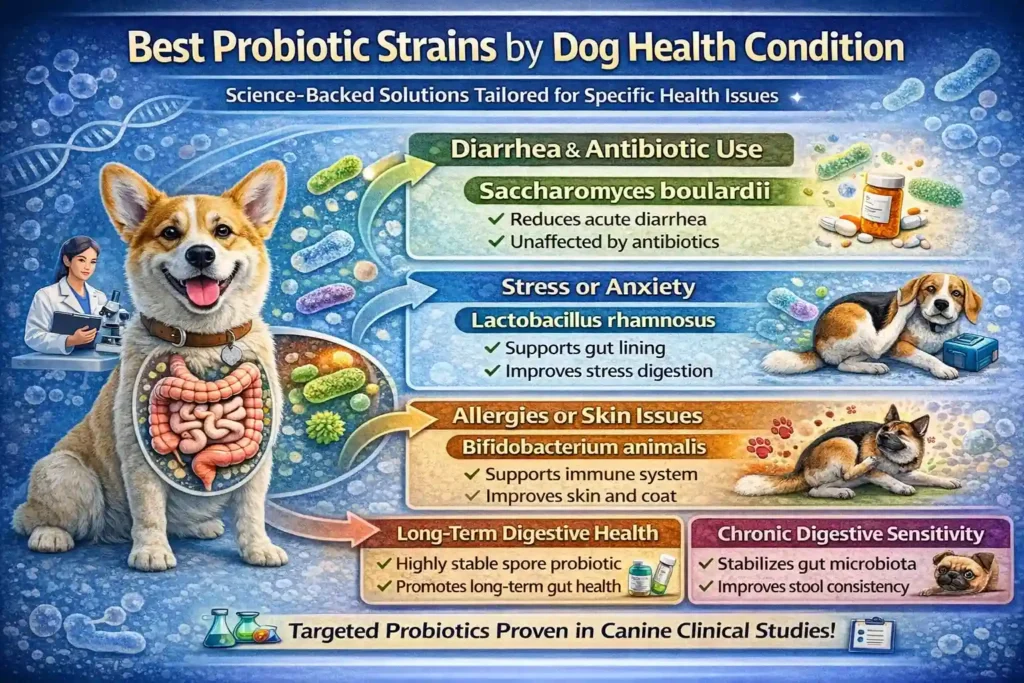
4. Bifidobacterium animalis – Colon Health & Stool Regulation
Best for: Chronic digestive sensitivity, fiber fermentation
Evidence-Based Benefits
- Supports large intestine health
- Improves stool quality and regularity
- Enhances fermentation of dietary fiber
This strain is often included in digestive-care dog foods and veterinary probiotic blends.
5. Bacillus subtilis – Stability & Long-Term Gut Support
Best for: Long-term supplementation, product stability
Why It’s Different
- Spore-forming probiotic
- Highly resistant to heat, moisture, and storage conditions
- Survives stomach acid effectively
Ideal Use
- Dry probiotic powders
- Soft chews
- Dogs requiring ongoing digestive maintenance
6. Saccharomyces boulardii – Antibiotic-Associated & Acute Diarrhea
Best for: Acute diarrhea, antibiotic-related gut disruption
What Makes It Unique
- Beneficial probiotic yeast (not a bacteria)
- Unaffected by antibiotics
- Helps protect intestinal lining and reduce inflammation
Often used short-term, sometimes under veterinary guidance, for dogs with severe or persistent diarrhea.
Probiotic Strains vs Probiotic Blends: What Works Best?
Approach | Best Use |
Single-strain probiotics | Targeted digestive or immune issues |
Multi-strain blends | Broad gut and immune support |
Both approaches can be effective when clinically relevant, dog-specific strains are used.
Probiotics, Prebiotics & Postbiotics: Understanding the Difference

- Probiotics: Live beneficial microorganisms
- Prebiotics: Fibers that feed good bacteria
- Postbiotics: Beneficial by-products produced by probiotics
High-quality canine supplements often combine all three for comprehensive gut microbiome support.
How to Choose the Best Probiotic Supplement for Dogs

Look for products that:
- Clearly list full strain names
- Are formulated specifically for dogs
- Provide CFU counts and storage instructions
- Are supported by veterinary use or research
🚫 Avoid supplements that only list “probiotic blend” without strain identification.
Are Probiotic Strains Safe for Dogs?
For healthy dogs, evidence-based probiotic strains are generally safe.
Possible mild side effects:
- Temporary gas
- Soft stools during adjustment
Dogs with immune compromise or severe illness should use probiotics under veterinary supervision.
When Do Dogs Benefit Most From Probiotic Strains?
- Acute or chronic diarrhea
- Antibiotic treatment
- Food allergies or sensitivities
- Anal gland issues and scooting
- Skin and immune-related conditions
Medical Disclaimer
This article is for educational purposes only and does not replace professional veterinary advice. Always consult a licensed veterinarian for diagnosis or treatment of digestive conditions.
Frequently Asked Questions (FAQs)
What are the best probiotic strains for dogs?
Common probiotic strains used for dogs include Enterococcus faecium, Lactobacillus acidophilus, Bifidobacterium animalis, Bacillus subtilis, and Saccharomyces boulardii. The best strain depends on the dog’s digestive issue.
What do probiotics do for dogs?
Probiotics support healthy gut bacteria, stool consistency, digestion, nutrient absorption, immune activity, and recovery after antibiotics or mild digestive upset.
Is Lactobacillus acidophilus good for dogs?
Lactobacillus acidophilus may support digestion, stool quality, and gut balance in dogs when used in a dog-specific product with proper dosing.
What is acidophilus for dogs dosage?
Acidophilus dosage depends on dog weight, CFU count, product strength, and health condition. Follow the product label or ask a veterinarian instead of guessing.
What is Enterococcus faecium SF68 for dogs?
Enterococcus faecium SF68 is a probiotic strain commonly used in veterinary digestive products. It may support stool quality, diarrhea recovery, and gut microbiome balance.
Is Enterococcus lactis SF68 the same as Enterococcus faecium SF68?
Owners may search “Enterococcus lactis SF68,” but in dog probiotic products, SF68 is commonly linked with Enterococcus faecium. Always check the exact strain name on the product label.
Are multi-strain probiotics better for dogs?
Multi-strain probiotics may provide broader gut support, but single-strain probiotics can also be useful when the strain has a specific purpose. Product quality and strain evidence matter more than strain count alone.
Can dogs take human probiotic strains?
Human probiotics are not ideal unless a veterinarian approves the exact product. Dog-specific probiotics are usually safer because they are formulated and labeled for canine use.
How long do probiotic strains take to work in dogs?
Some dogs may show stool improvement within a few days, but gut balance and long-term digestive support may take several weeks. Results depend on the strain, dose, product, and condition.
Are probiotic strains safe for puppies?
Some puppy-safe probiotics may be helpful, but puppies need careful dosing. Puppy diarrhea can become serious quickly, so ask a veterinarian if symptoms are repeated, watery, bloody, or linked with weakness.