
Do Dogs Need Prescription Digestive Supplements or Are OTC Options Enough?
Written by: Dr. Muhammad Ihsan Ullah, PhD
Medically Reviewed by: Dr. Zaheer Hussain, PhD
Last updated on September 05, 2026
Many dog owners dealing with digestive issues often search “prescription vs OTC digestive supplements for dogs” or wonder “which digestive supplement is better for dogs” before choosing a product. Questions like “Do dogs need prescription digestive supplements?”, “Are OTC digestive supplements safe for dogs?”, and “When to use probiotics or digestive enzymes for dogs?” are common when trying to manage problems like diarrhea, gas, or sensitive stomachs. With so many options available, understanding the difference between prescription and over-the-counter supplements is essential to choose a safe, effective solution tailored to your dog’s specific needs.
What Are Digestive Supplements for Dogs?
Digestive supplements for dogs are designed to support the gut microbiome, aid digestion, improve nutrient absorption, and boost the immune system. These supplements are often used to manage conditions such as chronic diarrhea, constipation, food allergies, or stress-induced digestive upset.
Common types of digestive supplements include:
- Probiotics: Beneficial bacteria that support gut balance
- Prebiotics: Fibers that feed beneficial bacteria
- Digestive Enzymes: Help break down food into absorbable nutrients
- Omega-3 Fatty Acids: Reduce inflammation and support gut health
- Multivitamins: Support overall health and immune function
Digestive supplements are used alongside dog food and other pet care supplies to improve digestive function, support immune health, and aid in post-illness recovery.
What Are Prescription Digestive Supplements for Dogs?
Prescription Digestive Supplements Explained
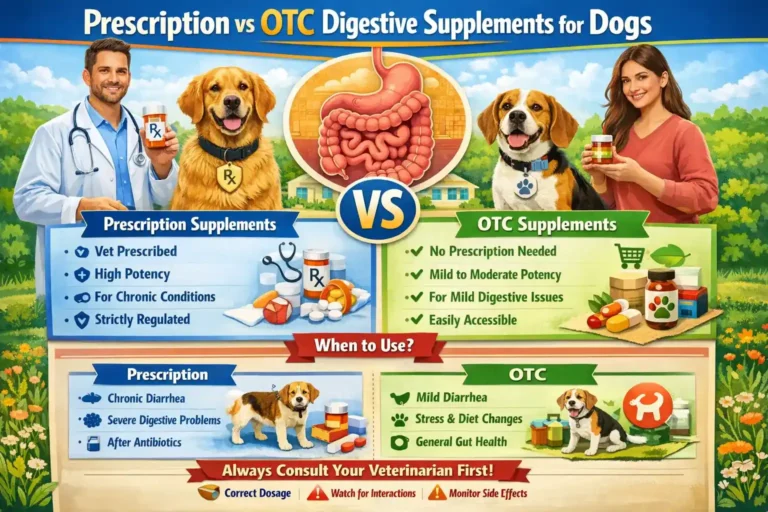
Prescription digestive supplements are veterinary-approved products prescribed by a veterinarian and dispensed under professional supervision. They are typically used for dogs with more severe digestive conditions or chronic health problems.
Conditions treated with prescription digestive supplements include:
- Chronic diarrhea
- Severe digestive diseases
- Pancreatic insufficiency
- Infections or gut imbalances
- Recovery from antibiotics or illness
- Post-injury care
Key Features of Prescription Products:
- Vet supervision required
- Higher potency and targeted formulations
- Reduced risk of harmful interactions
- Designed for diagnosed conditions
- Manufactured under strict animal feed supplement regulations
What Are OTC Digestive Supplements for Dogs?
Over-the-Counter Digestive Supplements
OTC digestive supplements are available without a prescription and are often used for less severe digestive issues. These supplements can help address mild diarrhea, stress-related digestive issues, or general gut health support.
Common OTC digestive supplements include:
- Probiotics
- Digestive enzymes
- Vitamins and minerals
- Herbal supplements
- General pet health nutrition
OTC supplements are widely available in pet stores, online retailers, and supermarkets.
Prescription vs OTC Digestive Supplements:
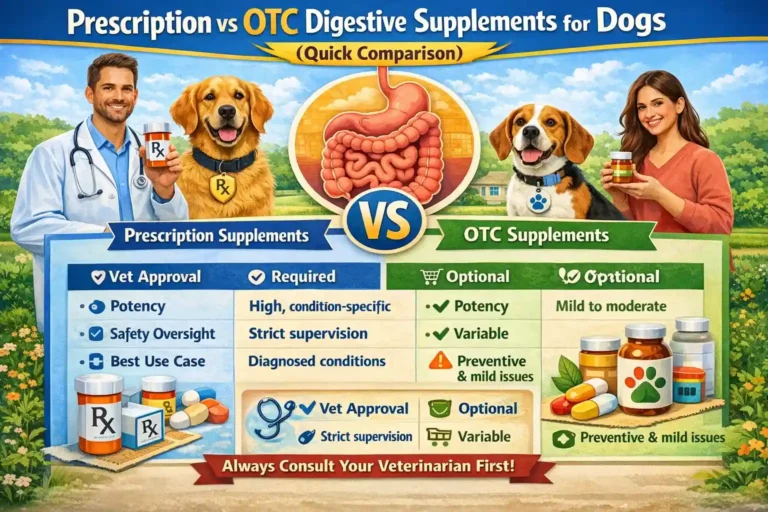
Here’s a quick breakdown of the key differences between prescription and OTC digestive supplements:
Feature | Prescription Supplements | OTC Supplements |
Vet Approval | Required | Optional |
Potency | High, condition-specific | Mild to moderate |
Safety Oversight | Strict supervision | Variable |
Use Case | Diagnosed conditions | Preventive & mild issues |
Risk of Interactions | Lower risk | Higher risk if misused |
Cost | Higher | More affordable |
Accessibility | Vet clinics | Online & pet stores |
When Do Vets Recommend Prescription Digestive Supplements?
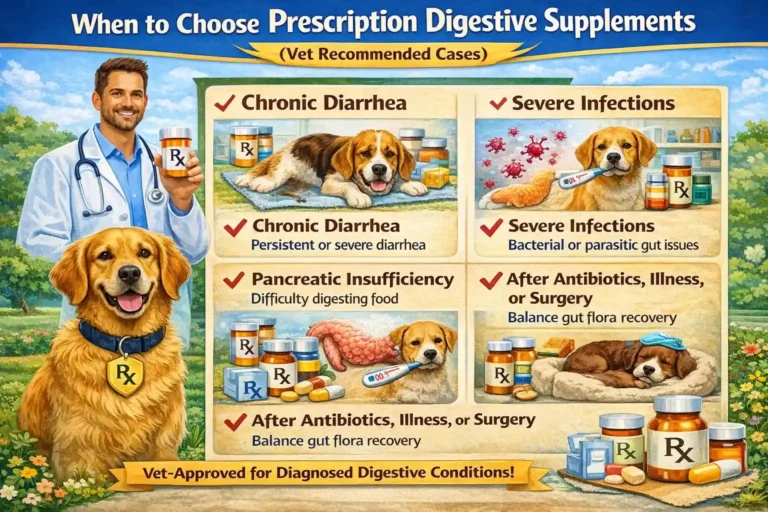
Veterinarians commonly prescribe digestive supplements for dogs with more serious or chronic digestive conditions. Some conditions that may require prescription supplements include:
- Chronic diarrhea or vomiting
- Diabetes-related digestive issues
- Thyroid imbalances
- Severe infections or infestations
- Immune-related gut disorders
- Antibiotic-associated gut damage
Prescription supplements are designed to reduce risks associated with toxicity, side effects, and drug interactions, especially for dogs who are already on medications.
When Are OTC Digestive Supplements Appropriate?

OTC digestive supplements are generally suitable for dogs experiencing mild or temporary digestive issues, such as:
- Mild diarrhea due to stress, travel, or dietary changes
- Puppy digestive support for growing dogs
- General gut health maintenance for healthy adult dogs
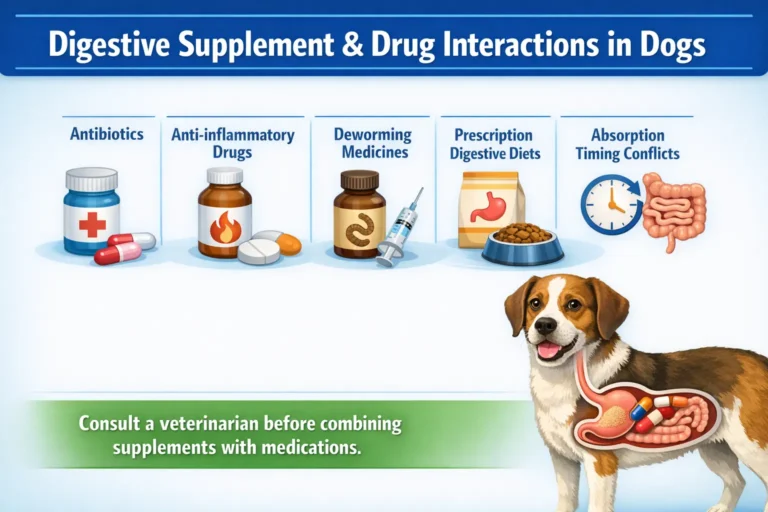
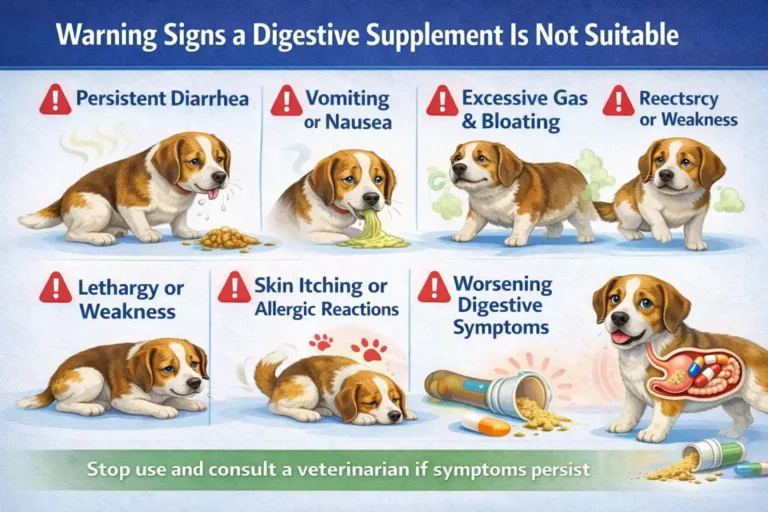
However, misuse of OTC supplements—especially when combined with medications like antibiotics, anti-inflammatories, or pain relievers—can lead to complications. It’s essential to follow correct dosage instructions and consult a vet if symptoms persist.
Safety Considerations: Risks, Side Effects, and Interactions
Both prescription and OTC digestive supplements can have risks if misused:
- Incorrect dosage can lead to under- or over-supplementation
- Drug interactions with common medications like ibuprofen or paracetamol
- Worsening of underlying conditions (e.g., allergies, infections)
- Masking serious health issues rather than addressing the root cause
- Toxicity from excessive vitamins or minerals
Always consult with a veterinarian, especially if your dog is dealing with a chronic condition or taking multiple medications.
How to Choose Between Prescription and OTC Digestive Supplements
When deciding between prescription and OTC digestive supplements for your dog, here’s a general rule of thumb:
- Mild symptoms (e.g., temporary diarrhea, stress-related digestive upset) → OTC supplements
- Persistent or severe symptoms (e.g., chronic diarrhea, infections) → Prescription supplements
- Multiple medications → Consult a vet for guidance
- Puppies, seniors, or chronically ill dogs → Prescription preferred
What to Look for on Digestive Supplement Labels
Whether you choose a prescription or OTC supplement, always check the label for the following key features:
- Active ingredients and probiotic strains (look for specific Latin names)
- Clear dosage instructions based on weight and condition
- Manufacturer transparency and contact information
- Life stage suitability (e.g., puppy, adult, senior)
- Safety approvals and compliance with pet food regulatory standards
- No artificial sweeteners or unnecessary fillers
Role of Digestive Supplements in Overall Pet Health
Digestive supplements provide broader benefits beyond gut health:
- Immune system balance
- Skin and coat health
- Improved nutrient absorption
- Stress and anxiety relief
- Post-illness recovery
- Long-term wellness management
These supplements should complement, not replace, a balanced diet, preventive care, and regular veterinary visits.
Medical Disclaimer:
This article is for informational purposes only and should not replace professional veterinary advice. Always consult a veterinarian before introducing any new supplements to your dog’s routine.
Frequently Asked Questions(FAQs)
1. Are prescription digestive supplements better than OTC for dogs?
Prescription supplements are more potent and safer for diagnosed conditions, but OTC products can be effective for mild issues.
2. Can I give my dog OTC probiotics without a vet?
Yes, for mild digestive issues, but consult a vet if symptoms persist or worsen.
3. Are digestive supplements safe long-term for dogs?
Yes, when used correctly and under supervision, digestive supplements are safe long-term.
4. Should puppies take prescription digestive supplements?
Only if recommended by a veterinarian, especially for specific health issues.
5. When should I give my dog digestive supplements?
During antibiotic recovery, stressful events, dietary changes, or ongoing digestive upset.
References:
- PetMD– Provides detailed insights into digestive supplements for dogs, comparing prescription and OTC options, their benefits, and when to use each.
[Link: https://www.petmd.com] - American Kennel Club (AKC)– Explains the importance of digestive health in dogs and the role of both prescription and OTC supplements in managing digestive issues.
[Link: https://www.akc.org] - Veterinary Partner– Offers a breakdown of prescription and OTC digestive supplements, emphasizing the importance of veterinary guidance in selecting the right option for your dog.
[Link: https://www.veterinarypartner.com] - com– Discusses when and why to use prescription vs OTC digestive supplements, and how to choose the best option for your dog’s digestive health.
[Link: https://www.rover.com]
Animal Wellness Magazine – Reviews the key differences between prescription and OTC digestive supplements, providing expert advice on which supplements are suitable for different conditions.
[Link: https://www.animalwellnessmagazine.com]