
Can Dogs Take Digestive Supplements Long Term? Safety, Side Effects & Vet Advice
Written by: Dr. Akram Khan, DVM
Medically Reviewed by: Dr. Muhammad Saeed, PhD
Last updated on October 23, 2026
Can dogs take digestive supplements long term? In some cases, probiotics, digestive enzymes, fiber supplements, or other gut-support products may be used for extended periods, but long-term use should depend on the dog’s underlying condition, diet, response to treatment, and veterinary guidance.
What Are Digestive Supplements for Dogs?
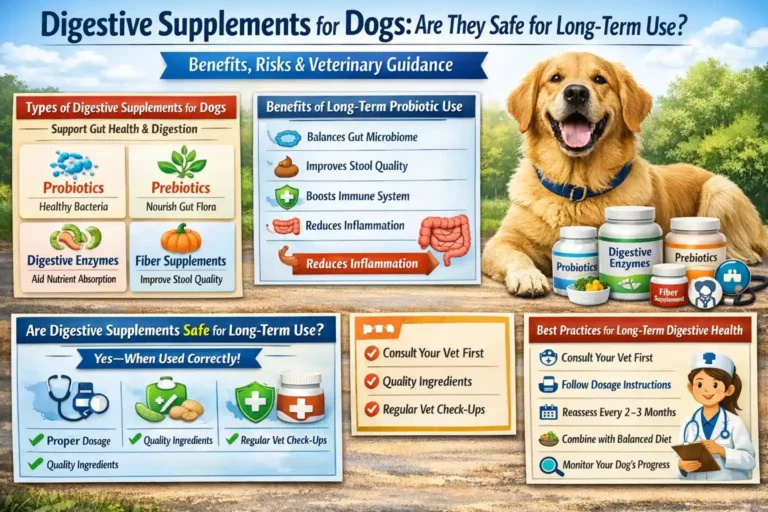
Digestive supplements are specifically designed to help dogs maintain a healthy gut microbiome, improve nutrient absorption, and support the overall gastrointestinal (GI) tract. Some common types of digestive supplements include:
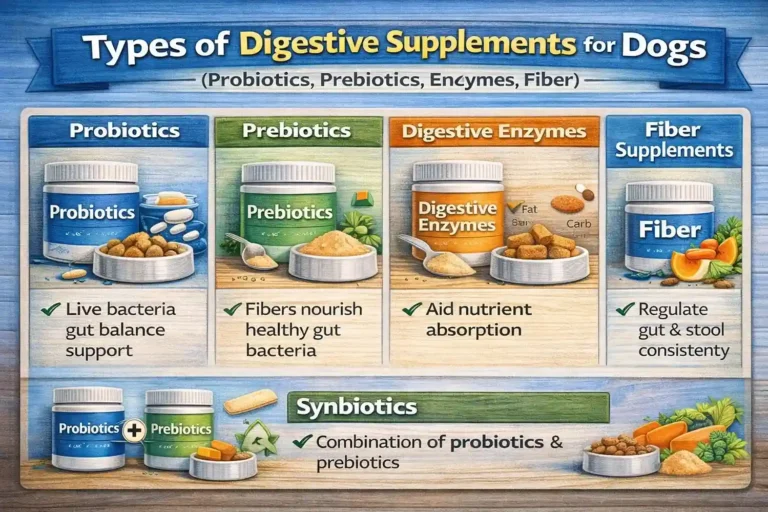
- Probiotics: Live bacteria that support gut balance and promote digestive health.
- Prebiotics: Fibers that nourish healthy gut bacteria and improve digestion.
- Digestive Enzymes: Help break down proteins, fats, and carbohydrates, improving nutrient absorption.
- Fiber Supplements: Help regulate stool consistency and bowel regularity.
- Synbiotics: A combination of probiotics and prebiotics for enhanced digestive support.
These supplements are commonly used to help dogs with chronic digestive issues, stress-related gut problems, or after antibiotic treatment that disrupts their gut microbiota.
Are Digestive Supplements Safe for Long-Term Use in Dogs?
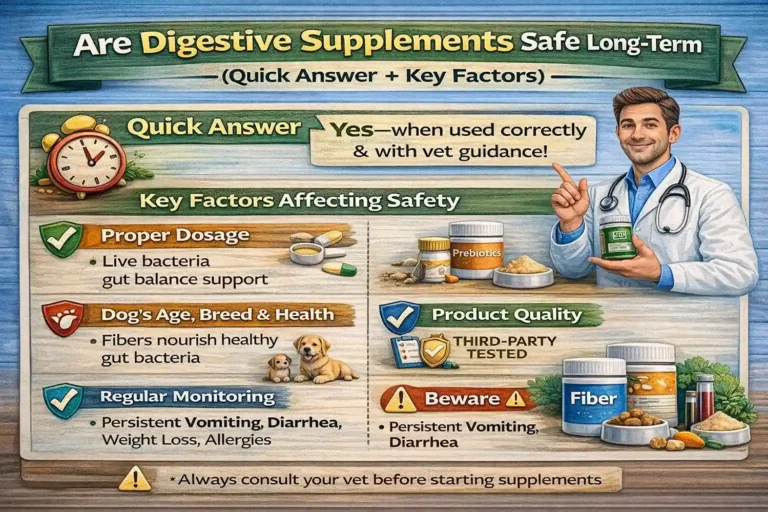
Most high-quality digestive supplements are considered safe for long-term use in dogs. However, their safety depends on several factors, including:
- Type of supplement
- Dosage accuracy
- Duration of use
- The dog’s age, breed, and overall health status
- The product’s quality and formulation
It’s important to use supplements that are specifically tailored to your dog’s needs and to follow veterinarian recommendations regarding dosage and duration.
Long-Term Use of Probiotics in Dogs: Are They Safe?
Probiotics for Dogs: A Safe Long-Term Solution?
Veterinary research and clinical experience indicate that probiotics are generally safe for long-term daily use, particularly for dogs suffering from:
- Chronic diarrhea
- IBS (Irritable Bowel Syndrome) or IBD (Inflammatory Bowel Disease)
- Food sensitivities
- Stress-related digestive issues
- Post-antibiotic gut imbalances
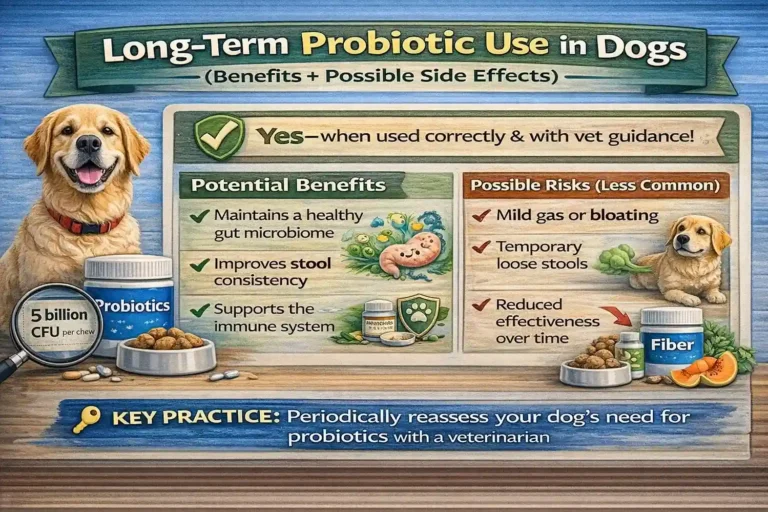
Potential Benefits of Long-Term Probiotic Use:
- Maintains a healthy gut microbiome
- Improves stool quality
- Supports the immune system
- Reduces inflammation in the GI tract
Possible Risks of Prolonged Probiotic Use:
- Mild gas or bloating
- Temporary loose stools
- Reduced effectiveness if not cycled or reassessed
🔑 Best Practice: Periodically reassess your dog’s need for probiotics with a veterinarian.
Digestive Enzymes: Can Dogs Take Them Long-Term?
Role of Probiotics in Homemade Diets for Dogs
When Digestive Enzymes Are Beneficial for Long-Term Use
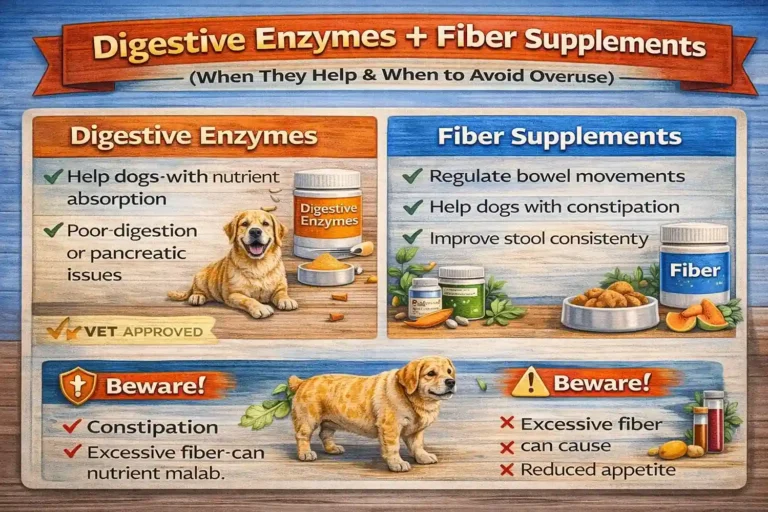
Digestive enzymes are commonly used for dogs with conditions like pancreatic insufficiency, poor nutrient absorption, or age-related digestive decline. These supplements are beneficial for senior dogs or those with chronic GI issues. When prescribed or recommended by a veterinarian, digestive enzymes are safe for extended use.
⚠️ Warning: Overuse of digestive enzymes in healthy dogs can interfere with natural enzyme production, potentially causing imbalances.
Fiber Supplements: A Long-Term Solution for Digestive Health
Are Fiber Supplements Safe for Long-Term Use?
Fiber supplements, such as psyllium, beet pulp, and pumpkin fiber, help regulate bowel movements and improve stool consistency. They are often used to help dogs with constipation or irregular bowel movements.
✔ Safe Use: Fiber supplements are safe when:
- Properly dosed
- Balanced with adequate hydration
- Matched to the dog’s condition
❌ Risks of Excessive Fiber:
- Nutrient malabsorption
- Constipation
- Reduced appetite
Signs Digestive Supplements May NOT Be Safe Long Term
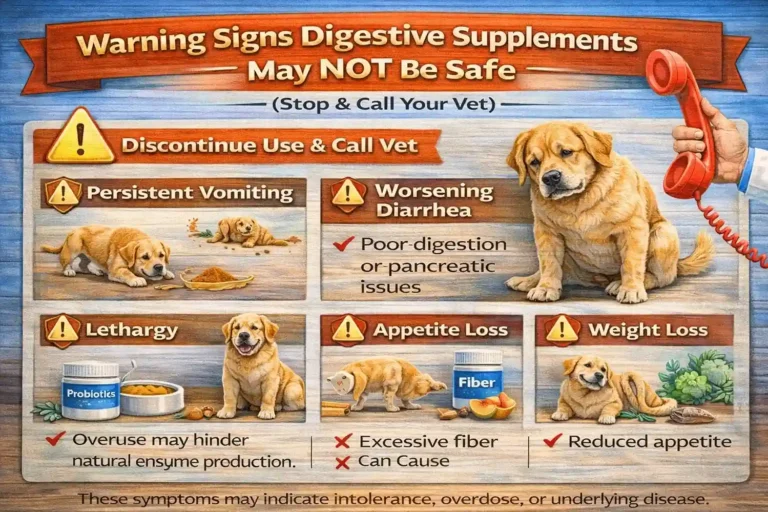
If your dog experiences any of the following, it may indicate an intolerance, overdose, or underlying disease:
- Persistent vomiting
- Worsening diarrhea
- Lethargy
- Appetite loss
- Weight loss
- New skin or allergy symptoms
If you notice any of these signs, it’s essential to stop supplementation and consult a veterinarian immediately.
Veterinary Perspective on Long-Term Digestive Supplement Use
Veterinarians generally recommend that supplements should be used as targeted treatments rather than as part of a lifelong routine. Long-term use should be accompanied by regular monitoring, which may include:
- Fecal tests
- Blood work
- Diet trials
- Review of ingredient labels
This helps ensure that the supplements are still providing benefits without causing adverse effects.
Choosing Safe Digestive Supplements for Long-Term Use
Not all supplements are created equal. Here’s what to look for on the label:
- Clearly listed bacterial strains (for probiotics)
- Guaranteed CFU count
- No unnecessary fillers or artificial additives
- Third-party testing
- Transparent manufacturer information
🚫 Avoid products with vague terms like “proprietary blend” that don’t disclose ingredient details.
Can Dogs Become Dependent on Digestive Supplements?
While dogs do not become addicted to digestive supplements, dependency can develop if the supplements are masking a poor diet or untreated medical conditions. Digestive supplements should support a balanced diet and high-quality dog food, not replace them.
How Long Should Dogs Take Digestive Supplements?
Here’s a general guideline for typical supplementation durations:
- Mild digestive upset: 2-4 weeks
- Antibiotic recovery: 4-8 weeks
- IBS / IBD: Long-term use with veterinary supervision
- Stress-related issues: As needed
- Senior digestive decline: Ongoing review
Best Practices for Long-Term Digestive Supplement Safety
To ensure your dog’s digestive health, follow these best practices:
- Consult a veterinarian before starting long-term use
- Strictly follow dosage instructions
- Reassess every 2–3 months
- Use condition-specific supplements only
- Combine with a balanced diet dietfor maximum effectiveness
Frequently Asked Questions(FAQs)
1. Can dogs take probiotics every day?
Yes, many dogs can safely take probiotics daily, especially for chronic digestive conditions.
2. Do digestive supplements cause side effects in dogs?
Side effects are rare, but they may include gas, bloating, or diarrhea if overdosed.
3. Are natural digestive supplements safer long-term?
“Natural” does not always mean safe. Quality, formulation, and dosage are more important.
4. Can I give my dog human digestive supplements?
No, human supplements can contain harmful ingredients for dogs. Always choose dog-specific products.
5. What’s the safest way to give digestive supplements to dogs?
Always follow veterinarian guidance, use condition-specific supplements, and monitor your dog’s response over time.
References
- American Veterinary Medical Association (AVMA).(2023). Dietary supplements for pets: Safety, benefits, and risks.
https://www.avma.org/resources-tools/pet-owners/petcare/pet-dietary-supplements - Merck Veterinary Manual.(2023). Probiotics, prebiotics, and digestive support in dogs.
https://www.merckvetmanual.com/management-and-nutrition/nutrition-small-animals - Hill, C., et al.(2014). Guidelines for the evaluation of probiotics in food. Journal of Food Protection, 77(4), 641–651.
https://doi.org/10.4315/0362-028X.JFP-13-392
(Widely cited for probiotic safety and long-term use principles in animals.) - Freeman, L. M., & Chandler, M. L.(2018). Use and misuse of dietary supplements in companion animals. Journal of the American Veterinary Medical Association, 252(2), 139–147.
https://doi.org/10.2460/javma.252.2.139 - WSAVA Global Nutrition Committee.(2021). Recommendations on gastrointestinal health, fiber, and supplementation in dogs.
https://wsava.org/global-guidelines/global-nutrition-guidelines/