
What to Do Right Away if Your Dog Accidentally Swallowed a Small Chicken Bone
Written by: Dr. Akram Khan, DVM
Veterinary review by: Dr. Khalid Mehmood, PhD (Assistant Professor in Clinical Veterinary Medicine)
Last medically reviewed: September 28, 2026
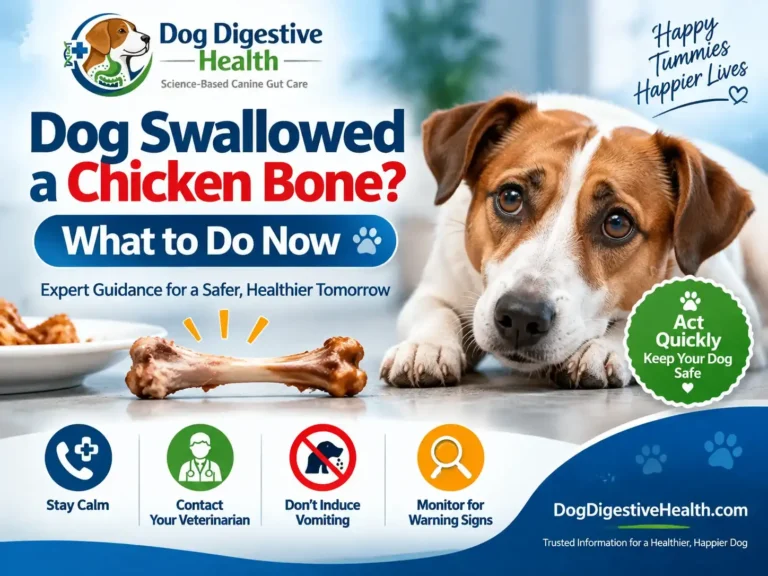
Discovering that your dog has swallowed a chicken bone can be alarming. Many dogs are quick to grab food that falls from the table, and chicken bones are one of the most common accidental ingestions reported by pet owners. The most important thing is to respond calmly and avoid actions that could increase risk.
If your dog swallowed a small chicken bone, the next steps depend on several factors, including your dog’s size, the type of bone, whether it was swallowed whole or broken into pieces, and whether your dog is showing any signs of distress.
Quick Answer
If your dog accidentally swallowed a small chicken bone, first check that your dog is breathing normally and is not choking. Keep your dog calm, do not attempt to make your dog vomit unless instructed by a veterinarian, and contact your veterinarian for advice. Seek urgent veterinary care if your dog develops breathing problems, repeated vomiting, severe discomfort, weakness, or other concerning changes.
My Dog Swallowed a Small Chicken Bone — What Should I Do Immediately?
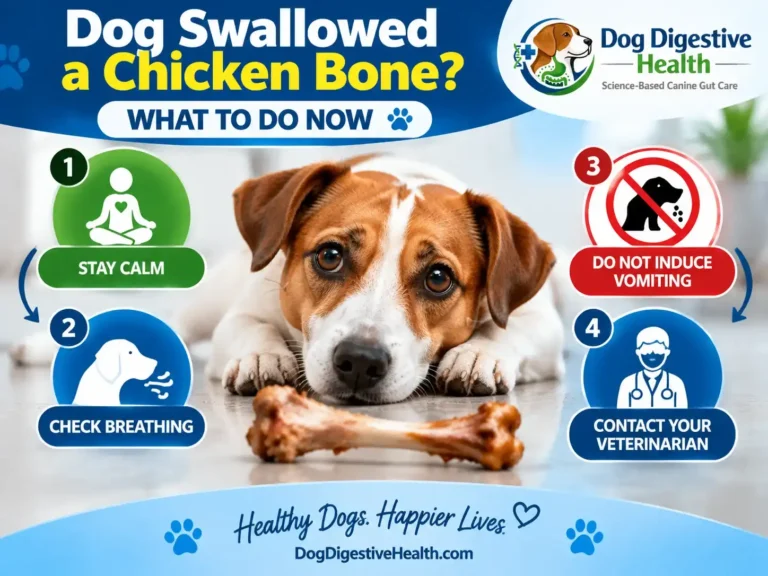
The first few minutes after ingestion are important. Avoid panic and focus on assessing your dog’s condition.
Start by checking:
- Is your dog breathing normally?
- Is your dog choking, coughing excessively, or struggling?
- Is your dog acting distressed or unable to settle?
If your dog is choking or having difficulty breathing, this should be treated as an emergency. Contact an emergency veterinary clinic immediately.
If your dog appears comfortable and is breathing normally, remove any remaining bones from your dog’s reach and contact your veterinarian for guidance.
Your veterinarian will consider important details such as:
- your dog’s weight and breed
- the size and shape of the chicken bone
- whether the bone was cooked or raw
- when the swallowing occurred
- whether the bone was chewed or swallowed whole
These factors help determine whether monitoring at home or further evaluation is appropriate.
Should I Make My Dog Vomit After Eating a Chicken Bone?
One of the most common reactions after a dog swallows a chicken bone is to try to make the dog vomit. However, this should not be attempted unless specifically advised by a veterinary professional.
When a bone is brought back through the oesophagus, sharp fragments may potentially cause additional irritation or injury. The safest approach is to contact your veterinarian and follow professional guidance based on your dog’s specific situation.
Avoid using home remedies or internet suggestions designed to force vomiting, as they may create additional risks.
My Dog Ate a Chicken Bone but Seems Fine — Should I Still Contact a Veterinarian?
A dog that appears normal after swallowing a chicken bone may still require careful observation.
Some dogs may pass small bone fragments without complications, while others may experience problems depending on the size, shape, and location of the bone. A swallowed bone can potentially become lodged or irritate areas of the gastrointestinal tract.
Veterinary studies evaluating gastrointestinal bone foreign bodies in dogs highlight that outcomes depend on factors such as the location of the bone and the clinical condition of the animal (1).
Even if your dog is acting normally, contacting your veterinarian allows you to make an informed decision based on your dog’s individual risk.
What Should I Do at Home After My Dog Swallowed a Chicken Bone?
If your veterinarian recommends monitoring your dog at home, keep the environment calm and observe your dog carefully.
Helpful steps include:
- Prevent your dog from eating any additional bones
- Avoid strenuous activity or rough play
- Keep track of when the bone was swallowed
- Note any changes in appetite, energy, or bathroom habits
It is also useful to remember what type of chicken bone was involved. A small fragment from a cooked chicken wing bone may behave differently from a larger, sharp piece swallowed whole.
How Long Should I Monitor My Dog After Swallowing a Chicken Bone?
The monitoring period depends on your veterinarian’s advice and your dog’s condition.
During observation, watch for changes such as:
- vomiting
- loss of appetite
- unusual tiredness
- abdominal discomfort
- difficulty passing stool
- blood in vomit or stool
- restlessness or signs of pain
If any concerning signs appear, contact your veterinarian promptly.
A veterinary examination may involve physical assessment and, when necessary, diagnostic tests such as abdominal radiography (X-ray) or other imaging methods to evaluate the location and possible effects of a swallowed bone.
When Should I Take My Dog to an Emergency Veterinarian After Eating a Chicken Bone?
Some situations require immediate veterinary attention.
Seek emergency care if your dog develops:
- difficulty breathing
- choking or severe gagging
- repeated vomiting
- severe abdominal pain
- weakness or collapse
- inability to keep food or water down
- sudden changes in behaviour
These signs may indicate that the swallowed bone is causing a complication that requires professional evaluation.
Can a Dog Pass a Small Chicken Bone Naturally?
Some small chicken bone fragments may pass through the digestive tract without causing problems. However, it is not possible to predict the outcome based only on bone size.
The digestive tract includes several areas where a fragment could potentially become trapped, including the oesophagus, stomach, and intestines. Research involving esophageal foreign bodies in dogs shows that rapid assessment is important when bones become lodged in sensitive areas (2).
Your veterinarian can help determine whether your dog’s situation is suitable for observation or requires further investigation.
What Information Should I Tell My Veterinarian?
Providing accurate details helps your veterinarian assess the situation more effectively.
Try to provide:
- your dog’s age and weight
- the type of chicken bone swallowed
- approximate bone size
- whether the bone was cooked or raw
- the time of ingestion
- any symptoms you have noticed
This information helps your veterinarian decide the safest next step.
Key Takeaways
If your dog accidentally swallowed a small chicken bone:
- Stay calm and check for breathing problems
- Do not induce vomiting unless instructed by a veterinarian
- contact your veterinarian for personalised advice
- Avoid unproven home treatments
- Monitor your dog closely for changes
A quick, informed response can help reduce unnecessary risks and ensure your dog receives appropriate care when needed.
Medical Disclaimer
This article provides general educational information about dogs swallowing chicken bones and is not a substitute for professional veterinary diagnosis or treatment. Every dog and situation is different; consult your veterinarian for personalized advice, especially if your dog shows signs of distress, pain, vomiting, or breathing difficulty.
Frequently Asked Questions (FAQs)
1. What should I do if my dog swallowed a small chicken bone?
Stay calm, check that your dog is breathing normally, avoid inducing vomiting, and contact your veterinarian for advice based on your dog’s size, the bone type, and when it was swallowed.
2. Should I make my dog vomit after eating a chicken bone?
No. Do not try to induce vomiting unless specifically instructed by a veterinarian, because sharp bone fragments may cause injury when brought back through the esophagus.
3. My dog ate a chicken bone but seems fine. Should I still worry?
Yes. A dog may appear normal initially, but complications can develop later. Monitor your dog closely and seek veterinary advice if any unusual signs appear.
4. Can a dog pass a small chicken bone naturally?
Some small bone fragments may pass through the digestive tract without problems, but the outcome depends on factors such as bone size, shape, and the individual dog’s health.
5. When should I take my dog to an emergency veterinarian after swallowing a chicken bone?
Seek emergency veterinary care if your dog has difficulty breathing, choking, repeated vomiting, severe abdominal discomfort, weakness, or sudden changes in behavior.
References
- Barash NR, Lashnits E, Kern ZT, Tolbert MK, Lunn KF. Outcomes of esophageal and gastric bone foreign bodies in dogs. Journal of Veterinary Internal Medicine. 2022;36(2):500–507. doi:10.1111/jvim.16383.
- Bongard AB, Furrow E, Granick JL. Retrospective evaluation of factors associated with degree of esophagitis, treatment, and outcomes in dogs presenting with esophageal foreign bodies. Journal of Veterinary Emergency and Critical Care. 2019;29(5):528–534. doi:10.1111/vec.12875.
- American Kennel Club. What to Do If Your Dog Eats a Chicken Bone. American Kennel Club Veterinary Expert Advice. https://www.akc.org/expert-advice/health/what-to-do-dog-eats-chicken-bone/