What Happens If a Dog Ingests a Whole Corn on the Cob?
Written by: Dr. Akram Khan, DVM
Veterinary review by: Dr. Khalid Mehmood, PhD (Assistant Professor in Clinical Veterinary Medicine)
Last medically reviewed: October 03, 2026
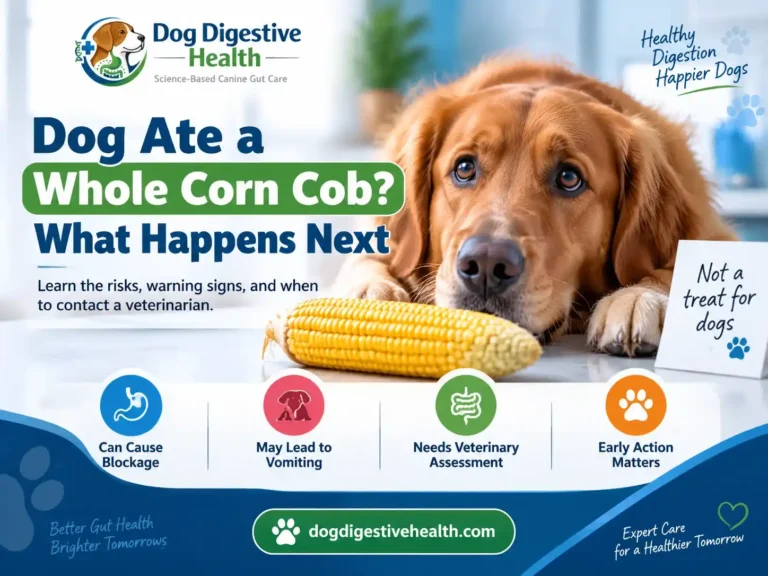
A dog swallowing a whole corn on the cob is not the same as eating a few corn kernels. While corn kernels are generally not considered dangerous for most dogs, the cob itself is a tough, fibrous object that cannot be properly digested. When swallowed whole, it may become trapped in the gastrointestinal tract and develop into a foreign body obstruction, which can require veterinary treatment (Cornell Vet College).
A corn cob ingestion should be taken seriously, even if your dog appears comfortable at first. Some dogs may not show immediate signs because the obstruction may develop as the cob moves through the digestive system.
A swallowed whole corn cob may become a gastrointestinal foreign body because the digestive system cannot break down the hard fibrous material. If the cob becomes lodged in the stomach or intestines, it can interfere with normal movement of food and fluids through the digestive tract. Contacting a veterinarian early is recommended because symptoms may appear later rather than immediately (1).
What happens if a dog eats a whole corn cob?
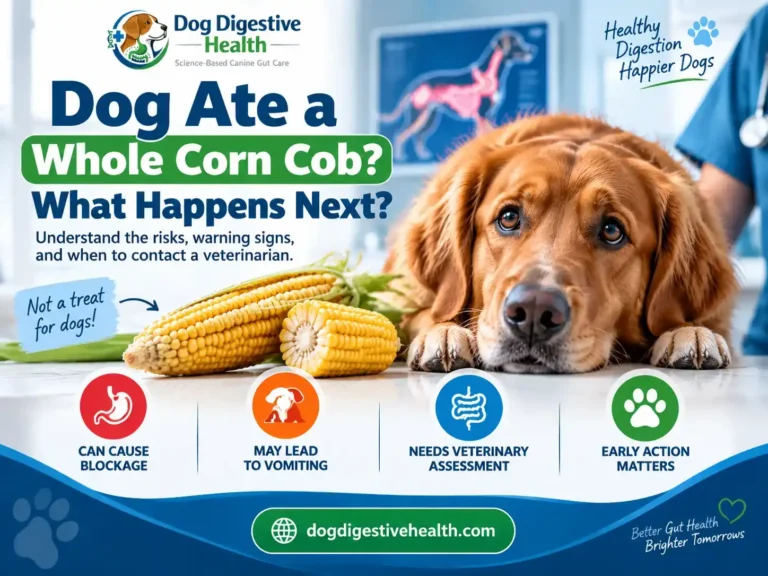
When a dog eats a whole corn cob, the main concern is not poisoning but physical blockage. The cob may remain in the stomach or travel into the small intestine, where its size and shape can prevent normal passage.
The digestive tract relies on coordinated muscular movements called peristalsis to move food forward. A large, indigestible object such as a corn cob can disrupt this process and may cause a partial or complete gastrointestinal obstruction.
The risk depends on several factors, including:
- The size of the corn cob swallowed
- Whether the cob was swallowed whole or chewed into small pieces
- The dog’s body size
- The location of the cob within the digestive tract
Type of ingestion | Digestive concern | Typical risk level |
A few loose corn kernels | Usually digested normally in healthy dogs | Lower concern |
Small chewed pieces of cob | May still cause irritation or blockage | Moderate concern |
Whole corn cob swallowed | Possible gastrointestinal foreign body obstruction | Higher concern |
A large cob piece swallowed by a small dog | Increased chance of becoming lodged | Higher concern |
My dog swallowed a corn cob but seems fine. Should I worry?
Yes. A dog may look completely normal shortly after swallowing a corn cob, but this does not always mean the object has passed safely.
Corn cobs can move through the stomach before becoming stuck further along in the digestive tract. Because obstruction signs depend on the location and severity of the blockage, symptoms may not appear immediately.
If your dog swallowed a whole corn cob, contact your veterinarian and provide details such as:
- When the ingestion happened
- Whether the cob was whole or broken
- Your dog’s weight and breed
- Any changes in appetite, energy, vomiting, or bowel movements
Can dogs digest corn cobs or will they pass them naturally?
Dogs cannot effectively digest whole corn cobs. The cob contains dense plant material that is resistant to normal digestive breakdown.
Some very small pieces may pass through the digestive system in certain situations, but a whole cob carries a greater risk because it can become lodged. Whether it passes depends on the size of the object and the individual dog’s anatomy.
Veterinary evaluation is important because waiting to see if a whole corn cob passes naturally may allow a developing obstruction to worsen (Animal Emergency MN).
How long does it take for a dog to pass a corn cob?
There is no fixed timeframe for passing a corn cob. Some dogs may develop problems within hours, while others may not show obvious signs until later.
The timing depends on:
- Where the cob is located
- Whether it causes a partial or complete obstruction
- The dog’s digestive movement
- The size and shape of the swallowed piece
A delayed appearance of symptoms does not guarantee that the corn cobs have passed safely. Foreign body obstructions can progress gradually before becoming severe (Cornell Vet College).
What signs suggest a corn cob blockage in dogs?
A corn cob obstruction may cause digestive symptoms that range from mild to severe. Common warning signs include:
- Vomiting or repeated vomiting
- Loss of appetite
- Lethargy or unusual tiredness
- Abdominal discomfort
- Diarrhoea
- Constipation or difficulty passing stool
- Reduced interest in food or water
More serious cases may involve dehydration, worsening abdominal pain, or complications affecting intestinal health. Gastrointestinal obstruction is considered a medical concern because untreated blockages can lead to serious consequences (Cornell Vet College).
How do veterinarians diagnose a corn cob obstruction?
A veterinarian will usually combine your dog’s history, physical examination findings, and diagnostic testing to determine whether an obstruction is present.
Possible diagnostic tools include:
- Abdominal X-rays (radiographs)
- Abdominal ultrasound
- Blood tests to assess hydration status and internal changes
Corn cobs may sometimes be identified through imaging, especially when a large segment remains intact. The veterinarian will consider the object’s location and your dog’s condition when deciding the appropriate treatment approach (MSPCA-Angell).
Does a dog need surgery after swallowing a corn cob?
Not every dog that swallows a corn cob will require surgery, but surgical removal may be necessary if the cob causes an intestinal obstruction or cannot be safely removed by other methods.
Treatment options may include:
- Veterinary monitoring in selected cases
- Endoscopic removal when appropriate
- Surgical removal if the object is causing blockage or intestinal damage
The earlier an obstruction is identified, the more options may be available for treatment (Merck Veterinary Manual).
Key takeaway for dog owners
A whole corn cob should never be considered a harmless snack for dogs. The primary danger is that the cob can behave as an indigestible foreign object and become trapped inside the gastrointestinal tract.
If your dog has swallowed a whole corn cob, avoid waiting only for symptoms to appear. Contact your veterinarian for guidance, especially if your dog develops vomiting, appetite changes, abdominal discomfort, or unusual behavior.
Medical Disclaimer
This article is for informational purposes only and does not replace professional veterinary advice, diagnosis, or treatment. If your dog has swallowed a whole corn cob or shows signs of illness, consult a qualified veterinarian for appropriate evaluation and care.
Frequently Asked Questions (FAQs)
1. Can a dog digest a whole corn cob?
No. Dogs cannot properly digest a whole corn cob because the fibrous material does not break down easily in the digestive tract.
2. What should I do if my dog swallowed a whole corn cob?
Contact your veterinarian for guidance, especially if the cob was swallowed intact or your dog begins showing any concerning signs.
3. Will a dog pass a corn cob naturally?
Some dogs may pass small pieces, but a whole corn cob can become trapped and may require veterinary treatment.
4. How long after eating a corn cob can symptoms appear?
Symptoms vary depending on the location and severity of the obstruction. Some dogs may develop signs within hours, while others may show problems later.
5. What are the warning signs of a corn cob blockage?
Vomiting, loss of appetite, lethargy, abdominal discomfort, and changes in bowel movements may indicate a possible obstruction.
References
- Cornell University College of Veterinary Medicine. Gastrointestinal Foreign Body Obstruction in Dogs. Riney Canine Health Center. Available from: Cornell University College of Veterinary Medicine. DOI: Not available.
- Sharma A, Thompson MS, Scrivani PV, et al. Comparison of radiography and ultrasonography for diagnosing small-intestinal mechanical obstruction in vomiting dogs. Veterinary Radiology & Ultrasound. 2011;52(3):248-255. DOI: 10.1111/j.1740-8261.2010.01791.x
- Kan T, et al. Clinical findings and patient outcomes following surgical treatment of gastrointestinal foreign body obstruction in dogs. Veterinary Medicine and Science. 2022. DOI: 10.1002/vms3.953.