
Should You Choose Grain-Free Dog Food? Benefits, Risks, and What Vets Really Think
Written by: Dr. Akram Khan, DVM
Medically Reviewed by: Dr. Muhammad Saeed, PhD
Last updated on September 04, 2026
Grain-free dog diets have become a popular topic in modern canine nutrition, as many pet parents consider grain-free dog food for digestive concerns, food sensitivities, or skin problems. But with so many options available, are grain-free diets really the best choice for digestive health in dogs, or are they only beneficial for specific conditions? In this guide, we’ll explore the benefits of grain-free dog food, its potential risks, and what veterinarians recommend for sensitive stomachs to help you make an informed decision for your dog’s diet.

What Is a Grain-Free Diet for Dogs?
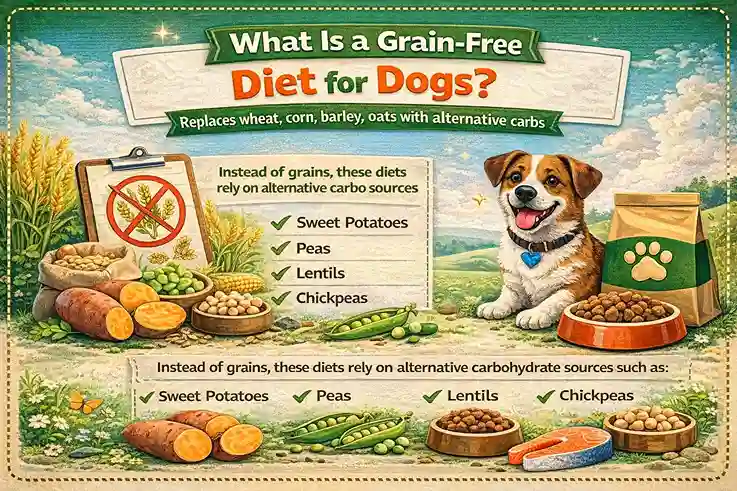
A grain-free dog diet eliminates traditional cereal grains commonly found in dog food, including:
- Wheat
- Corn
- Barley
- Oats
Instead of grains, these diets rely on alternative carbohydrate sources such as:
- Sweet potatoes
- White or yellow potatoes
- Lentils
- Peas
- Chickpeas
Despite the name, grain-free diets are not carbohydrate-free. They still provide starches for energy but replace grains with legumes or tubers paired with animal protein and fats to meet a dog’s nutritional requirements.
How Grain-Free Diets Affect Dog Digestion
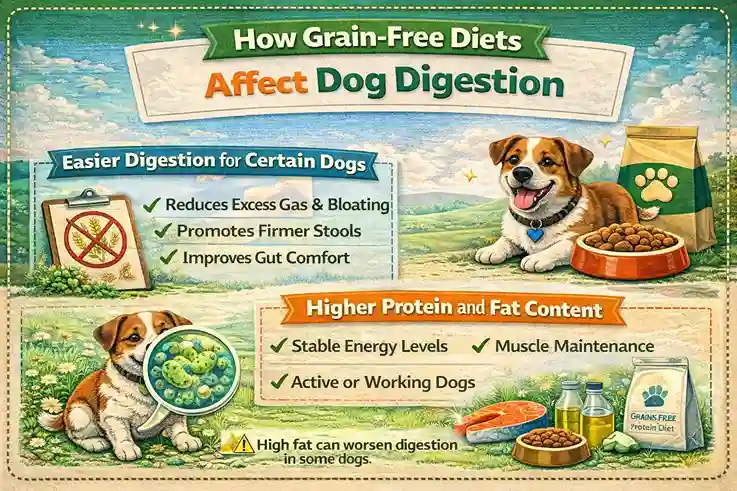
Easier Digestion for Certain Dogs
For dogs with confirmed grain intolerance or sensitivity, removing grains may help reduce:
- Chronic diarrhea
- Excess gas
- Bloating
- Digestive discomfort
This often results in firmer stools and improved gut comfort, particularly when grains were a true trigger.
Higher Protein and Fat Content
Many grain-free dog foods contain higher levels of protein and fat, which may support:
- Stable energy levels
- Muscle maintenance
- Active or working dogs
However, higher fat content can worsen digestive issues in dogs prone to pancreatitis or fat malabsorption, making formulation quality critical.
Digestive Issues Grain-Free Diets May Help Address
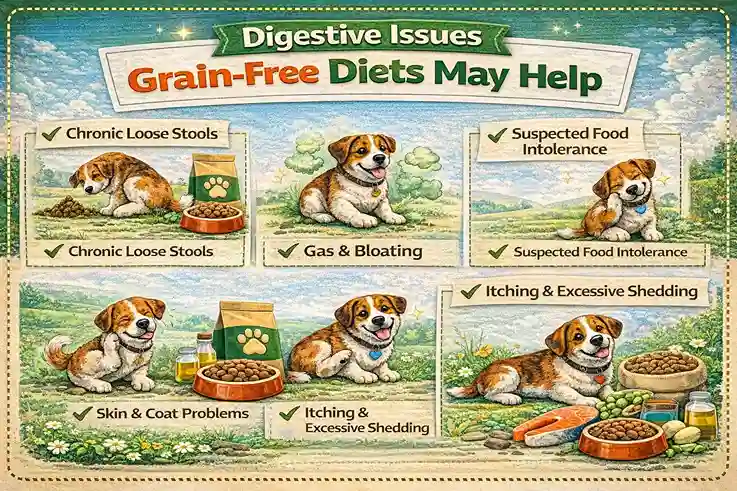
Grain-free diets are sometimes recommended for dogs experiencing:
- Chronic loose stools
- Gas and bloating
- Suspected food intolerance
- Skin and coat problems linked to diet
- Itching and excessive shedding
- Dry or dull coat
⚠️ Important clarification:
True grain allergies in dogs are rare. Most canine food allergies are caused by animal proteins, not grains.
Grain-Free vs Grain-Inclusive Diets: Digestive Comparison
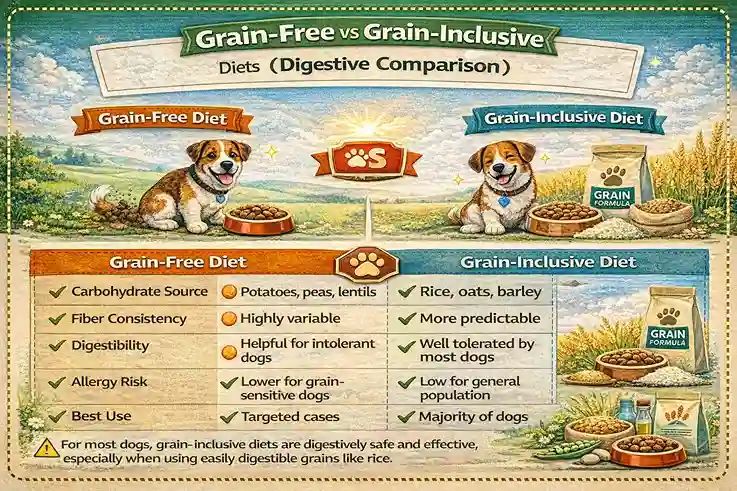
Feature | Grain-Free Diet | Grain-Inclusive Diet |
Carbohydrate source | Potatoes, peas, lentils | Rice, oats, barley |
Fiber consistency | Highly variable | More predictable |
Digestibility | Helpful for intolerant dogs | Well tolerated by most dogs |
Allergy risk | Lower for grain-sensitive dogs | Low for general population |
Best use | Targeted cases | Majority of dogs |
For most dogs, grain-inclusive diets are digestively safe and effective, especially when using easily digestible grains like rice.
Potential Digestive Benefits of Grain-Free Dog Diets
1. Reduced Symptoms in Grain-Sensitive Dogs
Dogs with confirmed gluten sensitivity or intolerance may experience fewer digestive and skin reactions when grains are removed.
2. Improved Skin and Coat Health
Higher fat content and quality animal proteins may contribute to:
- Shinier coat
- Better skin hydration
- Reduced dryness and itching
3. Alternative Carbohydrates for Sensitive Digestion
Some dogs tolerate sweet potatoes or pumpkin better than certain grains, especially during elimination diet trials.
Potential Risks of Grain-Free Diets (Critical Considerations)
Digestive Imbalance from Legumes
Grain-free diets often rely heavily on peas and lentils, which may cause:
- Gas
- Bloating
- Loose stools
in dogs with sensitive gastrointestinal systems.
Fiber Imbalance
Fiber levels in grain-free foods vary widely, potentially leading to constipation or diarrhea if not properly balanced.
Nutritional Formulation Issues
Not all grain-free diets meet the same nutritional standards. Poorly formulated foods can negatively affect:
- Long-term digestion
- Energy balance
- Nutrient absorption
- FDA Considerations Regarding Grain-Free Diets
The U.S. Food and Drug Administration has advised veterinarians to recommend grain-free diets only when medically appropriate, not as a default choice.
Grain-Free Diets and Food Allergies in Dogs
Are Grains Really the Problem?
Most documented food allergies in dogs are linked to:
- Beef
- Chicken
- Dairy
Grains such as rice and oats are rarely allergenic and are often included in veterinary digestive diets.
👉 Grain-free diets are best suited for dogs with confirmed intolerance, not assumed sensitivity.
Best Ingredients in Digestive-Friendly Grain-Free Dog Food
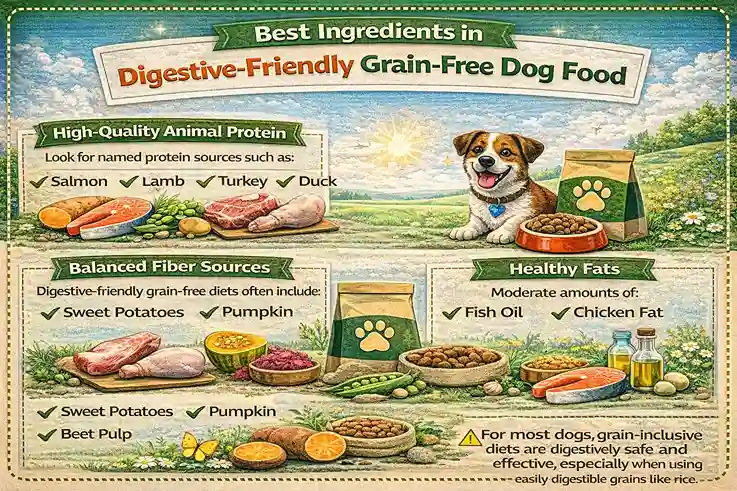
High-Quality Animal Protein
Look for named protein sources such as:
- Salmon
- Lamb
- Turkey
- Duck
These support digestion, muscle health, and energy.
Balanced Fiber Sources
Digestive-friendly grain-free diets often include:
- Sweet potatoes
- Pumpkin
- Beet pulp
These help regulate stool consistency and gut motility.
Healthy Fats
Moderate amounts of:
- Fish oil
- Chicken fat
support skin, coat, and cellular health without overwhelming digestion.
How to Know If a Grain-Free Diet Is Right for Your Dog
A grain-free diet may be appropriate if:
- Digestive symptoms persist on grain-inclusive food
- Food intolerance has been identified
- Skin issues appear diet-related
- A veterinarian recommends dietary restriction
- Your dog has specific activity or metabolic needs
Always consult a veterinarian before switching to a restricted diet.
How to Transition to a Grain-Free Diet Safely
Sudden food changes can worsen digestive upset. Transition gradually:
- Days 1–3: 75% old food / 25% new
- Days 4–6: 50% old / 50% new
- Days 7–9: 25% old / 75% new
- Some dogs may need a longer transition period.
Monitor stool quality, appetite, and energy closely.
Possible Signs of Improved Digestive Tolerance
Positive changes may include:
- Reduced gas and bloating
- Firmer stools
- Improved coat condition
- More stable energy levels
- Less itching or discomfort
If symptoms worsen, discontinue the diet and consult your veterinarian.
Veterinary Perspective on Grain-Free Diets
Current veterinary nutrition guidance emphasizes that…:
- Grain-free diets are not necessary for most dogs
- They can be helpful in specific digestive or allergy cases
- Overall formulation quality matters more than grain inclusion
Nutrition should always be tailored to the dog’s individual health—not trends or marketing claims.
Medical / Veterinary Disclaimer
This content is for informational and educational purposes only and is not intended as a substitute for professional veterinary advice, diagnosis, or treatment. Nutritional needs and digestive responses vary widely between individual dogs based on age, breed, size, activity level, genetics, and underlying medical conditions
Frequently Asked Questions (FAQs)
1. Are grain-free diets easier to digest for dogs?
It may be easier to digest for some dogs with confirmed grain intolerance.
2. Can grain-free food cause diarrhea?
Yes, especially if high in legumes or poorly balanced fiber.
3. Do grain-free diets help dog allergies?
They help only if grains are the actual trigger.
4. Are grain-free diets safe long-term?
Yes, if the diet is nutritionally complete and appropriate for the individual dog.
5. Is grain-free better for sensitive stomachs?
Not always—many sensitive dogs digest rice better.
References
Association of American Feed Control Officials. (2023). AAFCO dog food nutrient profiles.
Freeman, L. M., Stern, J. A., Fries, R., Adin, D. B., & Rush, J. E. (2018). Diet-associated dilated cardiomyopathy in dogs. Journal of the American Veterinary Medical Association, 253(11), 1390–1394.