
Probiotic Yogurt for Dogs: Is It Better Than Dog Probiotics?
Written by: Dr. Akram Khan, DVM
Medically Reviewed by: Dr. Zaheer Hussain, PhD
Last updated on September 08, 2026
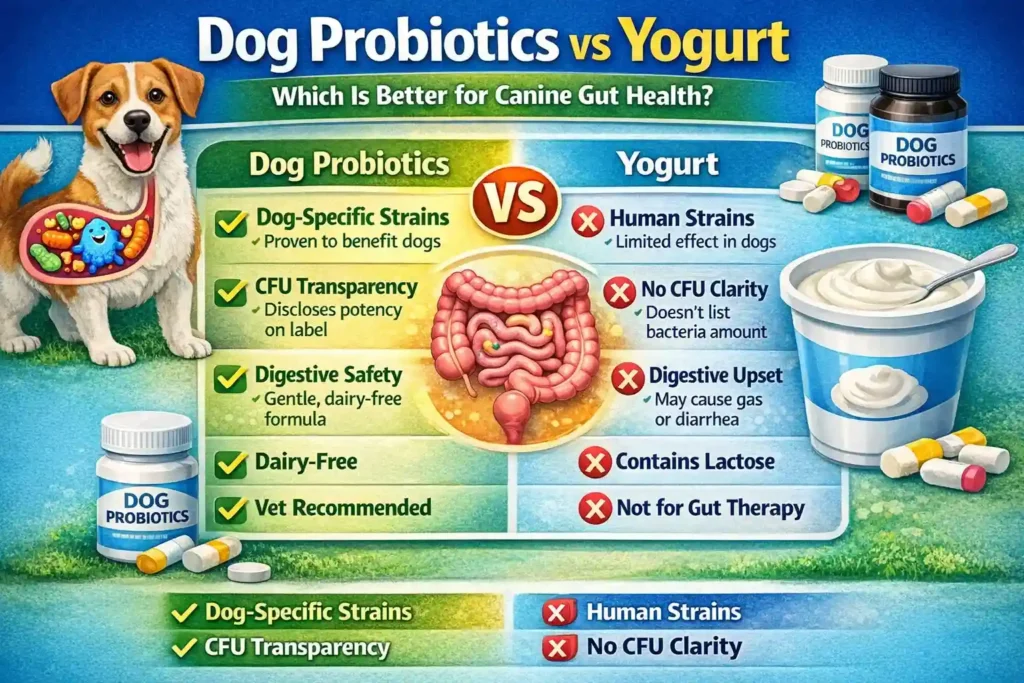
Probiotic yogurt for dogs is often seen as a natural way to support gut health, but it is not always the safest or most effective choice. Many owners ask, “is probiotic yogurt good for dogs?” or “can dogs eat yogurt with probiotics?” The answer depends on the yogurt ingredients, your dog’s dairy tolerance, and whether your dog needs real digestive support. In most cases, dog-specific probiotics are better than yogurt because they provide canine-tested strains, clearer CFU counts, safer dosing, and more reliable support for stool quality, diarrhea recovery, sensitive stomachs, and long-term gut health.
Is probiotic yogurt good for dogs?
Probiotic yogurt can be safe for some dogs only if it is plain, unsweetened, xylitol-free, and given in small amounts. However, dog-specific probiotics are usually better than yogurt because they contain canine-researched strains, controlled CFU levels, and no lactose. Yogurt should not replace vet-approved probiotics for diarrhea, sensitive stomachs, or chronic digestive issues.
Understanding Gut Health in Dogs
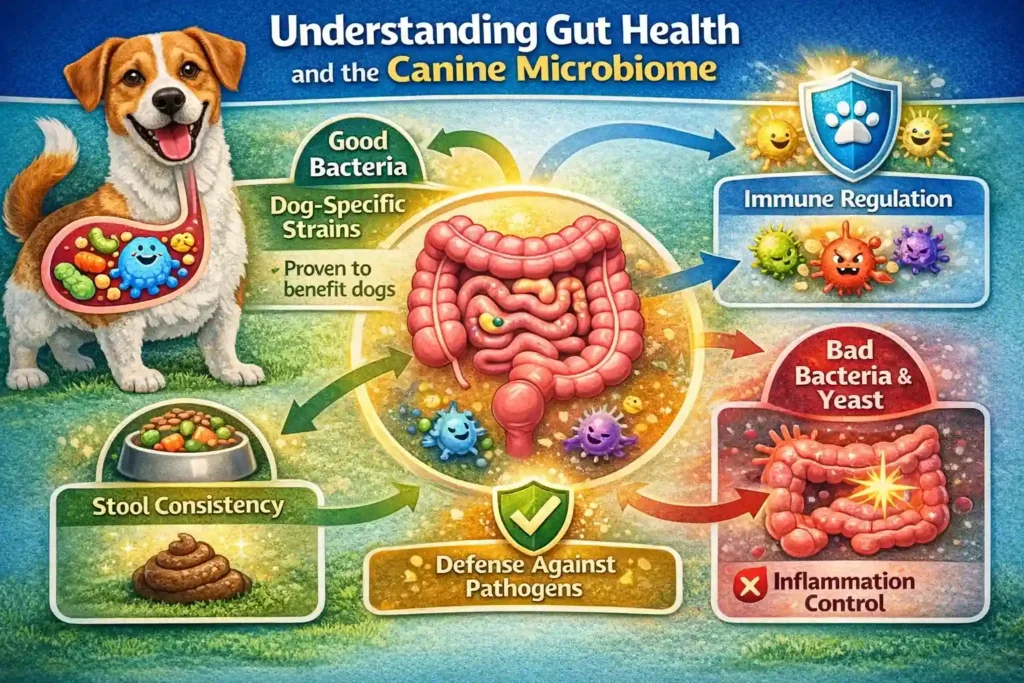
A dog’s gut microbiome is a complex ecosystem of beneficial bacteria, yeasts, and microorganisms living primarily in the intestines. This microbial balance directly influences:
- Digestion and nutrient absorption
- Stool consistency and bowel regularity
- Immune system regulation
- Inflammation control
- Protection against harmful pathogens
When this balance is disrupted—known as gut dysbiosis—dogs may develop diarrhea, constipation, gas, bloating, food sensitivities, skin allergies, or chronic digestive disorders such as IBS or IBD.
What Are Dog Probiotics?
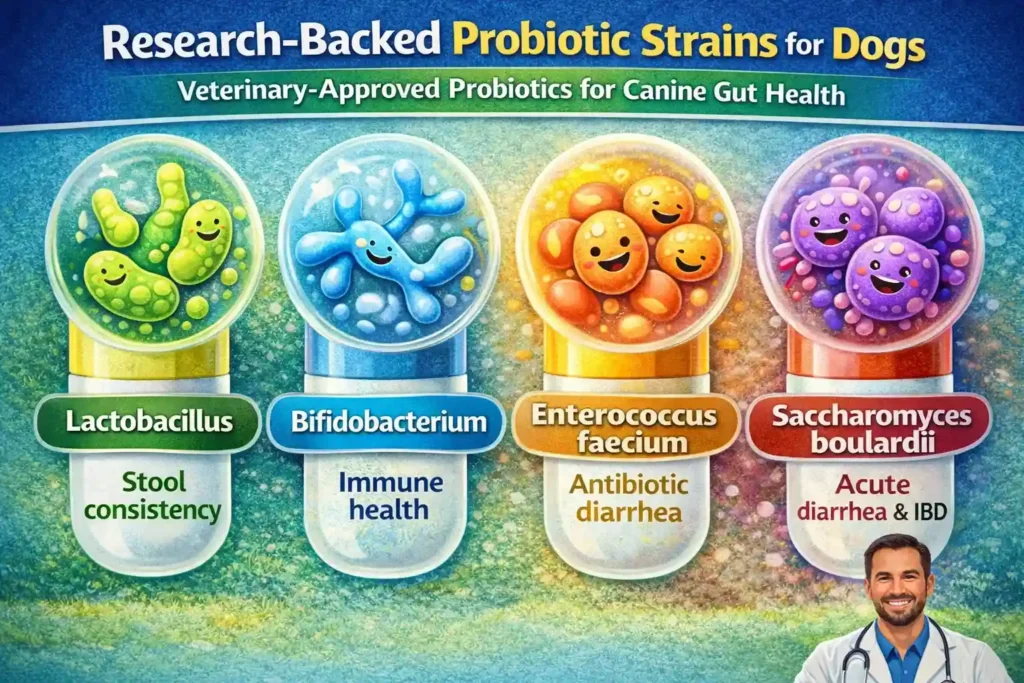
Dog probiotics are supplements formulated specifically for canine digestive physiology, containing live, beneficial microorganisms shown to support gut health in dogs.
Common Research-Backed Probiotic Strains for Dogs
- Lactobacillus species – Support digestion and stool consistency
- Bifidobacterium species – Enhance immune response and colon health
- Enterococcus faecium (E1707)—Widely studied for antibiotic-associated diarrhea
- Saccharomyces boulardii – A probiotic yeast effective for acute and inflammatory diarrhea
These strains are selected based on veterinary research, clinical trials, and canine-specific evidence, not human digestive models.
What Is Yogurt for Dogs?
Yogurt for dogs is often recommended because it contains live or active cultures, which are forms of beneficial bacteria.
Common types pet owners consider include:
- Plain yogurt
- Greek yogurt
- Unsweetened yogurt
- Kefir (fermented dairy product)
Yogurt also provides protein and calcium. However, its probiotic value for dogs is frequently overestimated, and it carries several digestive risks.
Dog Probiotics vs Yogurt: Key Differences Explained
1. Probiotic Strains & Clinical Effectiveness
Dog-specific probiotic supplements contain strains proven to survive a dog’s stomach acid and colonize the canine gut.
Yogurt cultures are primarily designed for humans. Many strains:
- Do not survive canine digestion
- Are present in insufficient amounts
- Have no clinical evidence in dogs
✔ Advantage: Dog probiotics
2. CFU Count, Stability & Label Transparency
Dog probiotics:
- Clearly list CFU count (colony-forming units)
- Use shelf-stable or spore-forming strains
- Maintain potency until expiration
Yogurt:
- Does not disclose CFU count
- Bacterial levels vary by brand and storage
- Cultures may be inactive by the time of feeding
✔ Advantage: Probiotic supplements for dogs
3. Digestive Safety & Tolerance in Dogs
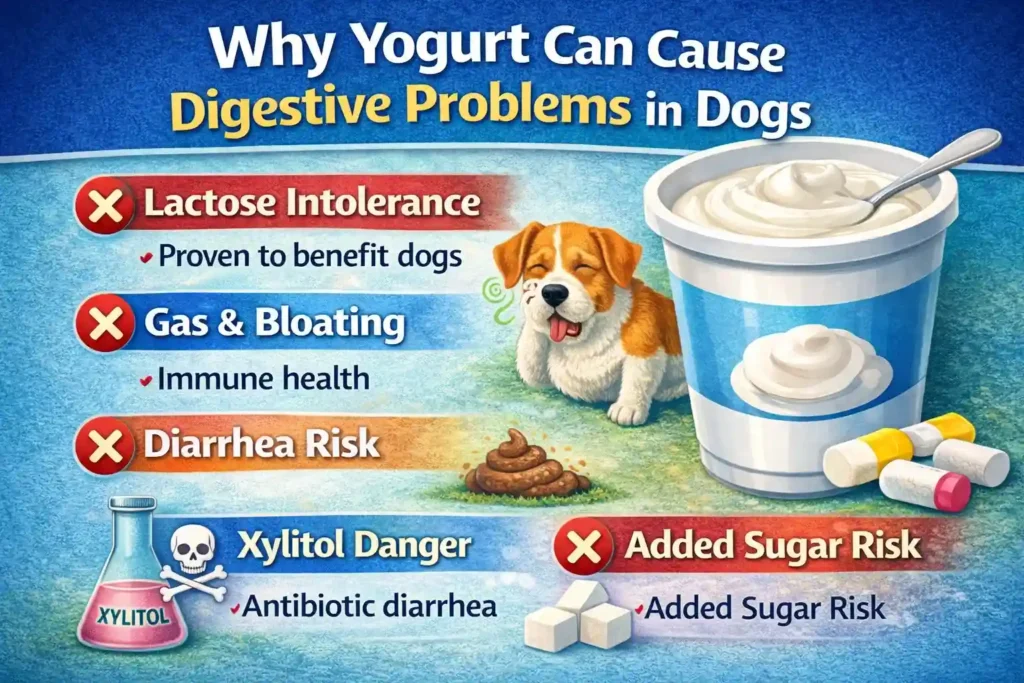
Many dogs experience:
- Lactose intolerance
- Dairy sensitivity
- Gas and bloating
- Acid reflux or diarrhea
Even plain or Greek yogurt can trigger digestive upset, especially in dogs with GERD, IBD, or sensitive stomachs.
✔ Advantage: Dairy-free dog probiotics
4. Risk of Harmful Ingredients
Commercial yogurt products may contain:
- Added sugars
- Artificial flavors
- Artificial sweeteners
- Xylitol (extremely toxic to dogs)
Dog probiotic supplements are formulated to avoid toxic additives entirely.
✔ Advantage: Vet-approved probiotics
When Veterinarians Clinically Recommend Probiotics
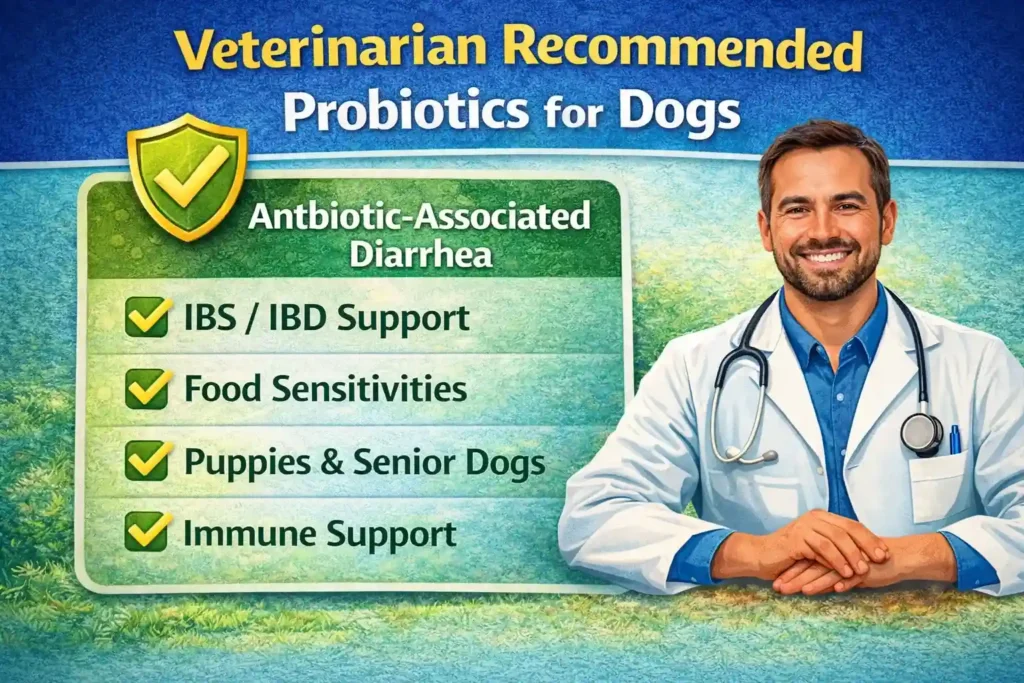
Veterinarians commonly recommend dog-specific probiotic supplements for:
- Antibiotic-associated diarrhea
- Chronic or recurrent diarrhea
- Constipation and irregular stools
- Leaky gut syndrome
- IBS / IBD
- Food sensitivities and allergies
- Anal gland issues and scooting
- Skin and coat problems
- Immune support in puppies and senior dogs
👉 Yogurt alone is not considered a treatment for these conditions.
Puppies vs Adult Dogs vs Senior Dogs
Puppies
- Immature digestive systems
- Require precise dosing
- Benefit only from canine-specific strains
Adult Dogs
- Probiotics help during diet changes, stress, or travel
Senior Dogs
- Reduced gut microbial diversity
- Higher inflammation risk
- Greater benefit from evidence-based probiotics
Yogurt is not recommended as a primary probiotic source at any life stage.
Probiotic Supplements: Forms & Gut-Health Options
Dog probiotics are available as:
- Probiotic chews
- Probiotic soft chews
- Probiotic powder
- Probiotic dog food
- Synbiotics (probiotics + prebiotics)
Prebiotics feed beneficial bacteria, while synbiotics support long-term microbiome balance.
Can Yogurt Ever Be Used for Dogs?
Yogurt may be used occasionally if:
- It is plain and unsweetened
- Contains no xylitol or artificial sweeteners
- Given in very small amounts
- The dog has no dairy intolerance
However, it should never replace probiotic supplements for digestive support, prevention, or therapy.
What Do Veterinarians Recommend?
Veterinary consensus consistently supports that:
- Dog-specific probiotics are safer and more effective
- Yogurt provides inconsistent and unreliable probiotic benefit
- Supplements allow controlled dosing, strain selection, and safety
These recommendations align with current veterinary nutrition and microbiome research.
Final Verdict: Dog Probiotics vs Yogurt for Gut Health
🏆 Winner: Dog Probiotics
Factor | Dog Probiotics | Yogurt |
Dog-specific strains | ✅ | ❌ |
CFU clarity | ✅ | ❌ |
Shelf stability | ✅ | ❌ |
Dairy-free | ✅ | ❌ |
Vet-recommended | ✅ | ❌ |
Therapeutic use | ✅ | ❌ |
Key Takeaway for Dog Owners
If your goal is better digestion, healthier stools, stronger immunity, or relief from gut issues, dog probiotics are the superior and evidence-based choice.
Yogurt is not always harmful—but it is not a reliable probiotic solution for dogs.
Medical Disclaimer
This content is for educational purposes only and does not replace professional veterinary advice. Always consult a licensed veterinarian for diagnosis and treatment.
Frequently Asked Questions (FAQs)
1.Is yogurt safe for dogs with diarrhea?
Not usually. Dairy can worsen diarrhea in sensitive dogs.
2.Are probiotics better than yogurt for dogs?
Yes. Dog-specific probiotics are safer and more effective.
3.Can puppies eat yogurt for gut health?
No. Puppies should only use vet-approved probiotic supplements.
4.Do probiotics help with allergies in dogs?
Yes. A balanced gut microbiome supports immune regulation.
5.How long do dog probiotics take to work?
Many dogs show improvement within 7–14 days.
6.Can probiotics replace veterinary treatment?
No. They support gut health but do not replace diagnosis or treatment.