
Gray Dog Poop: What It Means, its Causes, and When to Worry
Written by: Dr. Akram Khan, DVM
Medically Reviewed by: Dr. Khalid Mehmood, PhD (Assistant Professor in Clinical Veterinary Medicine)
Last updated on September 05, 2026
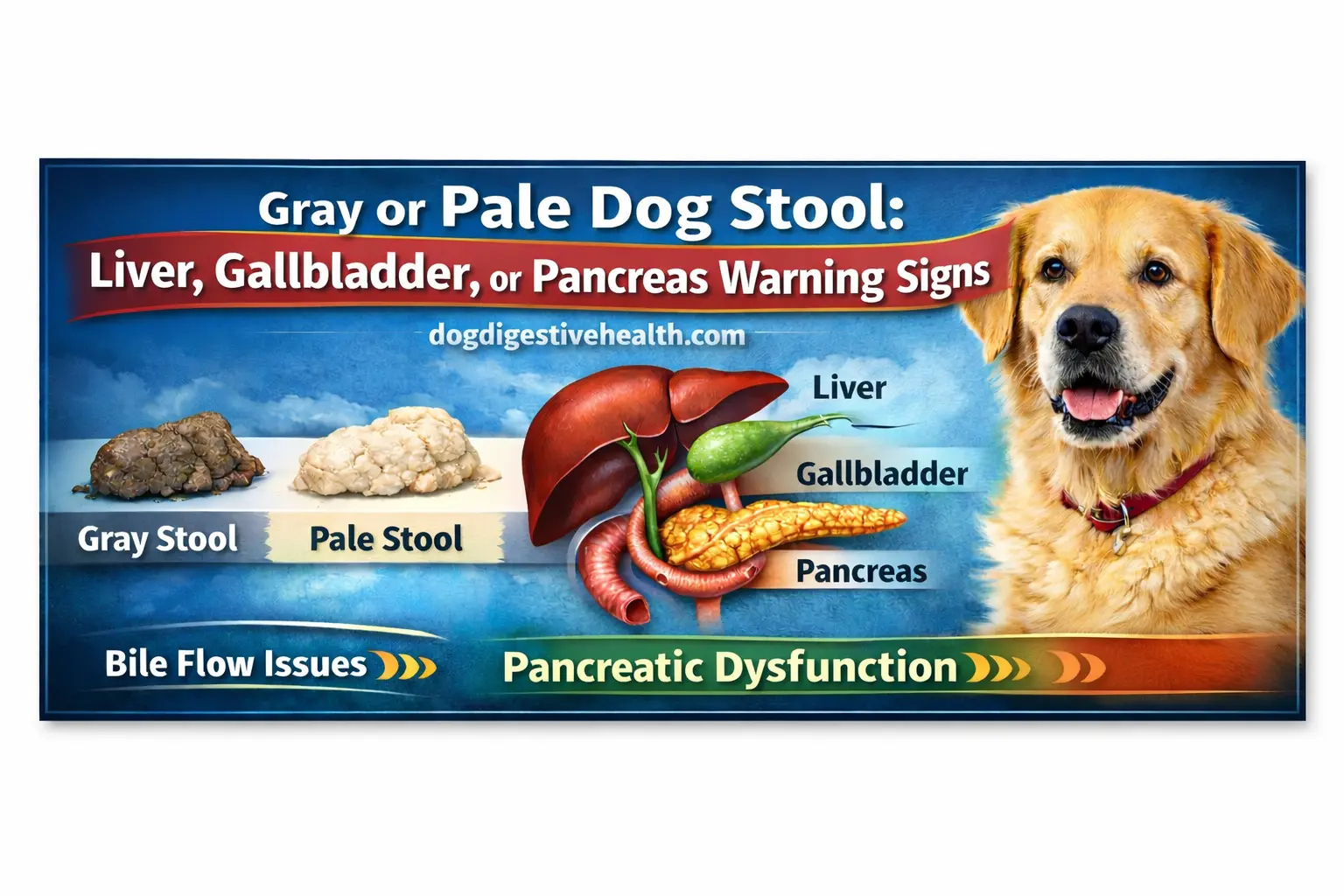
Gray dog poop is not a normal stool color, especially when it looks pale, light gray, greasy, white-gray, or clay-colored. If you’re searching “what does gray dog poop mean” or checking a dog poop color chart, this change often points to a problem with bile flow, fat digestion, or both. Pale dog poop may happen when too little bile reaches the intestine, while greasy gray dog poop can suggest poor fat digestion or absorption. Because the liver, gallbladder, bile ducts, and pancreas all help control digestion and normal stool color, repeated gray or pale stool in dogs should be taken seriously, especially if it appears with vomiting, jaundice, abdominal pain, weight loss, or loss of appetite.
What Does Gray, Pale, White, or Clay-Colored Dog Poop Mean?
- Normal dog stool is usually brown because bile pigments enter the intestine during digestion.
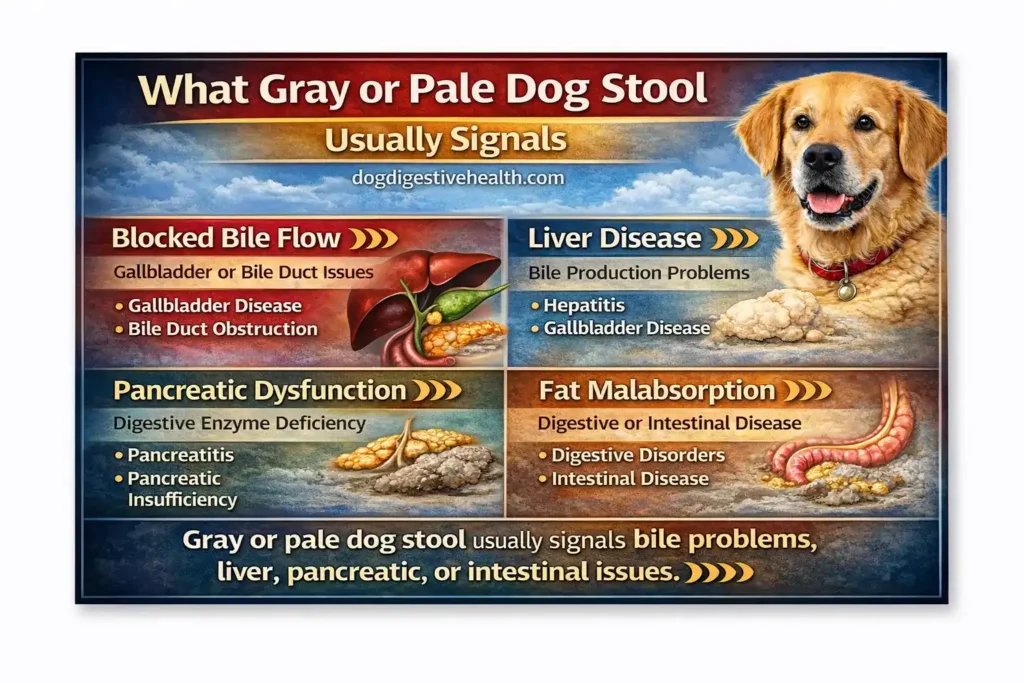
- When stool becomes gray, pale, white-gray, light tan, or clay-colored, it may mean the normal digestive pathway involving the liver, gallbladder, common bile duct, and duodenum is not working properly.
- This color change does not confirm a specific disease by itself.
- It does mean the dog may need evaluation for:
- Reduced bile flow
- Bile duct obstruction in dogs
- Gallbladder disease
- Liver disease in dogs
- Pancreatic dysfunction
- Fat maldigestion
- Fat malabsorption
Why Is My Dog’s Poop Pale Instead of Brown?
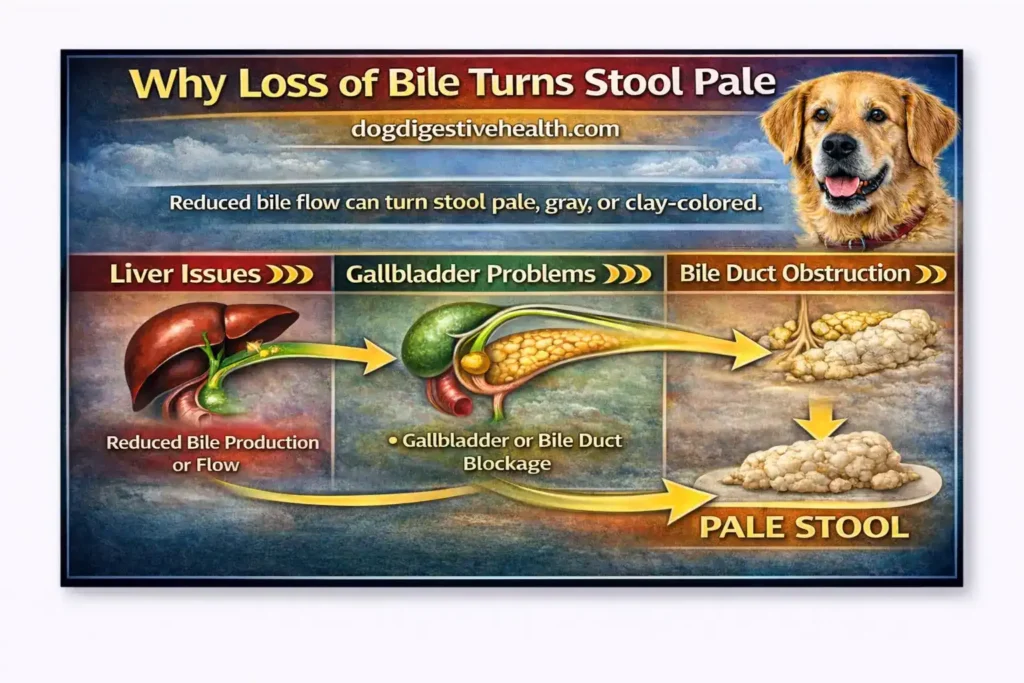
- The liver produces bile.
- The gallbladder stores and concentrates bile.
- The cystic duct and common bile duct carry bile into the small intestine.
- Bile helps with:
- Fat digestion
- Fat absorption
- Normal stool pigmentation
- If bile does not reach the intestine normally, stool can become:
- Pale
- Gray
- Light-colored
- Clay-colored
- This is why pale dog stool can be a warning sign of:
- Extrahepatic bile duct obstruction
- Gallbladder mucocele
- Cholecystitis
- Gallstones
- Thickened bile
- Biliary tract disease
- Less bile reaching the gut can mean less normal brown color in the stool
What Does Greasy Gray Dog Poop Mean?
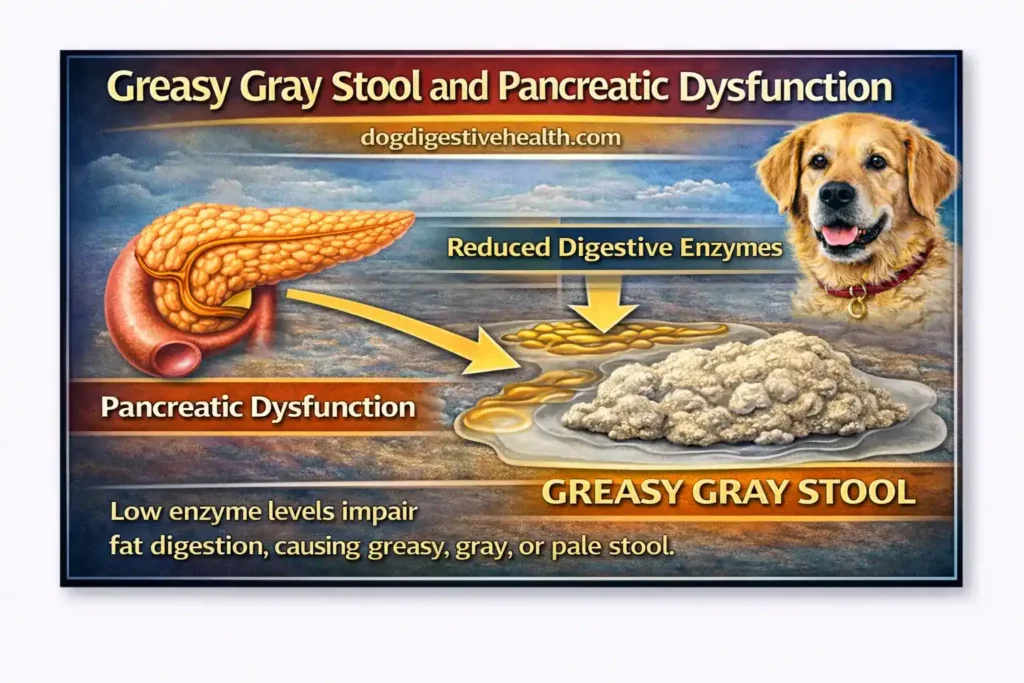
- If the stool is gray and greasy, pale and fatty, or light-colored and bulky, the pancreas becomes more important in the differential diagnosis.
- The pancreas produces digestive enzymes that help break down:
- Fat
- Protein
- Carbohydrates
- When pancreatic enzyme output drops too low, food is not digested properly.
- This can lead to:
- Maldigestion
- Steatorrhea
- Voluminous loose stool
- Pale greasy feces
- Weight loss
- Polyphagia with weight loss
- This pattern is especially important in exocrine pancreatic insufficiency in dogs.
- If a dog has greasy gray stool plus weight loss, pancreatic disease should move higher on the concern list.
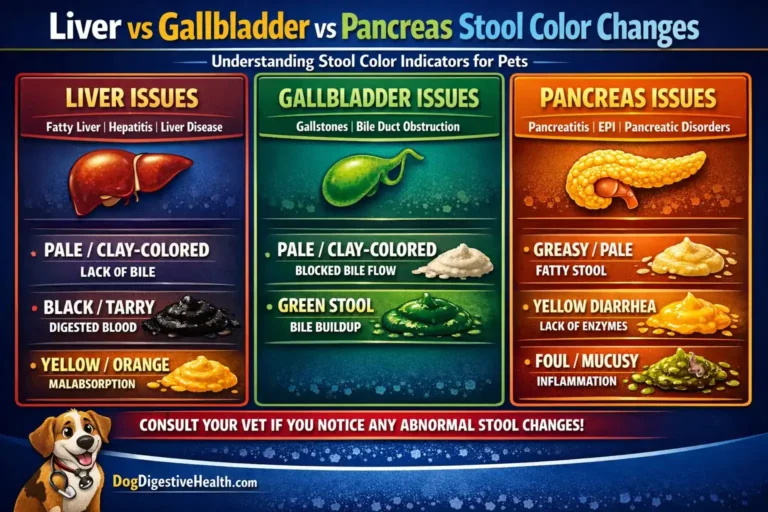
- The liver, gallbladder, bile ducts, and pancreas work together in digestion.
- A problem in one part of this system can affect the others.
- Liver disease can affect bile production and bilirubin handling.
- Gallbladder disease can affect bile storage and release.
- Bile duct obstruction can prevent bile from reaching the intestine.
- Pancreatitis can affect digestion and can also influence bile flow because of the close relationship between the pancreas and the common bile duct.
- Chronic pancreatitis can sometimes lead to exocrine pancreatic insufficiency.
When Is Gray or Pale Dog Poop a Serious Warning Sign?
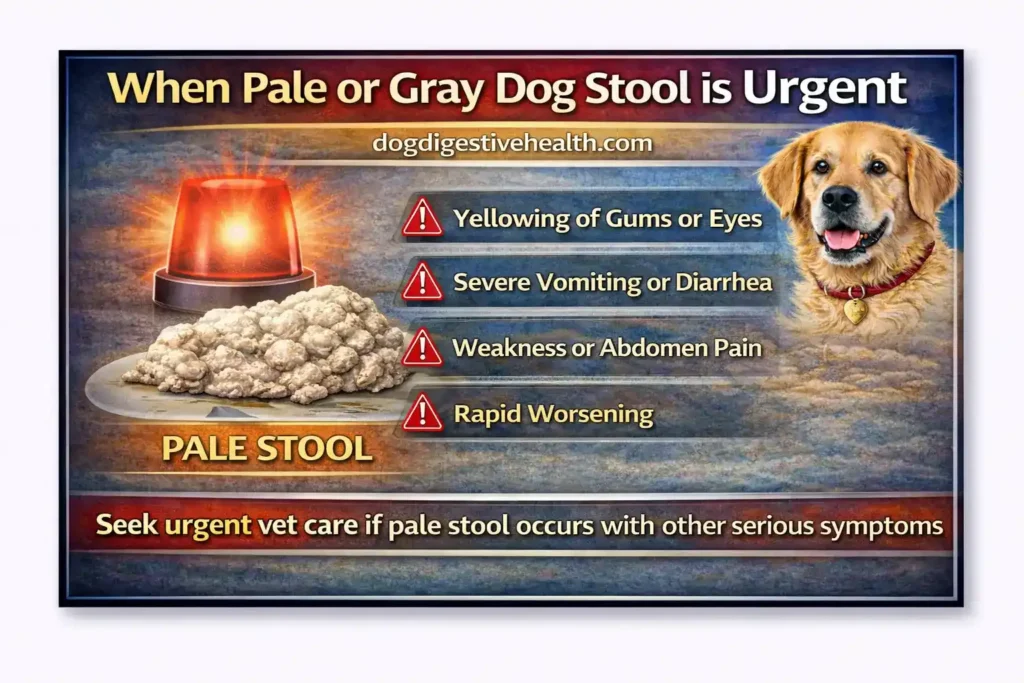
- A single unusual stool can happen.
- Repeated pale stool or recurring gray dog poop matters much more.
- The situation becomes more urgent when pale or gray stool appears with:
- Jaundice
- Vomiting
- Abdominal pain
- Loss of appetite
- Lethargy
- Weakness
- Dehydration
- Weight loss
- Polyphagia with weight loss
- Fever
- The most concerning combinations include:
- pale stool plus jaundice
- greasy gray stool plus weight loss
- pale stool plus vomiting and abdominal pain
- clay-colored stool that keeps returning
- These combinations increase concern for:
- biliary obstruction
- gallbladder disease
- hepatic dysfunction
- pancreatitis
- exocrine pancreatic insufficiency
- A practical rule:
If the color change persists, repeats, or appears with other signs, it deserves veterinary attention
What Will a Vet Check If My Dog Keeps Having Gray or Pale Poop?
Gray dog poop is not normal and may mean your dog is not getting enough bile into the intestines or is not digesting fat properly. Pale, clay-colored, white-gray, or greasy gray stool can be linked to liver, gallbladder, bile duct, or pancreatic problems. If gray poop repeats or appears with vomiting, jaundice, pain, weight loss, or appetite loss, contact a veterinarian promptly.
- Veterinarians do not diagnose the cause from stool color alone.
- They usually combine:
- History
- Physical examination
- Stool description
- Bloodwork
- Imaging
- Targeted pancreatic or hepatobiliary testing
- Depending on the case, testing may include:
- CBC
- Serum biochemistry
- Total bilirubin
- Liver enzymes
- Urinalysis
- Abdominal ultrasound
- Pancreatic lipase testing
- Serum trypsin-like immunoreactivity
- If the concern is exocrine pancreatic insufficiency, serum trypsin-like immunoreactivity is especially important.
- If the concern is pancreatitis, the diagnosis usually uses a combination of:
- Clinical signs
- Pancreatic lipase testing
- Imaging
- If the concern is bile duct obstruction or gallbladder disease, abdominal ultrasonography becomes highly useful.
Gray or pale dog stool is a warning sign, not a final diagnosis
Should You Worry About Gray or Pale Dog Poop?
- Gray or pale dog stool usually points to a bile-flow problem, a fat-digestion problem, or both.
- The most important organ systems behind this stool pattern are the
- liver
- gallbladder
- bile ducts
- pancreas
- The most important warning signs are:
- greasy stool
- repeated pale stool
- jaundice
- vomiting
- abdominal pain
- weight loss
- The safest conclusion is:
Persistent gray or pale stool in dogs should not be ignored
Medical Disclaimer:
- This article is for educational purposes only and is not a substitute for veterinary diagnosis or treatment.
- If your dog has repeated pale or gray stool, or has vomiting, jaundice, pain, weakness, or weight loss, contact a veterinarian promptly.
Frequently Asked Questions (FAQs)
1. Is gray dog poop normal?
No, Gray dog stool is not a normal stool color and may point to bile-flow or digestion problems.
2. What does gray dog poop mean?
Pale dog stool usually suggests reduced bile reaching the intestine or poor fat digestion.
3. Can liver disease cause pale stool in dogs?
Yes, Liver disease can affect bile production and change stool color.
4. When should I call the vet for gray dog poop?
One unusual stool can happen, but repeated pale or gray stool should be checked by a veterinarian.
References
- Center, S. A. (2024). Gallbladder, cystic duct, and common bile duct in animals. MSD Veterinary Manual. DOI: Not available.
- Center, S. A. (2024). Extrahepatic bile duct obstruction in small animals. MSD Veterinary Manual. DOI: Not available.
- Cridge, H., Williams, D. A., & Barko, P. C. (2024). Exocrine pancreatic insufficiency in dogs and cats. Journal of the American Veterinary Medical Association, 262(2), 246–255. https://doi.org/10.2460/javma.23.09.0505.
- Watson, P. (2015). Pancreatitis in dogs and cats: Definitions and pathophysiology. Journal of Small Animal Practice, 56(1), 3–12. https://doi.org/10.1111/jsap.12293.
- Gookin, J. L., Mathews, K. G., & Seiler, G. (2025). Diagnosis and management of gallbladder mucocele formation in dogs. Journal of the American Veterinary Medical Association, 263(6), 777–785. https://doi.org/10.2460/javma.24.12.0789.