
Best Probiotics for Dogs with Sensitive Stomachs: Gas & Diarrhea Help
Written by: Dr. Akram Khan, DVM
Medically Reviewed by: Dr. Khalid Mehmood, PhD
Last updated on September 08, 2026
Probiotics for dogs with sensitive stomachs may help support gut balance, stool quality, gas, bloating, diarrhea, and recurring digestive upset.
Choosing the best dog probiotics for sensitive stomach issues can help support digestive balance, especially in dogs prone to gas, occasional stomach upset, or changes in stool quality.
The right probiotic depends on your dog’s symptoms, diet, age, stool changes, and whether the issue is linked to food sensitivity, stress, antibiotics, IBS, IBD, or another underlying digestive condition.
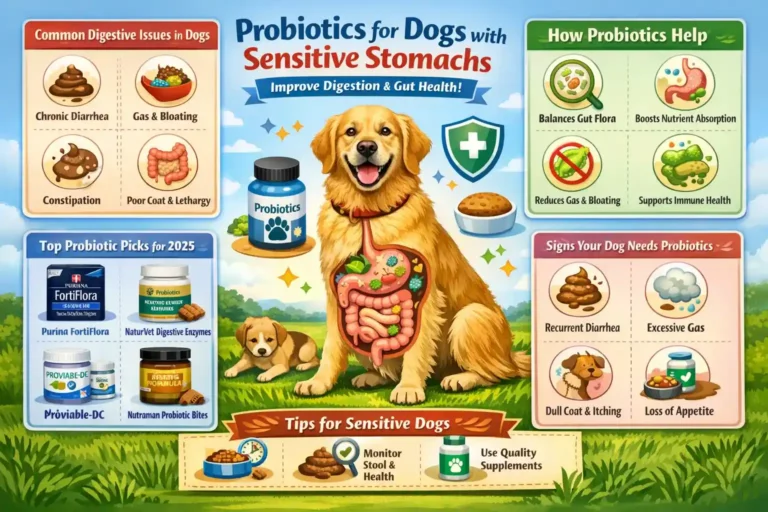
What are the best probiotics for dogs with sensitive stomachs?
The best probiotics for dogs with sensitive stomachs are dog-specific formulas with clearly listed strains, CFU counts, and minimal artificial additives. Strains such as Lactobacillus, Bifidobacterium, and Enterococcus faecium may help support stool quality, gas, bloating, diarrhea, and gut balance. Dogs with chronic or worsening symptoms should see a veterinarian.
How Probiotics Help Dogs with Sensitive Stomachs?
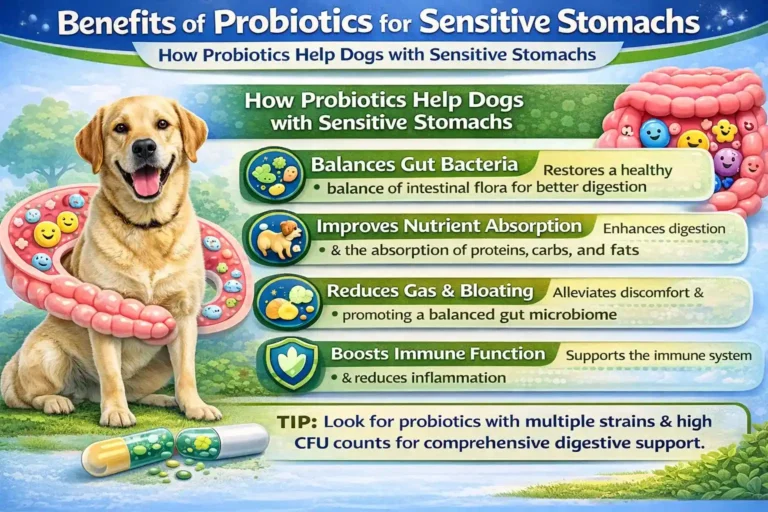
Probiotics are designed to introduce beneficial bacteria into the gut, promoting balance and supporting digestive health. Some of the key benefits of probiotics for dogs with sensitive stomachs include:
- Balancing Gut Bacteria: Probiotics restore a healthy balance of intestinal flora, improving gut function and preventing digestive upset.
- Improved Nutrient Absorption: Probiotics enhance digestion and the absorption of proteins, carbs, and fats, leading to better overall health.
- Reducing Gas and Bloating: By improving gut balance, probiotics can alleviate discomfort associated with excessive gas and bloating.
- Supporting Immune System Function: A healthy gut microbiome supports the immune system, helping reduce inflammation and promote general wellness.
- Aid During Antibiotic Recovery: Antibiotics can disrupt gut bacteria, and probiotics help replenish beneficial microbes, speeding up recovery.
Top 5 Dog Probiotics for Sensitive Stomachs
When choosing a probiotic for your dog, it’s essential to consider the specific digestive needs of your pet. Below are some of the best probiotics for dogs with sensitive stomachs, each offering unique benefits to promote digestive health:
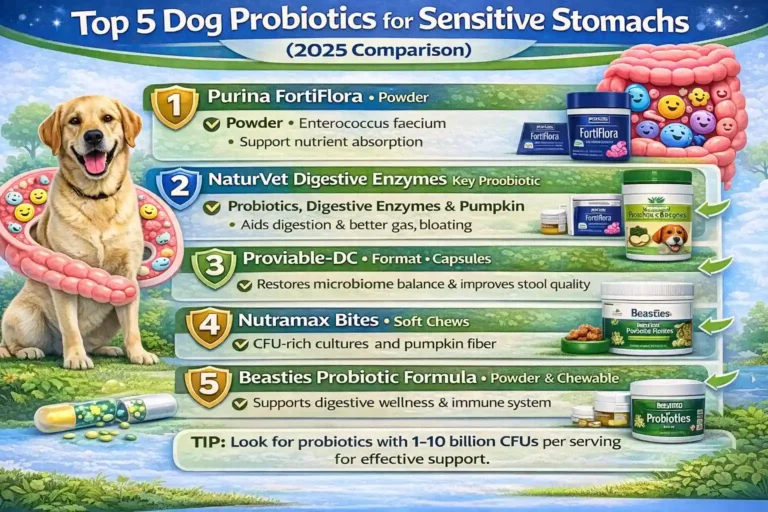
1. Purina FortiFlora
- Probiotic Strain: Enterococcus faecium
- Format: Powder for sprinkling over food
- Benefits: Supports nutrient absorption and reduces diarrhea
- Best For: Dogs recovering from antibiotics or occasional digestive upset
2. NaturVet Digestive Enzymes & Probiotics
- Key Ingredients: Probiotics, digestive enzymes, pumpkin
- Format: Chewable bites
- Benefits: Aids digestion, reduces gas and bloating
- Best For: Dogs with food sensitivities or mild digestive issues
3. Proviable-DC
- Probiotic Strains: Multi-strain cultures
- Format: Capsules and paste
- Benefits: Restores microbiome balance, improves stool quality
Best For: Chronic diarrhea, IBD, or stress-related gut problems
4. Nutramax Bites Probiotics
- Key Ingredients: CFU-rich cultures, pumpkin fiber
- Format: Soft chews
- Benefits: Reduces constipation and promotes gut health
- Best For: Sensitive stomachs, older dogs, or diet transitions
5. Beasties Dog Probiotic Formula
- Probiotic Strains: Multiple high-potency cultures
- Format: Powder and chewable
- Benefits: Supports digestive wellness and immune system
- Best For: Active dogs prone to digestive upset
How to Choose the Right Probiotic for Your Dog
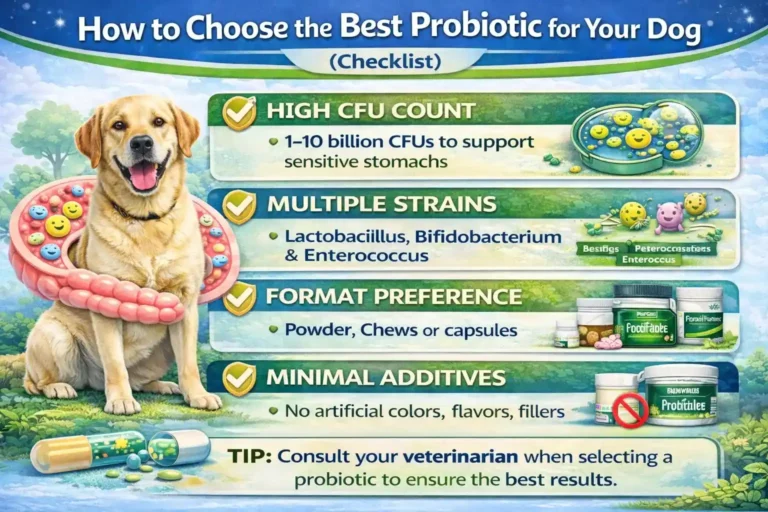
Choosing the right dog probiotic is essential for improving your dog’s digestive health. Here are key factors to consider when selecting a probiotic supplement:
1. CFU Count
- CFUs (colony-forming units) represent the strength of live bacteria in the supplement. For dogs with sensitive stomachs, look for a product with 1–10 billion CFUs per serving to ensure effective gut support.
2. Probiotic Strains
- Multiple strains of probiotics target different areas of the gut, enhancing overall gut health. Common beneficial strains include
- Lactobacillus acidophilus
- Bifidobacterium animalis
- Enterococcus faecium
3. Supplement Format
- Powder: Ideal for picky eaters, as it can easily be mixed with food.
- Chews: Convenient and palatable for dogs.
- Capsules or Paste: Suitable for precise dosing.
4. Additives & Preservatives
- Avoid products with artificial colors, flavors, or fillers. Opt for natural ingredients and dog-friendly flavoring.
5. Veterinary-Recommended Brands
- Trusted brands like Purina, Nutramax, and NaturVetare are recommended by veterinarians and are known for their quality products.
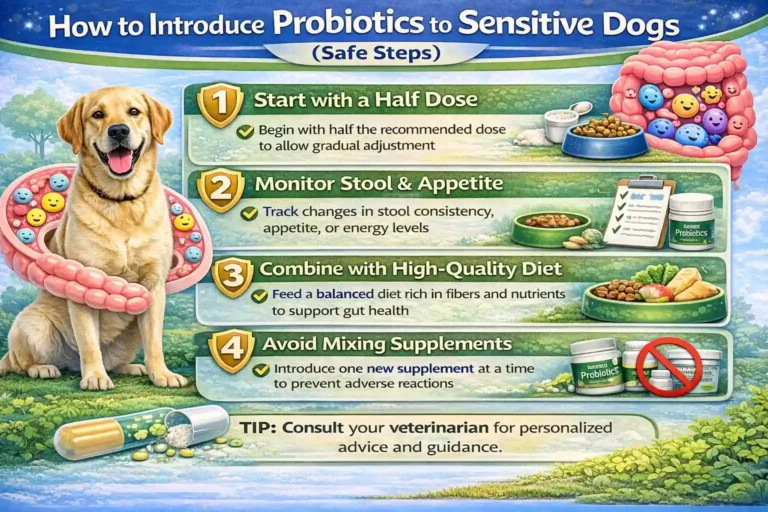
Tips for Introducing Probiotics to Sensitive Dogs
When introducing probiotics to a dog with a sensitive stomach, consider these tips for a safe and effective transition:
- Start with a Half Dose: Begin with half the recommended dose and gradually increase it over a few days to minimize the risk of digestive upset.
- Monitor Stool Consistency and Appetite: Keep an eye on changes in your dog’s stool and appetite to ensure the probiotics are working as expected.
- Combine with a High-Quality Diet: Probiotics should be combined with a well-balanced diet to maximize their effectiveness.
- Avoid Overuse of Multiple Probiotics: Don’t give your dog multiple probiotic supplements simultaneously without veterinary guidance.
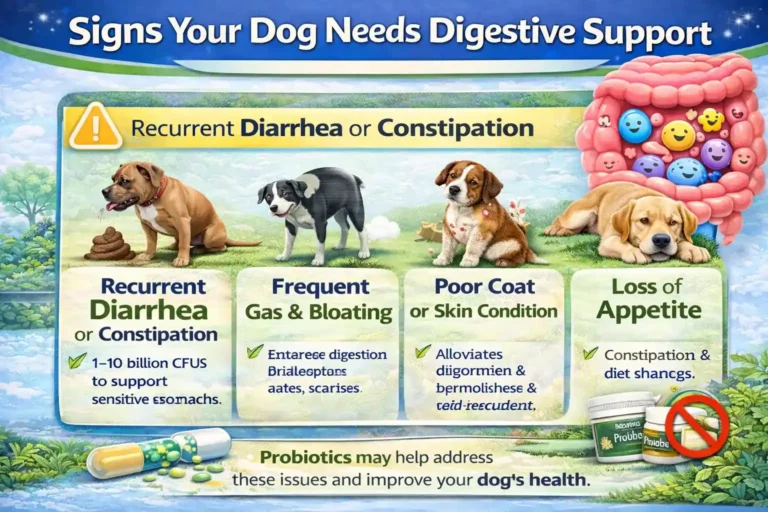
Signs Your Dog May Need Digestive Support
Probiotics can help address the following symptoms, indicating that your dog may benefit from digestive support:
- Recurrent diarrhea or constipation
- Frequent gas or bloating
- Poor coat or skin condition
- Loss of appetite or lethargy
- Stress or anxiety-related digestive issues
If you notice any of these signs, a high-quality probiotic could significantly improve your dog’s digestive health.
Frequently Asked Questions(FAQs):
1. Can dogs take probiotics every day?
Yes, many dogs safely take probiotics daily, especially those with chronic digestive conditions like IBS or IBD.
2. Do digestive supplements cause side effects in dogs?
Side effects are rare but may include mild gas, bloating, or diarrhea if overdosed.
3. Are natural digestive supplements safer long-term?
“Natural” doesn’t always mean safer. The key is the quality and formulation of the supplement, not just whether it’s natural.
4. What ingredients should I avoid in dog supplements?
Avoid artificial preservatives, unnamed animal ingredients, excessive fillers, and vague blends.
5. How long does it take for probiotics to work in dogs?
Probiotics can show improvements within 2–3 weeks, but it may take longer for chronic digestive issues.
Conclusion
Digestive supplements, particularly probiotics, can provide long-term support for dogs with sensitive stomachs. When selected carefully, they can help alleviate gas, bloating, and diarrhea and improve overall gut health. Always consult with your veterinarian to ensure you’re choosing the best probiotic for your dog’s specific needs.
Probiotics should be seen as part of a holistic digestive health plan, not as a one-time fix for unresolved health issues. Regular veterinary guidance and monitoring will help ensure that your dog’s digestive system remains balanced and healthy.
Medical Disclaimer
This article is for educational purposes only and does not replace professional veterinary diagnosis or treatment. Always consult a licensed veterinarian for medical concerns.
References
- American Veterinary Medical Association (AVMA).(2024). Dietary supplements for pets: Benefits, risks, and safety guidance.
https://www.avma.org/resources-tools/pet-owners/petcare/pet-dietary-supplements - Merck Veterinary Manual.(2023). Probiotics and gastrointestinal health in dogs.
https://www.merckvetmanual.com/management-and-nutrition/nutrition-small-animals - WSAVA Global Nutrition Committee.(2021). Guidelines on gastrointestinal health and probiotic use in dogs.
https://wsava.org/global-guidelines/global-nutrition-guidelines/ - Freeman, L. M., & Chandler, M. L.(2018). Use and misuse of dietary supplements in companion animals.
Journal of the American Veterinary Medical Association, 252(2), 139–147.
https://doi.org/10.2460/javma.252.2.139
Hill, C., et al. (2014). Expert consensus on probiotic evaluation, safety, and long-term use.
Journal of Food Protection, 77(4), 641–651.
https://doi.org/10.4315/0362-028X.JFP-13-392