
Homemade Food for Dogs with Digestive Issues: Vet-Approved Diets for Diarrhea, GERD, and Sensitive Stomachs
Written by: Dr. Akram Khan, DVM
Medically Reviewed by: Dr. Khalid Mehmood, PhD
Last updated on September 03, 2026
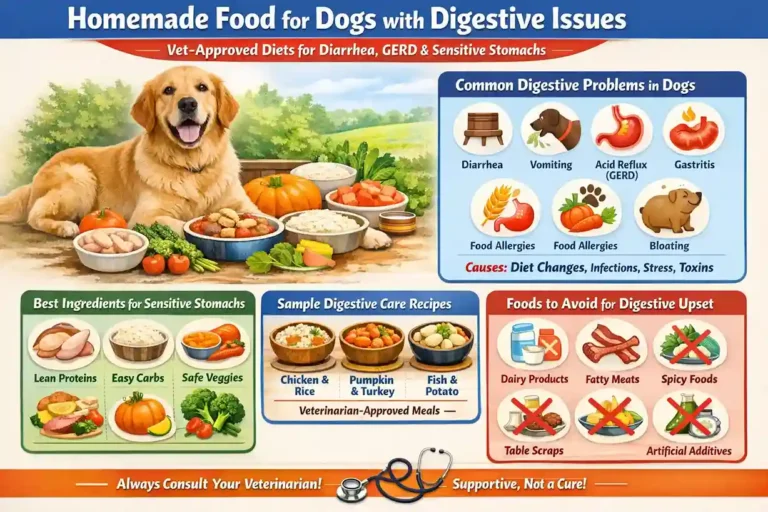
Vet-Approved Diets for Diarrhea, GERD, and Sensitive Stomachs
Dogs with digestive issues like chronic diarrhea in dogs, acid reflux (GERD), and sensitive stomachs require careful dietary management to ease their symptoms. A well-planned homemade diet for dogs with digestive problems allows owners to control ingredients, helping to avoid common allergens and irritants found in processed dog food. Homemade food can be highly effective in soothing stomach issues in dogs, improving digestive health in dogs, and restoring normal bowel movements. With vet-approved homemade dog food recipes, pet owners can offer meals that support their dog’s recovery from conditions like food intolerance, gastritis, and vomiting in dogs, leading to better overall health and comfort.
Common Digestive Problems in Dogs (Symptoms & Causes)
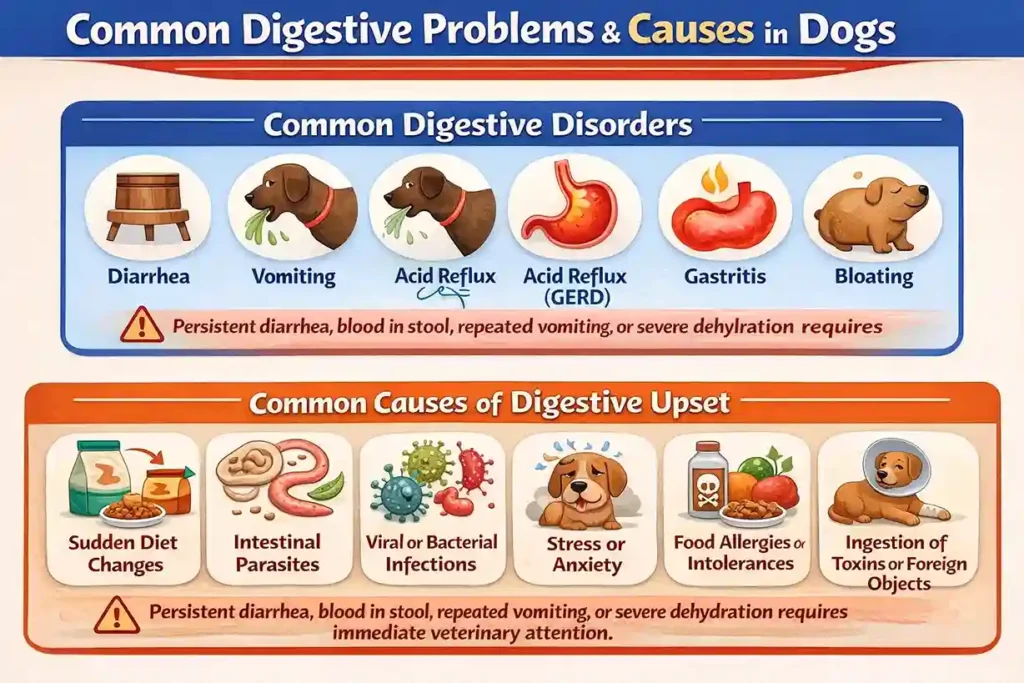
Most Frequent Digestive Disorders in Dogs
Dogs with digestive system imbalance may experience:
- Acute or chronic dog diarrhea
- Vomiting or regurgitation
- Gastritis (stomach inflammation)
- Food intolerance or food allergies
- GERD (acid reflux in dogs)
- Digestive tract irritation
- Dehydration due to fluid loss
Common Causes of Digestive Upset
Digestive disorders may be triggered by:
- Sudden diet changes
- Intestinal parasites
- Viral or bacterial infections
- Stress or anxiety
- Food allergies or intolerances
- Ingestion of toxins or foreign objects
- Post-surgical recovery
⚠️ Warning: Persistent diarrhea, blood in stool, repeated vomiting, or severe dehydration requires immediate veterinary attention.
Why Homemade Food Helps Dogs with Digestive Disorders
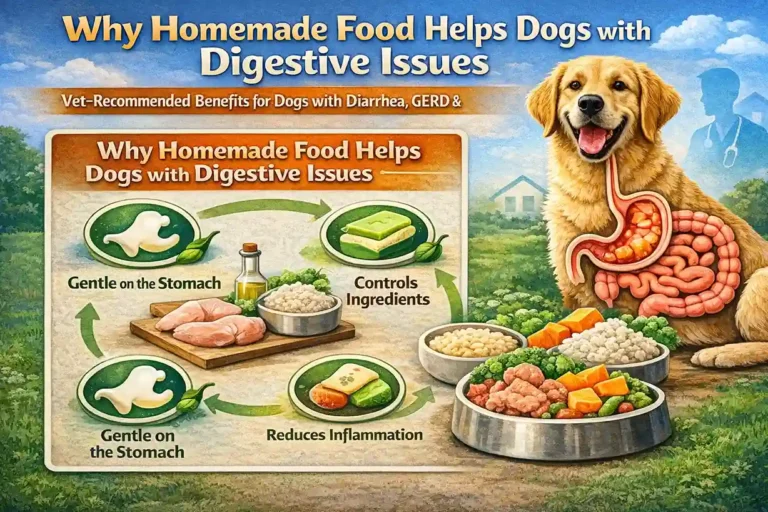
Why Veterinarians Recommend Temporary Homemade Diets
Veterinarians often recommend short-term homemade diets because they allow:
- Full control over ingredients
- Elimination of common allergens
- Reduced digestive workload
- Improved hydration
- Enhanced nutrient absorption
Potential Digestive Health Benefits
When properly prepared, homemade food may help:
- Reduce diarrhea episodes
- Soothe intestinal inflammation
- Restore gut flora
- Support recovery after illness or surgery
- Lower exposure to artificial additives
Homemade diets are supportive tools, not replacements for medical treatment.
Best Ingredients for Homemade Dog Food (Digestive-Friendly Choices)
1. Easily Digestible Proteins for Dogs with Sensitive Stomachs
Protein is essential for healing, but fat content and preparation matter.
Recommended proteins:
- Skinless, boneless chicken
- Lean turkey
- Well-cooked white fish
- Rabbit (novel protein for allergies)
Avoid:
- Fatty cuts of meat
- Raw meat or bones
- Processed meats
2. Gentle Carbohydrates That Support Digestion
Carbohydrates help bind stool and provide easily accessible energy.
Best options:
- Plain white rice
- Rice water (excellent for diarrhea)
- Potatoes
- Pumpkin (fiber-rich, stool-normalizing)
- Other well-cooked tubers
3. Vegetables That Soothe the Canine Digestive Tract
Vegetables provide fiber, hydration, and micronutrients.
Safe vegetables:
- Carrots
- Pumpkin
- Apples (no seeds)
- Mild vegetable broths
- Well-cooked vegetable blends
Avoid completely:
- Onions
- Garlic
- Spicy or seasoned vegetables
4. Healthy Fats (Used Sparingly)
Fats are necessary but should be limited during digestive upset.
Safe options (small amounts):
- Fish oil
- Olive oil
Excess fat can worsen diarrhea and vomiting.
Ideal Homemade Food Proportions for Dogs with Digestive Issues
Veterinary-aligned recovery ratio:
- 50–60 % carbohydrates(rice, pumpkin)
- 25–30 % protein(chicken, fish)
- 10–15 % vegetables
❗ Proportions vary based on age, size, and medical condition. Homemade diets should not be fed long-term without veterinary supervision.
Simple Homemade Dog Food Recipes for Digestive Problems

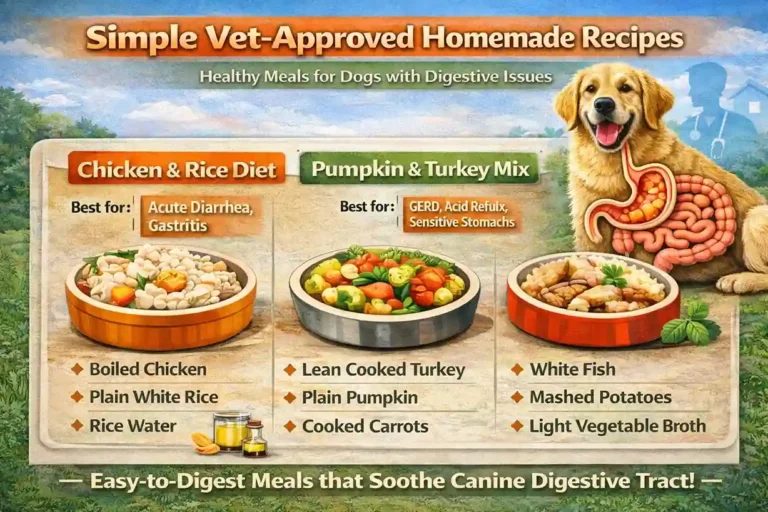
1. Chicken and Rice Recovery Diet
Best for: Acute diarrhea, vomiting, gastritis
Ingredients:
- Boiled chicken
- Plain white rice
- Rice water
Feeding: Small meals, 3–4 times daily
2. Pumpkin & Turkey Digestive Support Recipe
Best for: GERD, acid reflux, sensitive stomachs
Ingredients:
- Lean turkey
- Plain pumpkin
- Cooked carrots
3. Fish & Potato Gentle Diet
Best for: Food intolerance and allergies
Ingredients:
- White fish
- Mashed potatoes
- Light vegetable broth
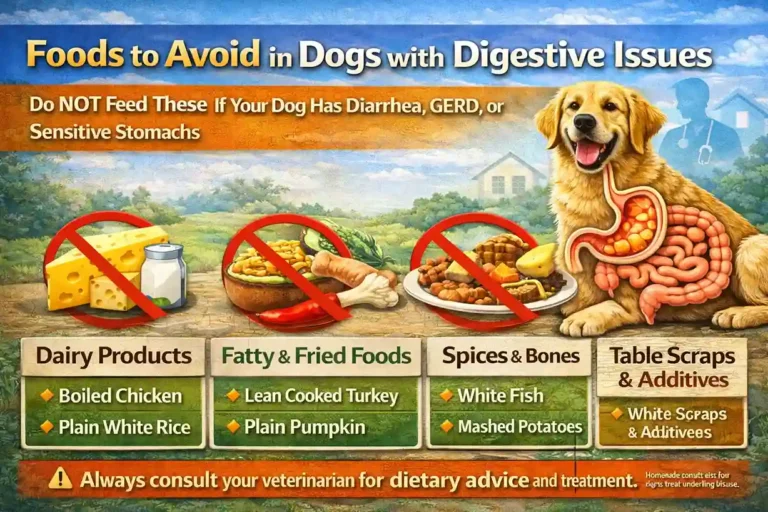
Foods to Avoid in Dogs with Digestive Disorders
Avoid these irritants completely:
- Dairy products (unless vet-approved)
- Spices and seasonings
- Fatty or fried foods
- Raw bones
- Table scraps
- Artificial treats and additives
Role of Probiotics in Homemade Diets for Dogs
Probiotics help restore intestinal balance disrupted by:
- Diarrhea
- Antibiotics
- Stress
- Infections
Use veterinarian-approved canine probiotics only. Human yogurt should not be used unless specifically recommended.
Hydration: Preventing Dehydration in Dogs with Diarrhea
Hydration is critical during digestive illness.
- Provide fresh water at all times
- Offer rice water for electrolyte support
- Use small, frequent sips if vomiting is present
Severe dehydration requires veterinary fluid therapy.
When Homemade Food Is NOT Enough
Seek veterinary care if:
- Diarrhea lasts longer than 48 hours
- Vomiting persists
- Lethargy or weakness develops
- Signs of poisoning appear
- Puppies or senior dogs are affected
Homemade food supports recovery but does not replace diagnosis or treatment.
Medical Disclaimer
This article is based on veterinary nutrition principles and aligns with guidance from organizations such as the American Veterinary Medical Association.
However, always consult a licensed veterinarian before starting or continuing a homemade diet—especially for dogs with chronic digestive disease.
Frequently Asked Questions (FAQs)
1. Can homemade food cure digestive problems in dogs?
No. It supports recovery but does not treat underlying disease.
2. How long should dogs eat a recovery diet?
Usually 3–7 days, unless otherwise advised.
3. Is homemade food safe for puppies with diarrhea?
Only under veterinary supervision.
4. Can homemade food help dog acid reflux (GERD)?
Yes, when low-fat and properly balanced.
5. Is yogurt safe for dogs with digestive issues?
Often no—many dogs are lactose intolerant.
6. Can homemade diets be fed long-term?
Only if nutritionally balanced by a veterinary professional.
References
Association of American Feed Control Officials. (2023). AAFCO dog food nutrient profiles.
Hand, M. S., Thatcher, C. D., Remillard, R. L., Roudebush, P., & Novotny, B. J. (2010). Small animal clinical nutrition (5th ed.). Mark Morris Institute.