
Signs of Poor Digestion in Dogs: Symptoms, Causes, and When to Seek Help
Written by: Dr. Akram Khan, DVM
Medically Reviewed by: Dr. Muhammad Saeed, PhD
Last updated on September 01, 2026
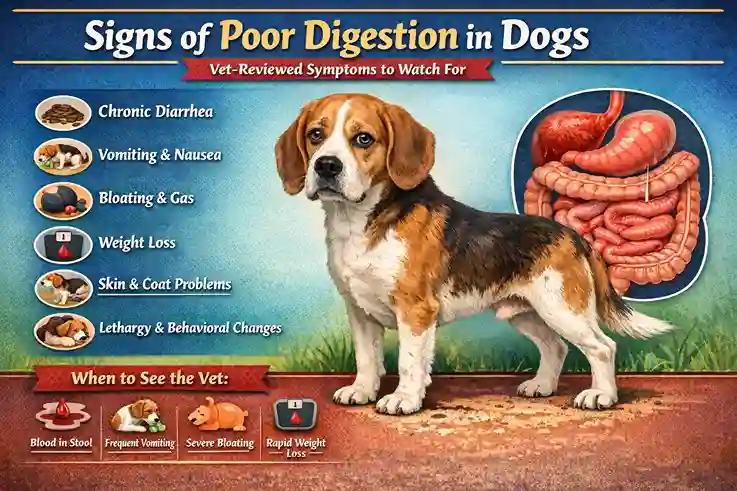
Vet-Reviewed Guide to Symptoms, Causes & When to Act
Poor digestion in dogs can lead to several signs of discomfort, including chronic diarrhea in dogs, vomiting and regurgitation, and bloating in dogs. These digestive issues often signal an underlying problem such as food sensitivities in dogs, intestinal inflammation, or gut health problems. If your dog is showing signs like weight loss despite eating or excessive gas in dogs, it’s important to take action. Identifying digestive problems in dogs early can help prevent more severe conditions like inflammatory bowel disease and improve your pet’s overall digestive health.
What Is Poor Digestion in Dogs?
Poor digestion occurs when food is not properly broken down, absorbed, or moved through the digestive tract. This can involve the stomach, intestines, intestinal lining, digestive enzymes, or immune responses within the gut.
When digestion is impaired, nutrients remain unavailable to the body, leading to gastrointestinal upset and systemic symptoms.
Most Common Signs of Poor Digestion in Dogs
1. Chronic Diarrhea in Dogs
Persistent or recurring diarrhea is one of the clearest indicators of digestive dysfunction.
Possible causes include:
- Food sensitivities or allergies
- Gut inflammation or IBD
- Poor nutrient absorption
- Intestinal infections
Loose stools that last more than 48–72 hours warrant veterinary attention.
2. Vomiting or Regurgitation
Frequent vomiting or regurgitation may signal:
- Acid reflux or stomach irritation
- Delayed gastric emptying
- Food intolerance
- Inflammation of the stomach or intestines
Occasional vomiting can be normal, but repeated episodes indicate poor digestive processing.
3. Bloating, Gas & Flatulence
Excessive bloating or flatulence occurs when food ferments improperly in the intestines. This is often linked to:
- Imbalanced gut bacteria
- Poor enzyme activity
- Diets high in difficult-to-digest ingredients
Chronic bloating may also increase the risk of discomfort and pain.
4. Constipation or Irregular Bowel Movements
Poor digestion doesn’t always cause diarrhea. Constipation, straining, or infrequent stools can indicate:
- Dehydration
- Low dietary fiber
- Reduced gut motility
- Intestinal inflammation
Healthy digestion produces regular, well-formed stools.
5. Blood or Mucus in Stool
The presence of blood or mucus in stool is a red-flag sign and may indicate:
- Inflammation of the intestinal lining
- Food allergies
- Intestinal infections
- Immune-mediated bowel disease
This symptom should always prompt veterinary evaluation.
6. Loss of Appetite or Picky Eating
Dogs with digestive discomfort often show:
- Reduced appetite
- Avoidance of previously favorite foods
- Slow or reluctant eating
This behavior is often a response to stomach pain, nausea, or irritation.
7. Weight Loss Despite Eating
Unexplained weight loss suggests poor nutrient digestion or absorption. Even when food intake appears normal, the body may not be accessing:
- Proteins
- Fats
- Vitamins and minerals
This is common in malabsorption syndromes and chronic intestinal disease.
8. Weakness, Low Energy & Lethargy
Poor digestion reduces the availability of energy sources. Dogs may appear:
- Weak
- Less active
- Easily fatigued
This reflects insufficient nutrient delivery to muscles and organs.
9. Dehydration
Digestive disorders—especially diarrhea and vomiting—can quickly lead to fluid and electrolyte loss, increasing the risk of dehydration, particularly in puppies and senior dogs.
10. Skin, Coat & Immune Changes
The gut and immune system are closely linked. Poor digestion may manifest as:
- Dull or brittle coat
- Increased shedding
- Skin irritation
- Recurrent infections
These signs reflect impaired nutrient absorption and immune imbalance.
Behavioral Changes Linked to Digestive Discomfort
Dogs experiencing digestive pain may show:
- Restlessness
- Irritability
- Overstimulation or withdrawal
- Changes in posture or movement
Behavior changes are often overlooked signs of chronic gastrointestinal discomfort.
What Causes Poor Digestion in Dogs?
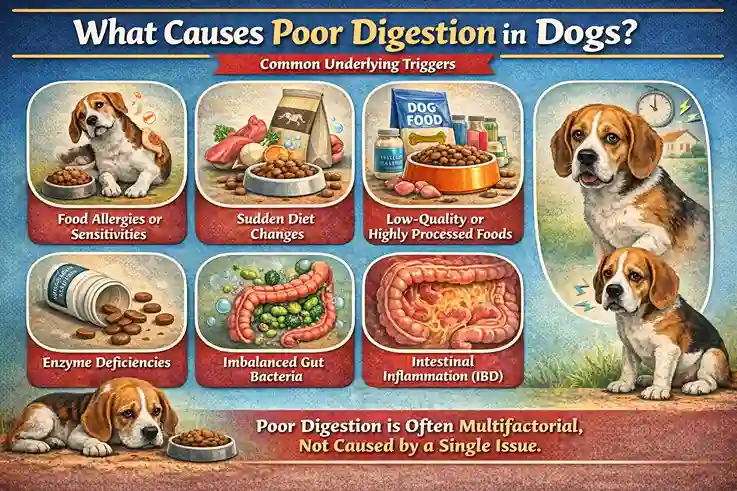
Common Underlying Triggers
- Food allergies or sensitivities
- Sudden diet changes
- Low-quality or highly processed foods
- Enzyme deficiencies
- Intestinal inflammation (IBD)
- Imbalanced gut bacteria
- Stress or environmental changes
Poor digestion is often multifactorial, not caused by a single issue.
Role of the Immune System in Digestive Health
The gut houses a large portion of the immune system. When the immune response is overactive, it may attack food antigens or gut bacteria, leading to:
- Chronic inflammation
- Damage to the intestinal lining
- Poor nutrient absorption
This mechanism is central to IBD and food-related digestive disorders.
How Poor Digestion Affects Nutrient Absorption
Digestive dysfunction interferes with:
- Protein breakdown
- Fat digestion
- Vitamin and mineral uptake
Over time, this can lead to systemic weakness, immune dysfunction, and chronic disease progression.
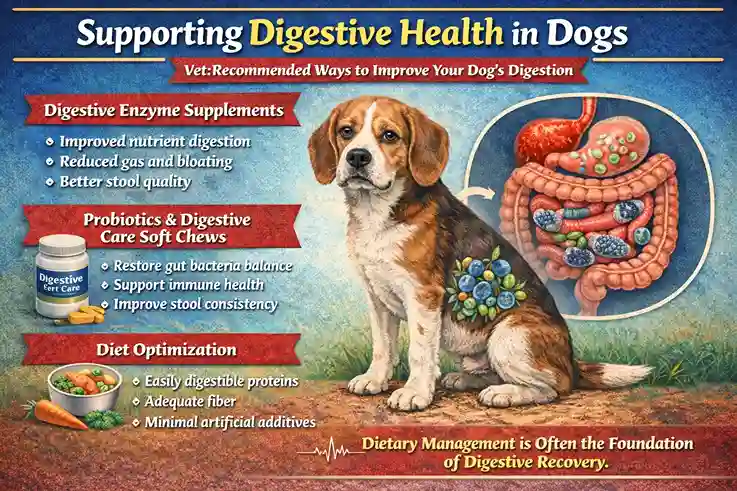
Supporting Digestive Health in Dogs
When to See a Veterinarian
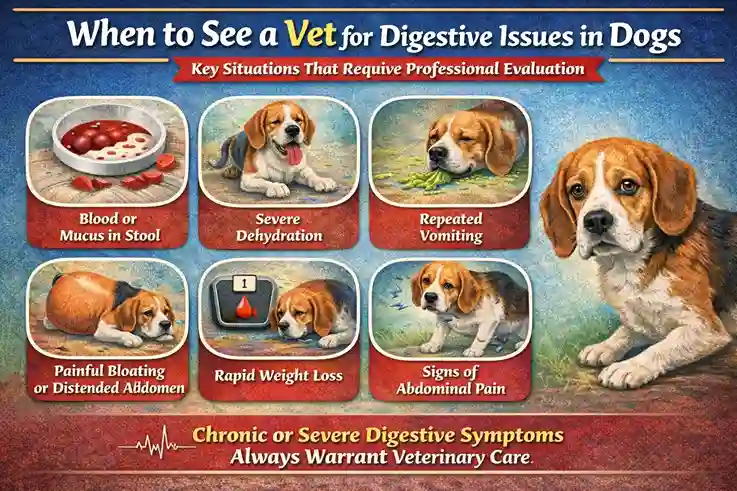
Seek veterinary care if signs persist, worsen, or include:
- Blood in stool
- Severe dehydration
- Repeated vomiting
- Rapid weight loss
- Signs of pain
Diagnosis may involve fecal testing, blood work, dietary trials, or imaging.
Medical Disclaimer
This content is for educational purposes only and does not replace professional veterinary advice. Always consult a licensed veterinarian for diagnosis and treatment of digestive conditions.
Frequently Asked Questions (FAQs)
1. Is poor digestion the same as IBD in dogs?
No. Poor digestion can be temporary or mild, while IBD is a chronic inflammatory condition requiring veterinary management.
2. Can digestive problems cause skin issues?
Yes. Some digestive disorders can affect the skin and coat through nutrient deficiencies or changes in immune function
3. Are digestive supplements safe for dogs?
Veterinarian-approved supplements are generally safe when used as directed, but they should not replace proper diagnosis or treatment