
How to Soothe a Dog’s Intestinal Tract after Eating Table Scraps
Written by: Dr. Akram Khan, DVM
Medically Reviewed by: Dr. Khalid Mehmood, PhD (Assistant Professor in Clinical Veterinary Medicine)
Last updated on October 29, 2026
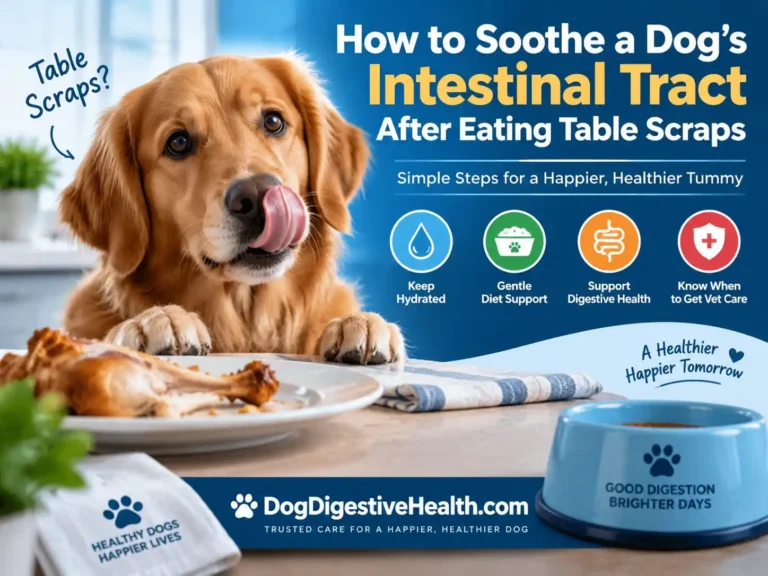
Dogs are naturally curious and often interested in whatever their owners are eating. A few bites of leftover food may seem harmless, but table scraps can sometimes disturb a dog’s digestive system, especially when the food is rich, fatty, heavily seasoned, or very different from their regular diet.
If your dog ate table scraps and developed digestive discomfort, the goal is to support normal intestinal function while allowing the gastrointestinal tract time to recover. Simple measures such as maintaining hydration, avoiding additional dietary stress, and monitoring your dog’s condition can help in mild cases.
If your dog ate table scraps and has digestive upset, remove access to more leftovers, provide fresh water, avoid rich or fatty foods, and allow the gastrointestinal system time to settle. Mild stomach irritation may improve with supportive care, but persistent vomiting, diarrhea, appetite loss, abdominal pain, weakness, or worsening symptoms require veterinary attention.
How Can I Soothe My Dog’s Intestinal Tract After Eating Table Scraps?
When a dog eats table scraps, the digestive system must process unfamiliar ingredients, different fat levels, and sometimes large portions compared with their normal food. This sudden dietary change can temporarily disturb digestion.
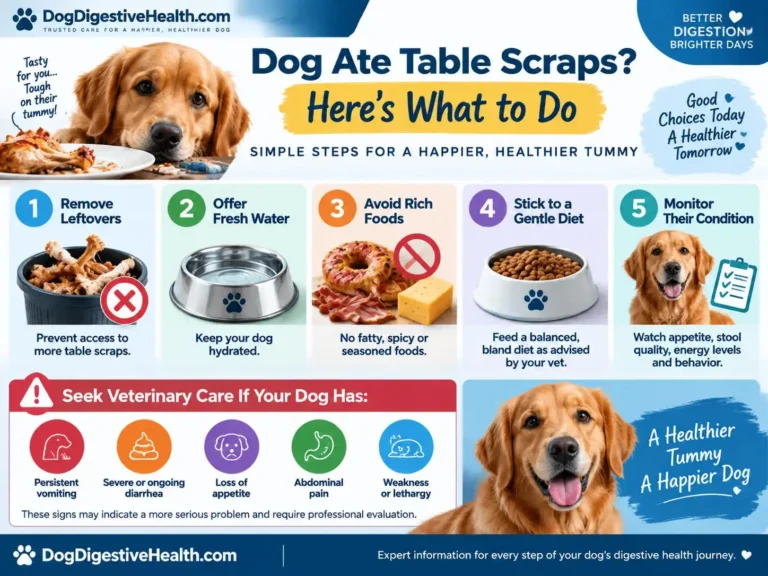
To help soothe your dog’s intestinal tract after eating table scraps:
- Remove remaining leftovers and prevent further access.
- Provide clean, fresh water.
- Avoid giving additional treats or human foods.
- Keep feeding routines consistent.
- Monitor appetite, energy level, stool quality, and overall behavior.
The intestinal tract contains a complex community of microorganisms known as the gut micro biome. These beneficial bacteria contribute to digestion and intestinal health, and sudden diet changes can temporarily affect this balance.
My Dog Ate Table Scraps and Has an Upset Stomach — What Should I Do?
Start by considering what your dog ate and how much was consumed. A small amount of plain food may cause little or no reaction, while larger amounts of rich foods can create more digestive stress.
Pay particular attention if the table scraps contained:
- Fatty meats
- Fried foods
- Greasy sauces
- Dairy products
- Spicy seasonings
- Foods containing bones
Avoid trying to counteract the problem with additional foods or home remedies that may further irritate the stomach. The safest approach is usually to remove the source of irritation and allow your dog’s digestive system to stabilize.
What Can I Give My Dog After Eating Human Food and Having Digestive Problems?
Many owners wonder what to feed a dog after eating table scraps. The answer depends on the severity of digestive upset and your dog’s overall health.
For mild digestive disturbances, supportive care may include:
- Fresh water to maintain hydration
- A consistent, balanced dog diet
- Smaller meals if recommended by your veterinarian
- Veterinary-formulated gastrointestinal diets when appropriate
Avoid sudden food changes because introducing unfamiliar foods can sometimes prolong intestinal irritation. Dogs generally do best when their diet remains stable and appropriate for their nutritional needs.
How Do I Settle My Dog’s Stomach after Eating Leftovers?
If your dog ate leftovers and has mild stomach discomfort, focus on reducing stress on the digestive tract.
Helpful steps include:
- Stop offering table scraps.
- Avoid fatty foods such as bacon, gravy, fried foods, and greasy meats.
- Encourage normal water intake.
- Observe your dog’s behavior and bowel movements.
A dog’s digestive system is designed to handle its regular diet, not frequent changes between commercial food and rich human foods. Returning to a normal feeding pattern often helps the gastrointestinal tract regain balance.
Can Probiotics Help My Dog After Eating Table Scraps?
Probiotics are beneficial microorganisms that may support intestinal microbial balance in some dogs. They are commonly used in canine digestive care to support healthy gut bacteria and normal stool quality.
However, probiotics are not a replacement for veterinary assessment when a dog has significant digestive problems. A dog with persistent vomiting, severe diarrhea, loss of appetite, abdominal pain, or weakness may need medical evaluation rather than only digestive supplements.
The effectiveness of probiotics can vary depending on the specific product, bacterial strains, and the individual dog’s condition.
What Foods Are Gentle on a Dog’s Digestive System after Eating Leftovers?
After a dog eats table scraps, the goal is to avoid additional irritation and support normal digestion.
Generally helpful approaches include:
- Returning to a complete and balanced dog food
- Avoiding high-fat and heavily seasoned foods
- Following veterinary dietary recommendations when needed
Foods that commonly create digestive challenges include:
- Greasy leftovers
- Fried foods
- Fatty meat scraps
- Rich sauces
- Large amounts of cheese or dairy
The purpose is not to “cleanse” the intestinal tract but to give the digestive system a chance to return to normal function.
How Long Does a Dog’s Intestinal Tract Take to Recover after Eating Table Scraps?
Recovery time varies depending on the type and amount of food eaten, as well as the individual dog’s age, health, and digestive sensitivity.
Some dogs recover quickly after a minor dietary mistake, while others may experience digestive upset for a longer period.
A dog that continues to show:
- Loose stool
- Vomiting
- Poor appetite
- Low energy
- Abdominal discomfort
Should be monitored carefully and may require veterinary advice.
My Dog Ate Greasy Leftovers and Has Digestive Upset — How Can I Help?
Greasy leftovers are among the table scraps most likely to cause digestive problems because they contain concentrated fat. Foods such as fried chicken, bacon, pizza, fatty meat, and gravy can provide much more fat than a dog’s normal meal.
High-fat meals may contribute to gastrointestinal irritation and can increase concern for pancreatitis in susceptible dogs. Pancreatitis involves inflammation of the pancreas and may require veterinary treatment depending on severity (1).
If your dog ate greasy leftovers, avoid adding more fatty foods and watch closely for changes in appetite, energy, vomiting, stool consistency, or signs of pain.
When Does Digestive Upset After Table Scraps Need Veterinary Attention?
Not every episode of eating table scraps requires emergency care, but some signs indicate that professional evaluation is needed.
Contact your veterinarian if your dog develops:
- Persistent vomiting
- Severe or ongoing diarrhea
- Refusal to eat
- Significant lethargy
- Abdominal pain
- Weakness
- Dehydration
- Rapid worsening of condition
Digestive problems can sometimes progress beyond simple stomach upset, especially when the food consumed was high in fat or contained potentially harmful ingredients.
Dog Ate Table Scraps: Mild Upset or Veterinary Concern?
Situation after eating table scraps | Possible concern | Recommended action |
Ate a small amount and behaves normally | Temporary digestive adjustment | Remove scraps, provide water, and monitor |
Mild gas or soft stool | Minor gastrointestinal irritation | Avoid more table scraps and observe |
Vomiting, diarrhea, or reduced appetite | More significant digestive upset | Contact a veterinarian if symptoms continue |
Ate fatty foods and appears unwell | Possible fat-related digestive problem | Seek veterinary guidance |
Persistent vomiting, pain, weakness, or dehydration | Possible serious illness | Arrange veterinary evaluation |
Key Takeaway
If your dog ate table scraps, the best approach is to support the intestinal tract with hydration, dietary consistency, and careful observation. Avoid adding more human food, especially rich or fatty leftovers, while your dog’s digestive system recovers.
Most mild cases improve with supportive care, but every dog responds differently. Persistent digestive problems or concerning changes in behavior should always be discussed with a veterinarian.
Medical Disclaimer
This article provides general information about canine digestive health and is not a substitute for veterinary diagnosis, treatment, or professional medical advice. Every dog is different, and dogs with persistent or worsening digestive problems should be evaluated by a veterinarian.
Frequently Asked Questions(FAQs)
1. How can I soothe my dog’s intestinal tract after eating table scraps?
Remove leftover food, provide fresh water, avoid additional rich foods, and allow your dog’s digestive system time to settle. Monitor for worsening signs.
2. My dog ate table scraps and has diarrhea. What should I do?
Avoid more human food, maintain hydration, and monitor your dog. Contact a veterinarian if diarrhea continues or other symptoms develop.
3. Can probiotics help my dog after eating leftovers?
Probiotics may support intestinal balance in some dogs, but they should not replace veterinary care for severe or persistent digestive problems.
4. What should I feed my dog after eating table scraps?
Return to a balanced dog diet and avoid fatty, seasoned, or rich foods. Any dietary changes should be introduced carefully.
5. When should I call a veterinarian after my dog eats table scraps?
Seek veterinary advice if your dog has ongoing vomiting, severe diarrhea, loss of appetite, abdominal pain, weakness, dehydration, or worsening symptoms.
References
- Cridge H, Twedt DC, Marolf AJ, Steiner JM. New insights into the etiology, risk factors, and pathogenesis of pancreatitis in dogs. Journal of Veterinary Internal Medicine. 2022;36(3):817-831. doi:10.1111/jvim.16421.
- Cridge H, Parker VJ, Kathrani A. Nutritional management of pancreatitis and concurrent disease in dogs and cats. Journal of the American Veterinary Medical Association. 2024;262(6):834-840. doi:10.2460/javma.23.11.0641.