
How to Read Dog Supplement Labels: What to Look For, Red Flags & Safe Buying Tips
Written by: Dr. Akram Khan, DVM
Medically Reviewed by: Dr. Muhammad Saeed, PhD
Last updated on September 05, 2026
Introduction:
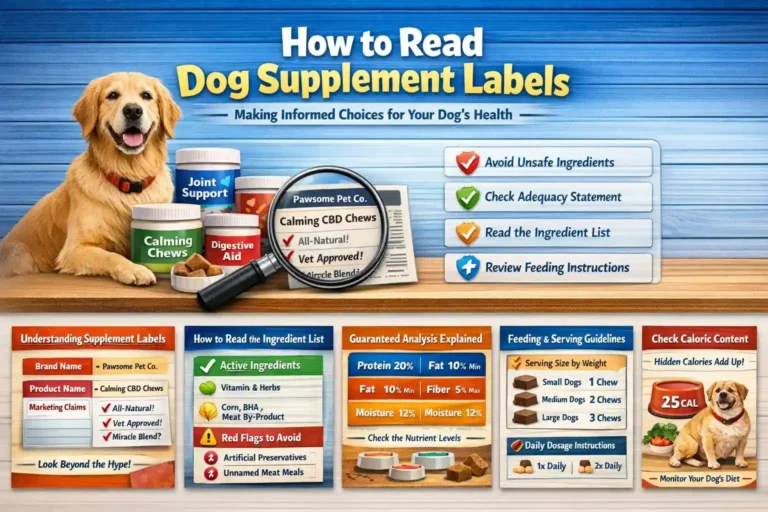
With so many options on the market, many pet owners search “how to read dog supplement labels,” “what to look for in dog supplements,” or even “how to choose safe dog supplements” before making a purchase. From calming chews and CBD treats to digestive and joint support formulas, it’s easy to get confused by flashy packaging and bold claims. However, not all products are created equal, and some labels can even be misleading. Learning how to understand dog supplement ingredients and identify dog supplement label red flags is essential for choosing safe, high-quality products that truly support your dog’s health.
Proper label reading helps pet parents:
- Avoid unsafe ingredients and fillers
- Choose supplements tailored to their dog’s age, size, and activity level
- Compare different brands, price points, and product quality
- Prevent overfeeding or underfeeding
- Make vet-informed purchasing decisions
1. Brand Name, Product Name & Marketing Wording
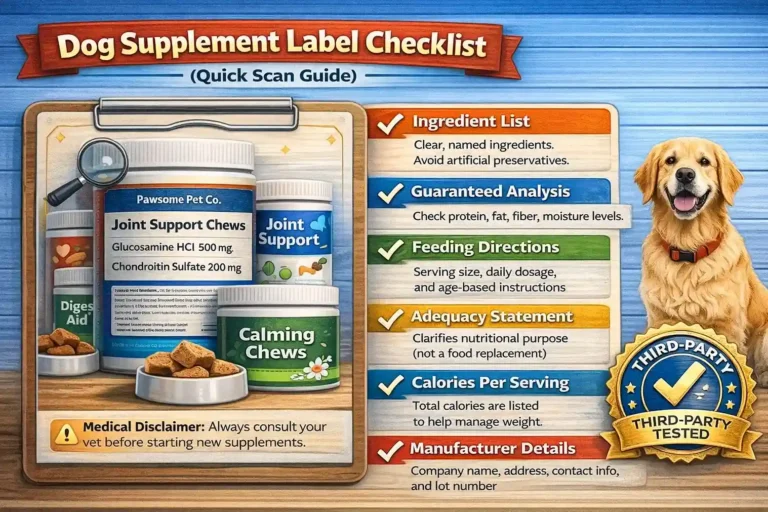
Brand Name vs Product Name: What’s the Difference?
- Brand Name refers to the manufacturer of the supplement.
- Product Name: Tells you the specific purpose of the supplement, such as “Calming CBD Chews.”
Marketing Wording to Be Cautious Of
Look out for these phrases that may influence purchasing decisions without guaranteeing quality:
- “Vet-approved” (without proof or certification)
- “Miracle blend”
- “All-natural” (not regulated and could still contain harmful ingredients)
Be wary of such terms, as they may not necessarily reflect the safety or effectiveness of the product.
2. Adequacy Statement: What It Does (and Doesn’t) Mean
The adequacy statement explains whether a product:
- Meets a nutritional purpose
- Supplements (not replacements) for regular food
It’s important to remember that supplements do not replace a balanced diet. For instance, chicken dog food or lamb dinner formulas are designed to provide complete nutrition, whereas supplements are only intended to provide additional support.
3. Ingredient List: How to Read It Like a Pro
Ingredient Order Matters
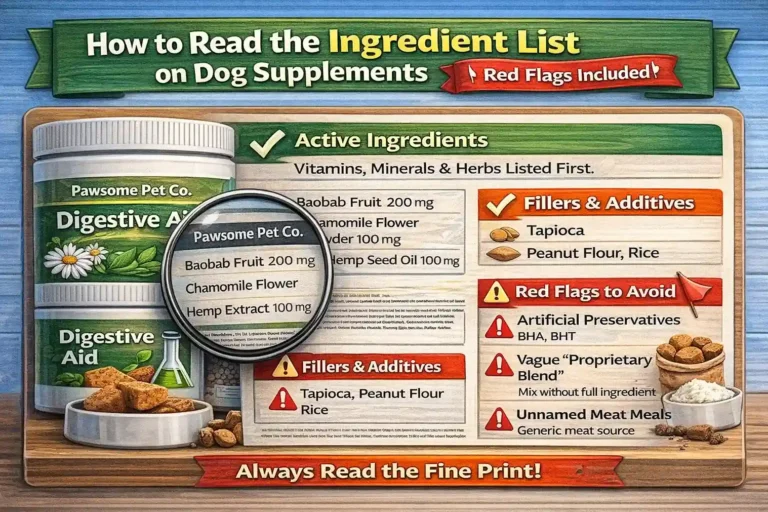
Ingredients are listed in descending order by weight before processing:
- The first few ingredients are the largest contributors to the formula.
Common Ingredients You’ll See
- Active Ingredients: Vitamins, minerals, and herbs like chamomile, baobab, or hemp extract.
- Flavoring Agents: Chicken flavor, honey, duck meat.
- Binders & Fillers: Peanut flour, tapioca, rice.
Red Flags to Watch For
- Artificial preservatives like BHA/BHT
- Vague terms like “proprietary blend” (without listing exact ingredients)
- Unnamed animal sources (such as “meat meal”)
4.Guaranteed Analysis: Understanding the Numbers
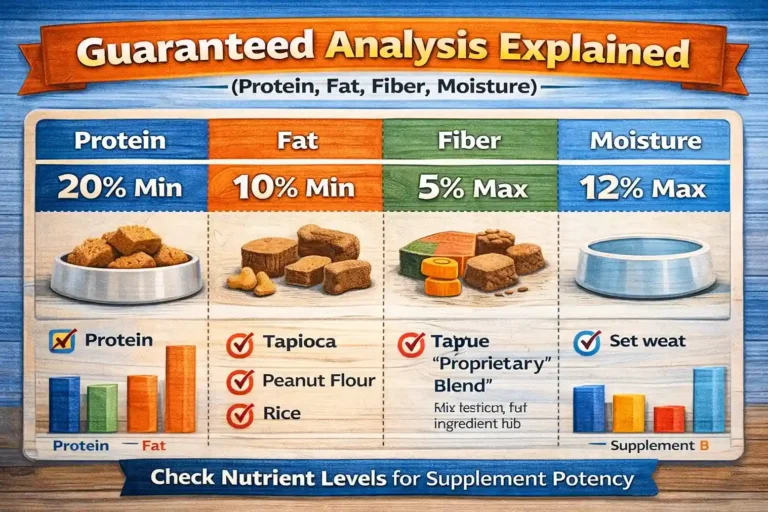
The guaranteed analysis gives a breakdown of essential nutrients like
- Protein
- Fat
- Fiber
- Moisture
This section helps compare:
- Supplement potency
- Nutrient density
- Price-value ratio
📊 Note: Higher numbers aren’t always better. Balance matters, as some nutrients may be more effective in lower quantities.
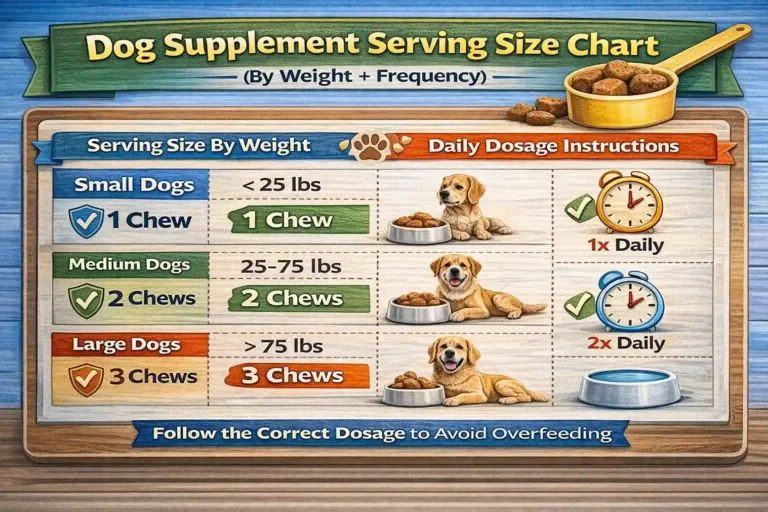
5.Serving Size, Quantity & Feeding Instructions
Why Feeding Instructions Matter
Incorrect dosing can lead to:
- Overfeeding or underfeeding
- Digestive upset or nutrient imbalance
Make sure the label includes:
- Serving sizes based on dog weight
- Feeding frequencies and clear instructions based on age and activity level
6.Caloric Content: Hidden Calories Add Up
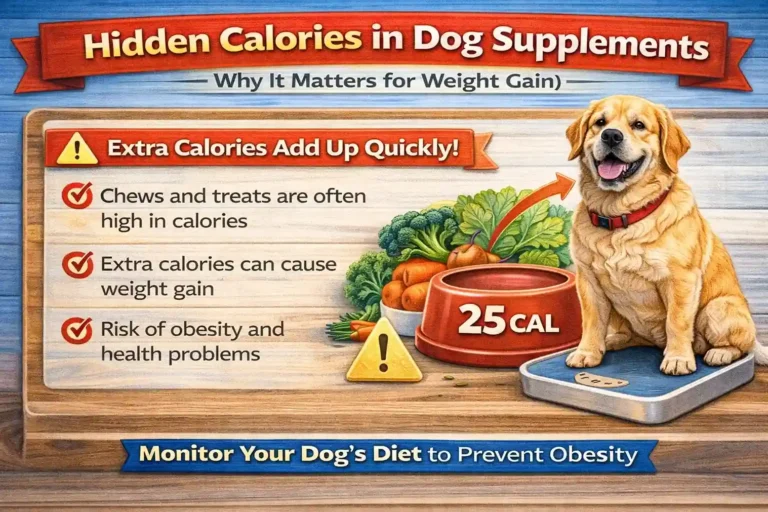
Many supplements, particularly treats or CBD chews, contain calories. This is essential to track because:
- Excessive calories can lead to weight gain
- It can interfere with weight management food
Always check that the caloric content is disclosed, especially for daily-use supplements.
7. Life Stage Indication & Suitability
Look for life stage indications, as quality labels specify whether the product is suitable for:
- Puppies
- Adult dogs
- Senior dogs
Additionally, ensure that the supplement is designed for dogs only, as some ingredients may overlap with cat food, which isn’t suitable for dogs.
8. Manufacturer Information, Address & Contact Details
A reputable brand should list:
- Manufacturer’s name
- Physical address
- Customer contact information
This ensures:
- Accountability in case of adverse effects
- Traceability (lot number for recalls)
- Consumer assurance regarding quality and safety
9. Laboratory Testing, Quality Assurance & Regulations
Look for:
- Third-party laboratory testing
- Batch numbers for quality assurance
- Compliance with pet food labeling regulations
These details indicate that the manufacturer has verified the ingredients, conducted safety tests, and provided an honest product breakdown.
10. Understanding Common Label Terms & Qualifiers
Common Terms:
- Natural: Loosely defined and not always truly natural.
- Blend: May hide exact quantities of ingredients.
- Flavor: Doesn’t always mean real meat (e.g., chicken flavor could be synthetic).
- Supplement: This product does not replace food and is only meant to supplement your dog’s diet.
- Treat: Often higher in calories than supplements or regular food.
11. Comparing Products, Prices & Value
When comparing supplements:
- Check the quantity against the price tag
- Compare active ingredients, not just the packaging
- Don’t assume a higher price equates to better quality
💡 Tip: Higher prices often reflect marketing, not product quality.
12. Common Mistakes Pet Parents Make When Reading Labels
- Focusing too much on brand popularity rather than ingredients
- Ignoring ingredient lists
- Overlooking feeding instructions or serving sizes
- Confusing pet food with pet supplements
- Assuming human-grade equals dog-safe
Medical Disclaimer
This article adheres to consumer safety best practices, aligns with veterinary nutrition principles, and avoids unsupported medical claims. Always consult with a licensed veterinarian before starting new supplements, especially for dogs with medical conditions.
Frequently Asked Questions(FAQs)
1. How do I know if a dog supplement label is trustworthy?
Look for clear ingredients, accurate feeding instructions, manufacturer address, and testing disclosures.
2. Are dog supplements regulated like dog food?
No. Supplements have looser regulations, which is why label literacy is so important.
3. Can I give my dog human supplements?
Only if approved by a veterinarian—many human supplements are unsafe for dogs.
4. What ingredients should I avoid in dog supplements?
Avoid artificial preservatives, unnamed animal ingredients, excessive fillers, and vague blends.
5. Are dog supplement labels misleading?
Yes, they can be. Watch out for terms like “natural”, “all-natural”, and “miracle blend” without proof.
References
- Association of American Feed Control Officials (AAFCO).(2023). Model regulations for pet food and specialty pet products.
https://www.aafco.org/consumers/understanding-pet-food - S. Food & Drug Administration (FDA).(2024). Animal dietary supplements and labeling requirements.
https://www.fda.gov/animal-veterinary/animal-health-literacy - American Veterinary Medical Association (AVMA).(2023). Dietary supplements for pets: What veterinarians want owners to know.
https://www.avma.org/resources-tools/pet-owners/petcare/pet-dietary-supplements - Merck Veterinary Manual.(2023). Pet nutrition, supplements, and labeling standards.
https://www.merckvetmanual.com/management-and-nutrition - Freeman, L. M., & Chandler, M. L.(2018). Use and misuse of dietary supplements in companion animals. Journal of the American Veterinary Medical Association, 252(2), 139–147.
https://doi.org/10.2460/javma.252.2.139