
Best Elevated Dog Bowls for Large Breeds With Acid Reflux
Written by: Dr. Akram Khan, DVM
Medically Reviewed by: Dr. Khalid Mehmood, PhD (Assistant Professor in Clinical Veterinary Medicine)
Last updated on October 29, 2026
A Veterinary-Informed Guide to Choosing the Right Feeder
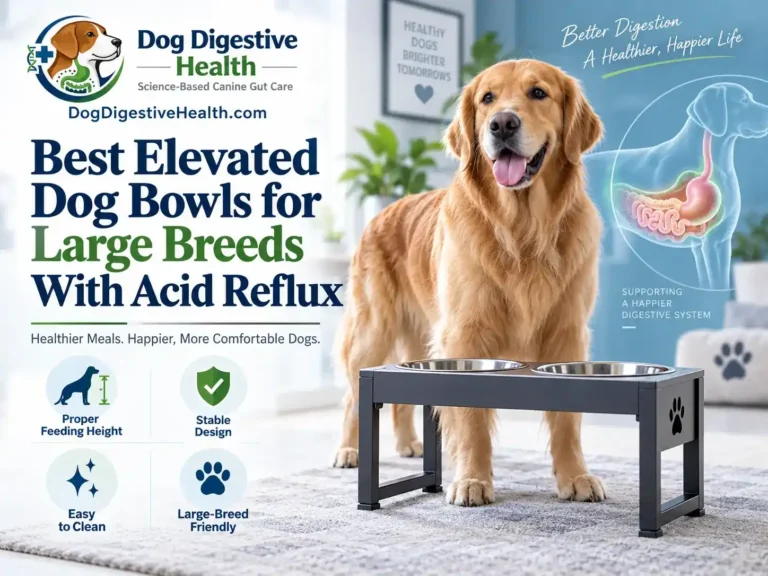
Finding the best elevated dog bowl for large breeds with acid reflux concerns requires more than choosing a tall stand. Large dogs have different body structures, eating patterns, and health needs, so the right feeder should support comfortable posture, stable feeding, and practical daily use.
Many owners consider elevated bowls when their dogs experience regurgitation, discomfort after meals, or difficulty eating from floor-level dishes. However, an elevated feeder should be viewed as a supportive feeding tool rather than a treatment for canine acid reflux. Dogs with ongoing digestive problems require proper veterinary evaluation to identify the underlying cause and the most appropriate feeding approach.
An elevated dog bowl may improve feeding comfort and posture for some large breed dogs, but it is not proven to stop canine acid reflux. The ideal feeder should provide suitable height, stability, hygiene, and compatibility with the dog’s individual needs. Dogs with frequent regurgitation, swallowing problems, or suspected gastrointestinal disease should receive veterinary guidance before changing their feeding setup.
Can Elevated Dog Bowls Help Dogs With Acid Reflux?
Elevated dog bowls are designed to raise food and water closer to a dog’s natural standing position. For some large dogs, this may make eating more comfortable by reducing excessive bending and allowing a more relaxed feeding posture.
However, the relationship between elevated feeders and acid reflux is not straightforward. Canine gastro esophageal reflux disease (GERD) involves movement of stomach contents back into the esophagus, and bowl height alone does not address all factors involved in this process.
A raised feeder may be considered as part of an overall feeding strategy, but it should not replace veterinary care, dietary management, or treatment when a dog has diagnosed gastrointestinal disease.
What Is the Best Elevated Dog Bowl for Large Breeds With Acid Reflux Concerns?
The best elevated dog bowl for large breeds depends on the individual dog’s size, feeding habits, and health requirements. A suitable feeder should provide comfort without forcing the dog into an unnatural eating position.
Important features include:
- Adjustable height to match the dog’s body structure
- Strong, stable construction for large and powerful breeds
- Stainless steel bowls for durability and easy cleaning
- Wide bowl design for comfortable access
- Non-slip features to prevent movement during meals
- Compatibility with slow feeder inserts when needed
Large breeds such as Great Danes, German Shepherds, Mastiffs, and Doberman Pinschers may benefit from carefully selected feeding equipment because their body proportions vary considerably.
What Height Should an Elevated Dog Bowl Be for a Large Breed?
There is no single ideal height that works for every large dog. The correct elevated bowl height depends on factors such as shoulder height, neck length, body shape, and individual comfort.
A properly positioned feeder should allow the dog to eat without excessive stretching upward or lowering the head uncomfortably. Adjustable elevated dog bowls for large breeds are often practical because they allow owners to modify the height as needed.
For giant breeds, including Great Danes and Mastiffs, selecting the correct height is especially important because their size and anatomy can make feeding posture more challenging.
Are Raised Dog Bowls Good for Dogs with Regurgitation or Reflux?
A raised dog bowl may provide improved feeding comfort for some dogs with posture-related challenges, but it does not directly treat reflux or prevent all episodes of regurgitation.
Dogs that frequently bring food back up, swallow repeatedly, cough after eating, or show discomfort during meals may require veterinary assessment. Conditions such as mega esophagus or other esophageal disorders need specific management plans that may include specialized feeding techniques.
An elevated feeder should therefore be considered one part of a broader feeding routine that may also include appropriate meal size, feeding frequency, diet selection, and medical care when required.
How to Choose an Elevated Dog Bowl for Giant Breeds
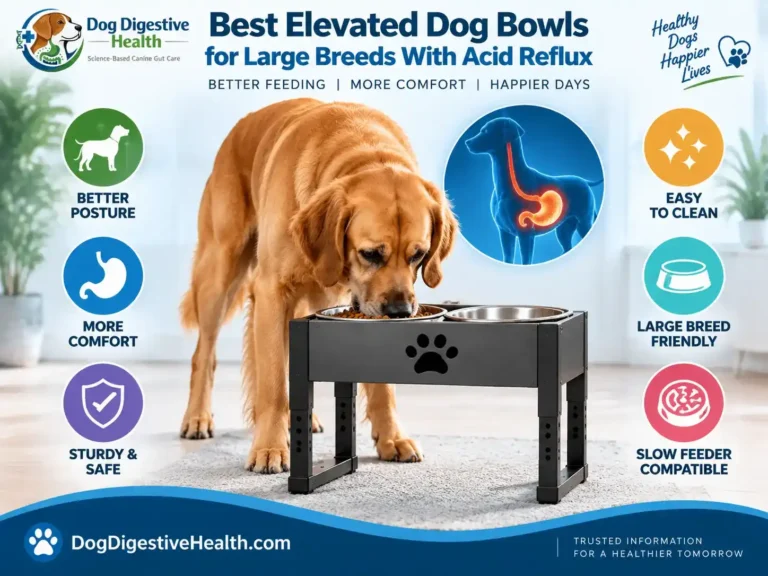
Selecting an elevated feeder for giant breeds requires attention to both comfort and safety. A well-designed feeder should remain stable when used by large dogs and should withstand daily activity.
Feature | Why It Matters |
Adjustable height | Allows customization based on body size and feeding posture |
Stainless steel bowls | Durable, hygienic, and easy to clean |
Stable base | Prevents sliding during meals |
Slow feeder compatibility | Helps manage rapid eating habits |
Large bowl capacity | Suitable for larger food portions |
Easy-clean design | Supports better feeding hygiene |
A quality feeder should be chosen based on the dog’s needs rather than marketing claims suggesting it can prevent or cure digestive disorders.
Are Elevated Bowls Safe for Great Danes and Other Large Breeds?
Owners of Great Danes and other deep-chested breeds often ask whether elevated bowls are safe. These breeds have a naturally increased risk of gastric dilatation-volvulus (GDV), commonly known as bloat.
Research has not shown that elevated bowls prevent GDV, and some studies have explored possible associations between raised feeding and GDV risk factors (1). Because evidence remains complex, feeding choices for high-risk breeds should be individualized.
Owners should discuss feeding equipment with a veterinarian if their dog has a history of digestive problems, chronic regurgitation, or increased GDV risk.
Can Elevated Slow Feeder Bowls Help Large Dogs Eat More Slowly?
Some large dogs eat rapidly, which may contribute to gulping air and discomfort after meals. An elevated slow feeder bowl for large dogs combines two different approaches: raising the feeding surface and encouraging slower eating.
Slow feeder designs typically use internal patterns or barriers that require dogs to work around the bowl to access food. This can help reduce rapid consumption and may encourage more controlled eating behavior.
However, slow feeders and elevated bowls serve different purposes. A slow feeder addresses eating speed, while an elevated feeder focuses mainly on feeding position and accessibility.
Key Features to Look for in an Elevated Dog Bowl
When selecting an elevated feeder for a large breed dog, consider:
- Correct height adjustment
- Durable construction
- Bowl material quality
- Ease of cleaning
- Stability during feeding
- Appropriate bowl depth
- Compatibility with your dog’s eating style
Stainless steel elevated dog bowls are commonly preferred because they are durable, resistant to odors, and simple to maintain. The best choice is one that fits the dog’s physical needs while supporting good feeding habits.
Medical Disclaimer
This article provides general educational information about elevated dog bowls and feeding considerations for dogs with acid reflux concerns. It is not a substitute for professional veterinary diagnosis, treatment, or individualized advice. Dogs with persistent regurgitation, vomiting, swallowing difficulties, or digestive concerns should be evaluated by a qualified veterinarian.
Frequently Asked Questions(FAQs)
1. Can elevated dog bowls stop acid reflux in dogs?
No. Elevated bowls may support feeding comfort in some dogs but are not proven to stop canine acid reflux.
2. What is the best elevated dog bowl height for large breeds?
The best height depends on the dog’s body structure, shoulder height, and comfort. Adjustable feeders allow better customization.
3. Are elevated bowls safe for Great Danes?
Elevated bowls should be selected carefully for Great Danes and other giant breeds, especially those with increased GDV risk.
4. What features should an elevated dog bowl have for reflux concerns?
Look for suitable height, stability, easy cleaning, durable materials, and a design appropriate for your dog’s feeding needs.
5. Can large dogs use an elevated slow feeder bowl?
Yes. Some large dogs may benefit from slow feeder designs combined with an appropriate elevated setup to encourage slower eating.
References
- Buckley L. Are Dogs That Are Fed from a Raised Bowl at an Increased Risk of Gastric Dilation Volvulus Compared with Floor-Fed Dogs? Veterinary Evidence. 2017;2(1). doi:10.18849/ve.v2i1.57.
- Glickman LT, Glickman NW, Schellenberg DB, Raghavan M, Lee T. Non-dietary risk factors for gastric dilatation-volvulus in large and giant breed dogs. Journal of the American Veterinary Medical Association. 2000;217(10):1492-1499. doi:10.2460/javma.2000.217.1492.
- Song KK, Goldsmid SE, Lee J, Simpson DJ. Retrospective analysis of 736 cases of canine gastric dilatation-volvulus. Australian Veterinary Journal. 2020;98(6):232-238. doi:10.1111/avj.12942.