
What Does Slimy Jelly Mucus in Dog Poop Mean?
Written by: Dr. Akram Khan, DVM
Medically Reviewed by: Dr. Khalid Mehmood, PhD (Assistant Professor in Clinical Veterinary Medicine)
Last updated on October 30, 2026
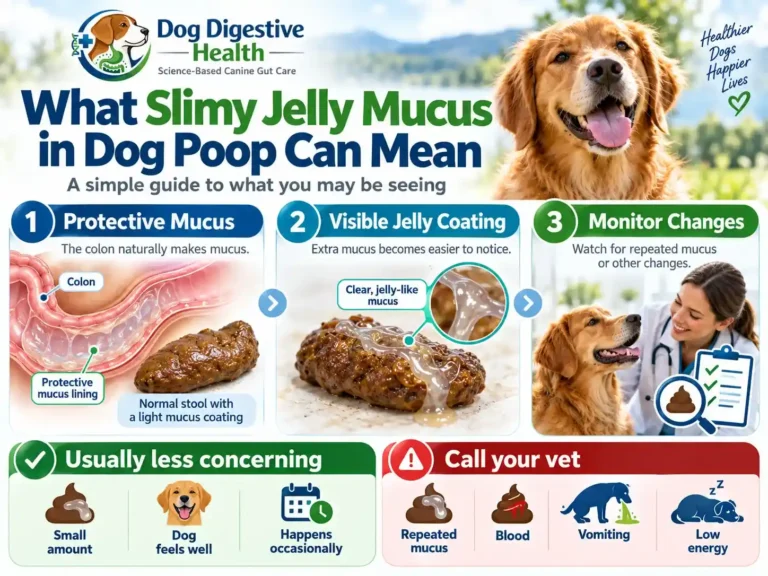
Finding slimy, jelly-like mucus in your dog’s poop can be worrying, especially when it appears as a clear coating, sticky layer, or gelatinous material around the stool. Many dog owners immediately wonder whether this unusual appearance means their pet has a serious digestive problem.
In many cases, this jelly-like substance is mucus produced naturally by the intestinal tract. The colon creates mucus to lubricate stool movement and protect the intestinal lining. However, when mucus becomes clearly visible, thick, frequent, or appears with other stool changes, it may indicate that the digestive system is responding to irritation or inflammation (1).
Slimy jelly mucus in dog poop is usually visible intestinal mucus produced by the colon to lubricate stool movement and protect the intestinal lining. A small amount may occur occasionally, but thick, frequent, or increasing mucus can indicate that the lower digestive tract is irritated. Monitoring stool changes, your dog’s behavior, appetite, and any additional signs helps determine whether it is a normal variation or needs veterinary evaluation.
What Is the Clear Jelly Stuff in My Dog’s Poop?
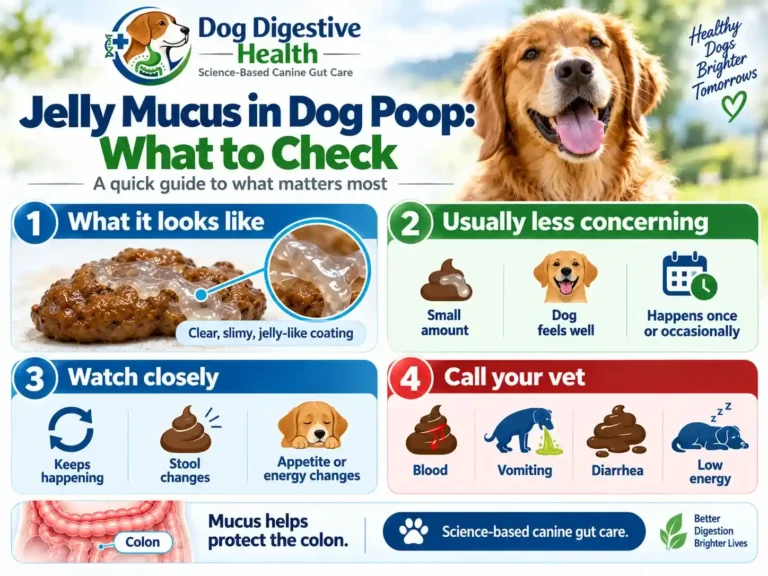
The clear jelly substance in dog poop is usually mucus, a natural secretion produced by the intestinal lining. This mucus helps stool move smoothly through the digestive tract while providing protection to the bowel surface.
Normally, mucus mixes with stool and may not be noticeable. When the amount increases or becomes concentrated on the outside of the stool, it may appear as:
- A clear jelly coating
- A shiny slimy layer
- Transparent strands
- A sticky gelatin-like substance
The appearance of mucus alone does not always indicate a serious condition. The amount, frequency, and overall health of your dog are important when understanding what the change may mean.
Why Does My Dog’s Poop Have a Jelly-Like Mucus Coating?
A jelly-like mucus coating on dog stool often means that the colon is producing more visible mucus than usual. The colon contains specialized cells that produce mucus to support normal bowel function.
This protective layer helps:
- Reduce friction during stool passage
- Protect intestinal tissues
- Maintain normal stool movement
When the lower digestive tract becomes irritated, the colon may respond by increasing mucus production. This extra mucus can become visible as a slimy coating around your dog’s poop.
An occasional mucus coating may happen temporarily, but repeated changes in stool appearance should be monitored carefully.
Is Slimy Jelly Mucus in Dog Poop Normal?
A small amount of mucus can be a normal part of digestive function because the gastrointestinal tract naturally produces mucus.
Occasional visible mucus may be less concerning when your dog:
- Has normal energy
- Eats and drinks normally
- Maintains normal weight
- Has regular bowel movements
- Shows no signs of discomfort
However, frequent jelly-like mucus, large amounts of mucus, or sudden changes in stool appearance deserve closer attention. The pattern over time is usually more informative than one isolated bowel movement.
Occasional Jelly Mucus in Dog Poop | Mucus Pattern That Needs Attention |
Small amount of clear mucus | Thick or excessive jelly-like mucus |
Appears occasionally | Happens repeatedly |
Dog remains active | Dog appears tired or uncomfortable |
Normal appetite and drinking | Reduced appetite or weight changes |
No blood present | Blood mixed with mucus or stool |
Stool is mostly normal | Persistent abnormal stool changes |
Why Does My Dog’s Poop Look Like Jelly or Slime?
The jelly-like appearance happens because mucus has a naturally slippery and gel-like texture. When it becomes visible around stool, it can look similar to clear jelly, slime, or a mucus film.
Dog owners may notice:
- Clear jelly around firm stool
- Slimy coating over poop
- White or transparent mucus strands
- Sticky material attached to stool
The appearance can provide useful information, but it does not identify the exact reason by itself. Veterinarians consider the complete picture, including stool consistency, frequency, diet history, and changes in behavior.
What Does Mucus Coating on Dog Stool Mean?
A mucus coating on dog stool means that visible mucus is present around the bowel movement. The digestive tract naturally uses mucus as a protective barrier, but increased visibility may occur when the colon produces more mucus.
The colon plays an important role in stool formation by regulating water balance and supporting normal elimination. Changes affecting the intestinal environment may influence mucus production and stool appearance (2).
A mucus coating does not always mean disease, especially when it happens rarely and your dog remains healthy. Persistent mucus changes, however, may require veterinary evaluation.
Why Does My Dog Have Clear Jelly Mucus in Poop but Act Normal?
Some dogs may have clear jelly mucus in their poop while continuing to behave normally. They may still eat, play, and maintain their usual activity level.
A single episode of mucus does not always indicate a serious digestive problem. Temporary changes in the intestinal environment can sometimes lead to increased mucus production.
It is helpful to monitor:
- How often mucus appears
- Whether stool consistency changes
- Appetite and drinking habits
- Energy level
- Any additional digestive signs
If the mucus continues or becomes more noticeable, a veterinarian can help determine whether further assessment is needed.
When Should I Be Concerned About Jelly Mucus in Dog Poop?
Visible mucus becomes more concerning when it is persistent, increasing, or accompanied by other health changes.
Contact your veterinarian if your dog has:
- Blood mixed with mucus
- Frequent diarrhea
- Vomiting
- Loss of appetite
- Weight loss
- Low energy
- Abdominal discomfort
- Repeated abnormal bowel movements
A veterinarian may recommend a physical examination or stool evaluation depending on your dog’s symptoms and history. Stool appearance is only one part of assessing digestive health.
How Should I Monitor My Dog’s Slimy Stool Changes?
If you notice jelly-like mucus in your dog’s poop, tracking changes over time can provide useful information.
Consider monitoring:
- Stool appearance and consistency
- Frequency of mucus episodes
- Recent food changes
- New treats or supplements
- Activity changes
- Stressful events
Taking a photo of unusual stool can also help your veterinarian better understand what you observed. A consistent pattern is often easier to interpret than a single unexpected change.
Medical Disclaimer
This article is for educational purposes only and does not replace professional veterinary advice, diagnosis, or treatment. If your dog has persistent mucus in stool, worsening digestive changes, or signs of illness, consult a qualified veterinarian for proper evaluation.
Frequently Asked Questions(FAQs)
1. What is the clear jelly substance in my dog’s poop?
The clear jelly substance is usually mucus produced by the colon to lubricate stool movement and protect the intestinal lining.
2. Is slimy jelly mucus in dog poop normal?
A small amount may occur occasionally, but repeated or excessive jelly-like mucus should be monitored and discussed with a veterinarian.
3. Why does my dog’s poop have a slimy coating?
A slimy coating usually means visible mucus is present around the stool, which can happen when the colon produces more mucus than usual.
4. Why does my dog have mucus in poop but act normal?
Some dogs may have occasional mucus without other signs. Monitoring frequency and any changes in stool or behavior is important.
5. When should I contact a vet about mucus in dog poop?
Seek veterinary advice if mucus continues, increases, or appears with blood, vomiting, appetite changes, diarrhea, or low energy.
References
- Mucus in Dog Poop. Updated 2024.
https://www.petmd.com/dog/symptoms/mucus-in-dog-poop
DOI: Not available. - Rolfe VE, Adams CA, Butterwick RF, Batt RM. Relationships between fecal consistency and colonic microstructure and absorptive function in dogs. American Journal of Veterinary Research.2002;63(4):479–484.
DOI: 10.2460/ajvr.2002.63.479