
How to Treat a Dog’s Loose Stool at Home Fast: Safest Bland Diet Routine
Written by: Dr. Akram Khan, DVM
Medically Reviewed by: Dr. Khalid Mehmood, PhD (Assistant Professor in Clinical Veterinary Medicine)
Last updated on October 29, 2026
Loose stool is a common digestive issue in dogs and can be concerning for pet owners who want a safe solution at home. In many mild cases, a carefully prepared bland diet routine can help support digestive recovery by reducing the workload on the gastrointestinal tract while providing gentle nutrition.
The goal of home care is not only to improve stool consistency but also to support hydration, maintain energy levels, and avoid foods that may further upset digestion. A temporary diet adjustment using easily digestible ingredients, appropriate portions, and a gradual return to normal food can help many dogs recover comfortably.
Quick Answer
For mild cases of loose stool, a dog may benefit from a temporary bland diet containing simple foods such as plain boiled chicken and white rice. Feed smaller meals throughout the day, provide constant access to fresh water, avoid fatty treats or sudden food changes, and slowly transition back to normal food once stool improves. Homemade bland diets are intended for short-term support and should not replace complete nutrition for long periods (1).
How Can I Stop Loose Stool in My Dog Quickly at Home?
When a dog develops mild loose stool, the digestive system may benefit from a short period of simple, easily digestible meals. A bland diet helps reduce digestive complexity by limiting ingredients that may be harder to process.
A practical home routine includes:
- Offering smaller meals instead of large portions
- Keeping fresh water available
- Avoiding treats, table scraps, and high-fat foods
- Feeding plain, gentle ingredients
- Monitoring appetite, energy, and stool changes
Dogs with mild digestive upset often tolerate simple foods better because they require less digestive effort. However, every dog responds differently, and persistent digestive problems should be evaluated by a veterinarian.
What Is the Safest Bland Diet Routine for a Dog With Loose Stool?
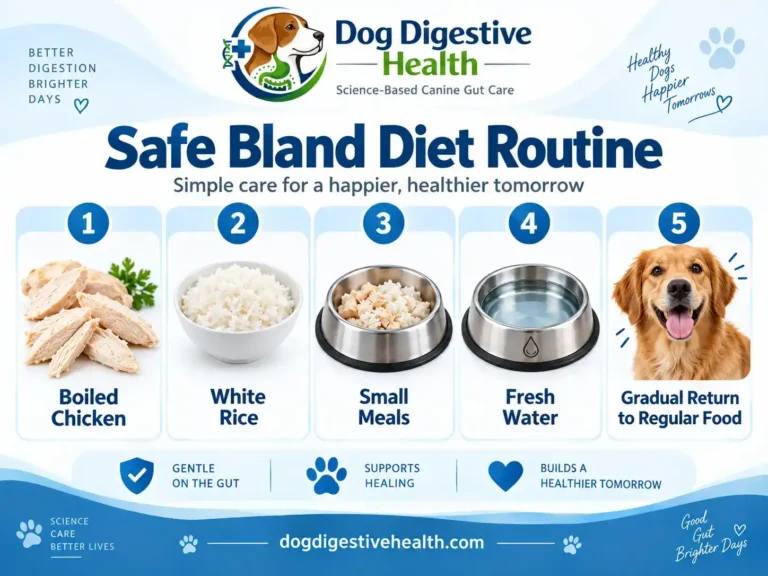
A safe bland diet for dog loose stool should focus on low-fat, simple ingredients that are easy to digest. The traditional approach combines a lean protein source with a carbohydrate source to provide temporary nutritional support.
Common bland diet options include:
- Plain boiled chicken breast without skin or seasoning
- White rice cooked without oil or spices
- Lean turkey as an alternative protein
- Plain pumpkin puree in suitable amounts
Chicken and rice are frequently used because they provide easily digestible nutrients during short-term digestive recovery. However, a homemade bland diet may not contain all essential nutrients required for long-term feeding (1).
How Do You Make Chicken and Rice for a Dog With Loose Stool?
A properly prepared chicken and rice meal should remain simple. Avoid adding ingredients commonly used in human cooking because some may irritate the digestive system or be unsafe for dogs.
Preparation steps:
- Boil skinless, boneless chicken breast until fully cooked
- Remove excess fat
- Cook plain white rice separately
- Mix the ingredients without salt, butter, oil, garlic, or spices
A commonly used ratio is approximately one part chicken to two parts cooked white rice. The exact amount should depend on your dog’s size, weight, activity level, and health condition.
This type of temporary dietary management is commonly recommended as supportive care for uncomplicated digestive upset because the ingredients are generally gentle on the gastrointestinal system (3).
How Much Chicken and Rice Should I Feed My Dog With Loose Stool?
The correct portion size depends on your dog’s individual needs. A small dog, puppy, senior dog, or large breed dog will not require the same amount of food.
Instead of feeding one large meal, divide the daily amount into smaller servings:
- Feed three to five smaller meals
- Start with moderate portions
- Adjust based on tolerance and stool improvement
Smaller meals may be easier for the digestive tract to handle during recovery. Dogs with chronic digestive conditions or repeated episodes of loose stool may require a customized nutrition plan from a veterinarian.
How Long Should a Dog Stay on a Bland Diet?
A bland diet should be viewed as a short-term digestive support method rather than a permanent diet. Once stool consistency improves, regular food should be introduced gradually.
A general transition approach:
Day 1–2:
Continue the bland diet while monitoring stool quality and hydration.
Day 3–5:
Begin mixing small amounts of regular food with the bland diet.
Following days:
Gradually increase normal food until your dog returns to their usual diet.
A slow transition helps prevent additional digestive stress caused by sudden food changes.
How Can I Help Firm Up My Dog’s Stool Naturally?
Supporting normal stool consistency involves more than changing food. Consistent feeding habits and avoiding digestive triggers are important parts of recovery.
Helpful steps include:
- Maintaining a predictable feeding schedule
- Avoiding fatty foods and unnecessary treats
- Providing adequate water intake
- Introducing dietary changes slowly
- Supporting healthy gut bacteria when appropriate
The intestinal micro biome plays an important role in digestive health, and some dogs may benefit from veterinarian-approved probiotics depending on their individual situation (2).
Can Pumpkin Help With Dog Loose Stool?
Plain pumpkin puree is often used as a supportive dietary ingredient because it contains soluble fiber that may help regulate stool texture in some dogs.
If using pumpkin:
- Choose plain pumpkin only
- Avoid pumpkin pie filling
- Avoid products containing sugar or spices
Pumpkin should be used as part of a balanced approach and not as a replacement for veterinary evaluation when loose stool is severe, persistent, or associated with other health concerns.
What Foods Should I Avoid During Loose Stool Recovery?
Some foods can make digestion more difficult while your dog’s gastrointestinal system is recovering.
Food Category | Better Choice | Avoid | Reason |
Protein | Boiled chicken breast, lean turkey | Fatty meats, fried foods | High fat may increase digestive stress |
Carbohydrates | Plain white rice, boiled potato | Seasoned foods, oily meals | Simple foods are easier to digest |
Treats | Pause treats temporarily | Biscuits, chews, flavored snacks | Extra ingredients may delay recovery |
Dairy | Usually avoid temporarily | Milk, cheese, cream products | Some dogs digest lactose poorly |
Human foods | Plain cooked ingredients | Leftovers and spicy foods | Added ingredients may irritate digestion |
How Do I Transition My Dog Back to Normal Food After a Bland Diet?
Once your dog’s stool improves, return to regular food slowly. A gradual transition allows the digestive system to adapt without sudden changes.
A simple approach:
- Start with mostly bland food and a small amount of regular food
- Increase regular food gradually over several days
- Return fully to the normal diet when tolerated
Avoid immediately switching back to a full regular meal because rapid dietary changes can trigger another episode of loose stool.
Medical Disclaimer
This article provides general educational information about managing mild dog loose stool at home and is not a substitute for professional veterinary advice, diagnosis, or treatment. Consult a veterinarian if symptoms persist, worsen, or occur with signs such as dehydration, vomiting, weakness, blood in stool, or loss of appetite.
Frequently Asked Questions(FAQs)
1.How can I help my dog’s loose stool at home?
A temporary bland diet, proper hydration, and smaller meals can support digestive recovery in mild cases.
2. Is chicken and rice good for dogs with loose stool?
Plain boiled chicken and white rice are commonly used as short-term bland diet options because they are simple and easy to digest.
3. How long should a dog eat a bland diet?
A bland diet is usually used temporarily until stool improves, followed by a gradual return to normal food.
4. How much chicken and rice should I give my dog?
The amount depends on your dog’s size, age, weight, and overall health. Smaller meals are generally easier to tolerate.
5. When should I contact a veterinarian?
Veterinary advice is recommended if loose stool continues, becomes severe, or occurs with vomiting, dehydration, blood in stool, or reduced appetite.
References
- German AJ, Halladay LJ, Noble PJM. First-choice therapy for dogs with chronic gastrointestinal disease: dietary management and nutritional considerations. Veterinary Clinics of North America: Small Animal Practice. 2015;45(4):689–703. doi:10.1016/j.cvsm.2015.02.006.
- Suchodolski JS. Diagnosis and treatment of intestinal dysbiosis in dogs and cats. Veterinary Clinics of North America: Small Animal Practice. 2022;52(3):515–528. doi:10.1016/j.cvsm.2022.01.002.
- VCA Animal Hospitals. Bland Diet Instructions for Dogs and Cats. Veterinary nutritional guidance resource. https://vcahospitals.com/know-your-pet/bland-diet-instructions-for-dogs-and-cats.